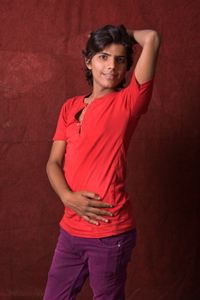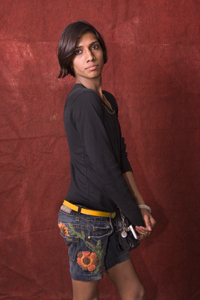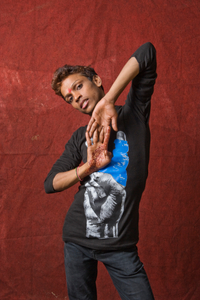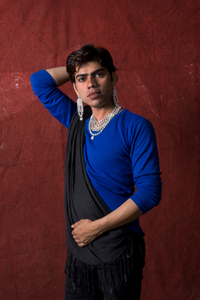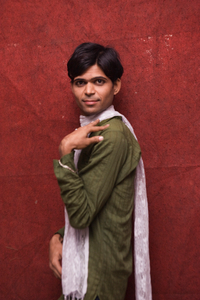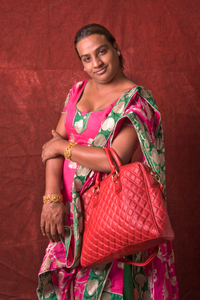
My photographic project has focused on documenting the lives of working class, effeminate queer males in Delhi, known as Kothi, and Hijra (who now come under the category of TG or transgender within the public health sphere) who came of age in the early 1990s just as HIV/AIDS arrived in India. My objective was to restore hope and extend dignity to my sitters, in an attempt to contradict their popular image, which is often disparaged. My approach was to make a series of studio portraits, a widespread form of photography in India, going back to colonial time when only the elite had access to a camera. Many of my sitters adopted poses struck by heroines of popular television serials, while others modelled themselves on famous courtesan characters in classic Bollywood films from the 1950s and 1960s. Made up names, genders and stories were the outcomes. In taking up this approach, my work also challenges the history of photography and its focus on pictures of the more middle and upper caste/class person from India who is more easily labelled LGBTQ, a subculture predominantly seen through the lens of local HIV/AIDS victim narratives and which is vulnerable to being overtaken by neo-colonial narratives of rights, community building and progress.