In a tract of land surrounded by water, history and fiction are easily confused on a daily
basis.
Our history began to be recorded the day Christopher Columbus landed in my
province, Holguin, Cuba, in 1492. Apparently, this is how Columbus “discovered”
America. Since his arrival, a series of historical events shaped our identity and created
what we called Cubans. Most of these events happened as a consequence of
decisions made by rulers such as Isabella of Castile and Ferdinand of Aragon.
A few centuries later, there was a time when ships stopped coming to the country and
started leaving. Resources were limited, and people were in survival mode. The lack of
material goods led to an explosion of creativeness. Cubans were able to keep 50-yearold
cars in working order, they built houses in the narrowest spaces, and they created
art almost from nothing.
The youngest generation of Cubans emerged at a time where creativeness was part of
the identity of the nation. A new generation, now more open to change and acceptance
than the past one, is the hope of building a future for Cuba.
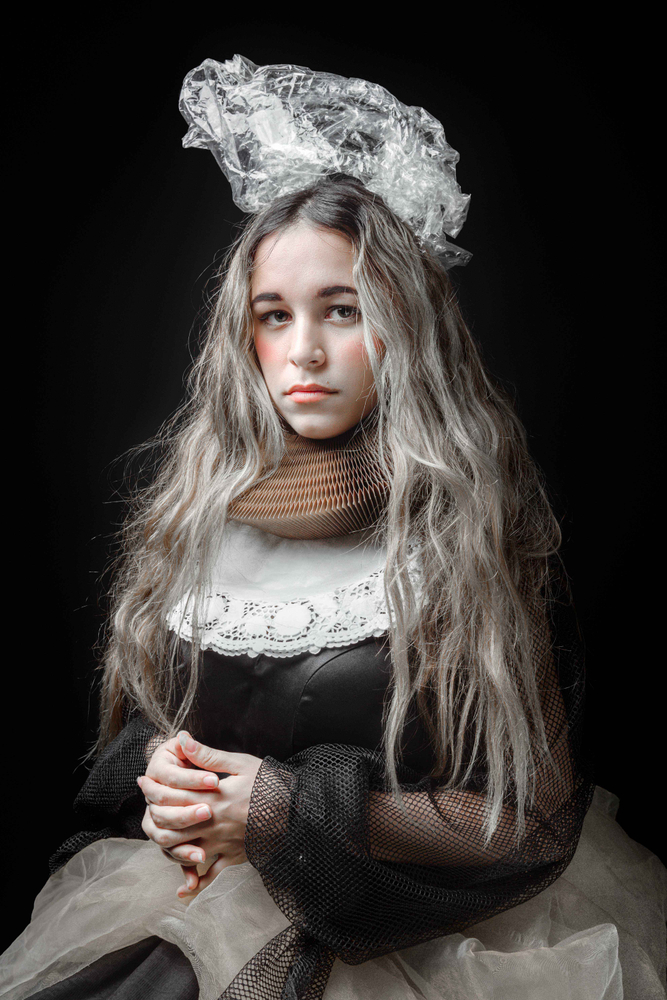
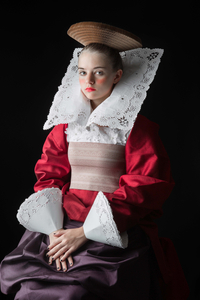
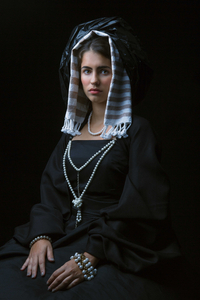
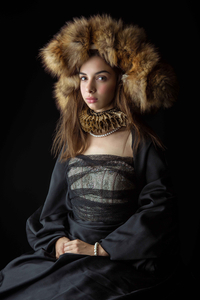
In this series, I am portraying the youngest generation of Cubans, who are the future of
the country. The models, apparently dressing in sumptuous costumes symbolizing the
relationship of past and present, are using regular objects found in their homes such as
kitchen towels, curtains, table covers, bedspreads, plastic bags, clothes pegs, and
stainless steel scouring pads. The photographs recreate what power means by using
repurposed objects to depict minorities.
This series extends the concept of the uncertainty of what real power means. It is about
expanding the meaning of power and constructing hope- the hope to be, the hope to
succeed, and the hope of being remembered.