Unseen Citizen
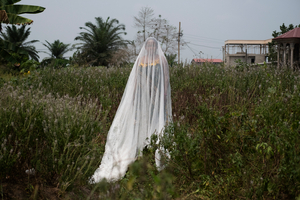
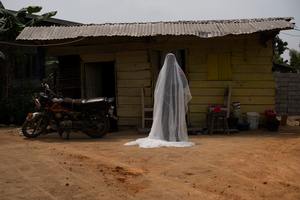
An IDP (Internally Displaced Person) is someone who is forced to flee his or her home because of a specific crisis and treatment of violence, yet they remain within his or her country's borders. Although they are often referred to as refugees, they do not fall within the "legal definitions" of a refugee. An IDP is a human being who is in falling into the bureaucracy of humanitarian limbo. You see, individuals who flee violence or crisis and can not flee to another nation are imprisoned in a predicament they were feeling. Presently there are 40 million IDPs in the world. The majority of them are vulnerable mothers. They are among the world’s most vulnerable people. Because they are not considered “refugees,” they remain out of reach of humanitarian aid and assistance. The state has a duty to protect IDP’s Rights, yet some governments are unable, unwilling, or cause the violence the IDPs are fleeing. The project, “Unseen Citizen,” explores the power of survival and the wish to be accepted. “Unseen Citizen” brings light to the IDP’s who live in Cameroon. These individuals who have deserted their homes to find security in the city of Douala are the invisible citizens of Cameroon. They have lost everything to the crises affecting their country. They have settled for the closes and more secure city of Douala. Unfortunately, they have no humanitarian support and are discriminated against. They are not consisted of legitimate by the International program because they are not refugees, and the local government will not assist them in any way. They are the invisible citizen. Yet we know they exist, we can see them, they live. Working with the organization Hope for Cameroon, which has been operating on the front line with the IDP’s of Douala, “Unseen Citizen” presents some of the locals who live, exist, and are trying to start a new future — utilizing photography to find a visual composition that represents the duality and problems of being an IDP. How to describe the feeling and understanding of not belonging. And still not show these brave survivors as nothing more than victims. The methodology and approach were inspired by working and understanding the reality in the field. Utilizing the necessities the community needed, I covered the subject with a mosquito net (which was then left for the IDP to keep), then build a composition of them as individuals in the landscape that they live, work, and exist in. However, we, as a viewer, can not quite make them out; they are blurred. That break and disconnect represent the struggle of the IDP’s. They are physically in the landscape, yet one can not quite make them out; the softness of their composition represents the fact that they are part of a country, yet not see by it. “Unseen Citizen” hopes to bring to light the problem that faces thousands of IDPs in Cameroon. This project was only possible by working hand and hand with the community and with the support of HFC. Thus, all proceeds will be given directly to HFC to protect and support IDP’s in Cameroon.
No categories selected
Photos (19)