
The Shetland Islands: Endangered Nests

Photos (11)

Cover
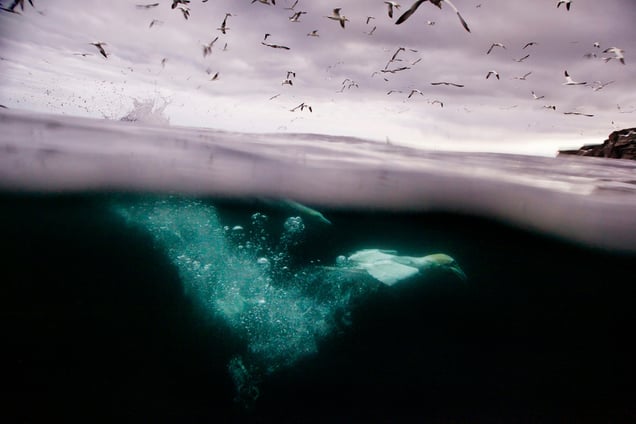
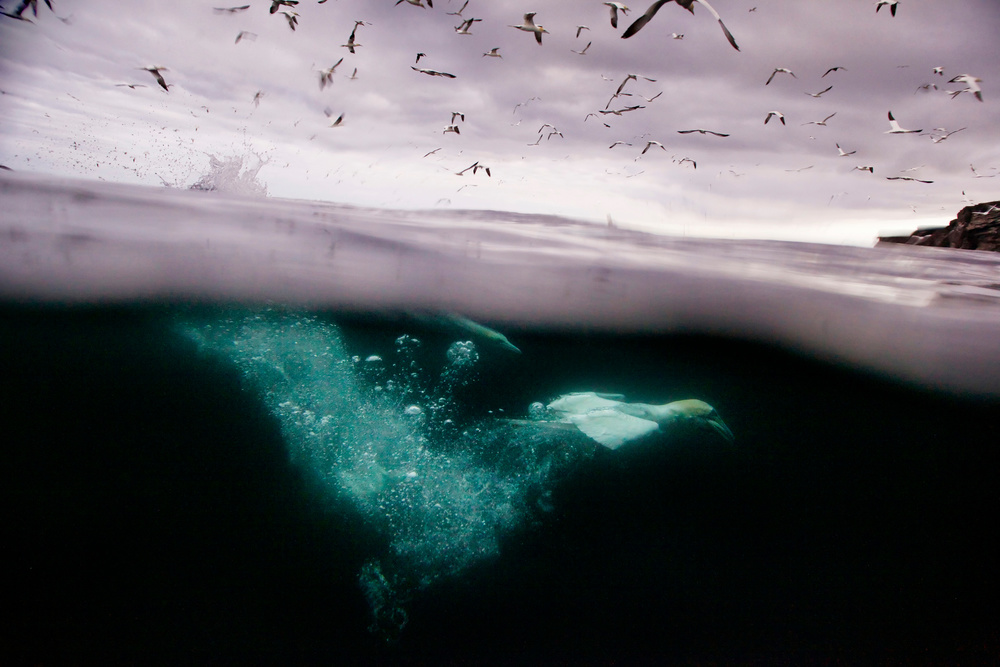
A Northern Gannet (Sula Bassana) dives into the dark waters of the North Sea off the cliffs of Noss. Northern Gannet have increased by adapting to the human fishing industry. They use rope from nets for nesting and will feed on surplus fish. The birds closely follow fishing boats and dive near nets. In this instance the birds are attracted to discarded fish thrown back into the sea from a boat.
File: lenscultureKD001.JPG
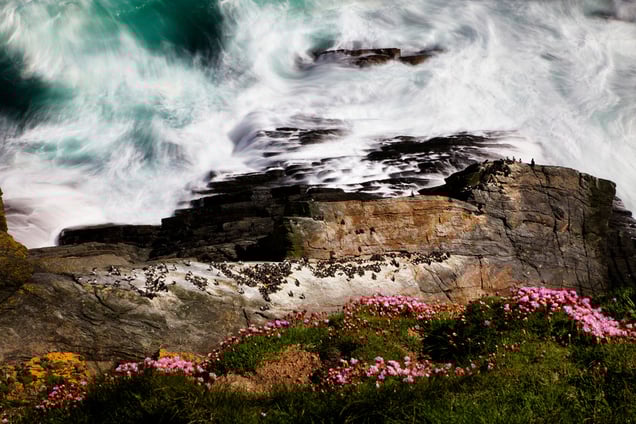
Common guillemots (Uria aalge) cling to a rocky nesting colony on the rocks at Sumburgh Head. The 100 islands that make up the Shetlands support 23,000 people and a million sea birds. The Shetlands are situated in the heart of UK's pelagic fishing grounds and mark the boundary between North Sea and Atlantic Ocean.
File: lenscultureKD002.JPG
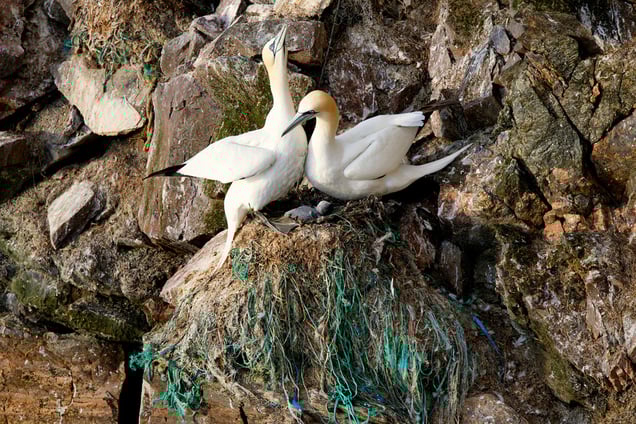
The nest of Northern Gannets (Sula Bassana), on the cliffs of Hermaness, composed of discarded fishing rope. Northern Gannet numbers have increased as the birds have adapted to the human fishing industry. They use rope from nets for nesting and will feed on surplus fish thrown back from the fishing boats. The 100 islands of the Shetlands support 23,000 people and a million sea birds. The islands a
File: lenscultureKD003.JPG
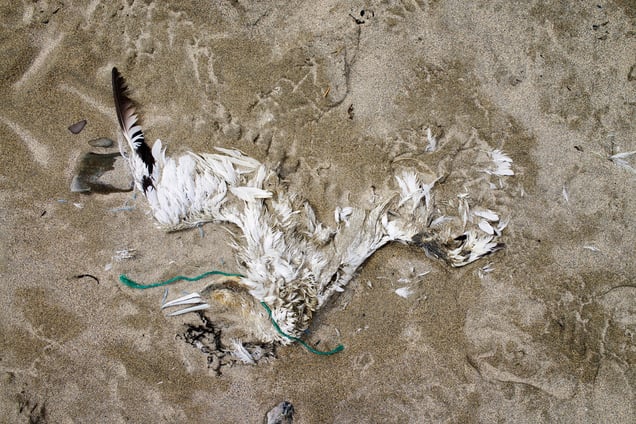
The body of a Northern Gannet (Sula Bassana) lies in the sand at St Ninian's beach. The cause of death is unknown although birds are known to starve with stomachs full of indigestible man-made plastics. The material travels across oceans from North America and Europe ending up in the food chain or on beaches. A fifth of the Shetlanders turn up for the annual 'ReddUp', the largest litter pick in
File: lenscultureKD004.JPG
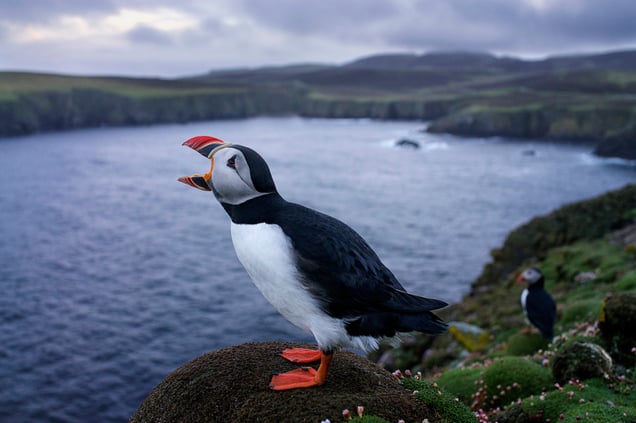
An Atlantic Puffin (Fratercula Artica) on the Shetland Isles. The 100 islands that make up the Shetlands support 23,000 people and a million sea birds. The Shetlands are situated in the heart of UK's pelagic fishing grounds and mark the boundary between North Sea and Atlantic Ocean
File: lenscultureKD005.JPG
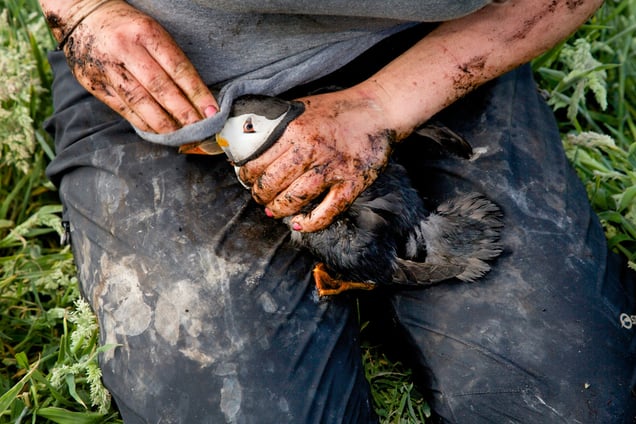
A biologist collecting puffins from their burrows for examination and to gauge feeding success on the isle of May, part of a wider North sea study that also includes the Shetland isles, further north.
File: lenscultureKD006.JPG
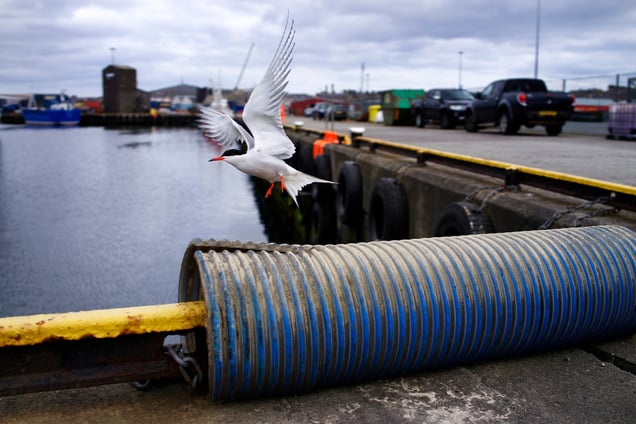
The Arctic Tern, known locally as the 'tirrick' for its distinctive call, is the harbinger of summer. The bird's population has dropped by 70% in thirty years, a result of the decline of their main food the sand eel. The birds undertake the longest migration of any animal, with some clocking up 44,000 miles a year from pole to pole.
File: lenscultureKD007.JPG
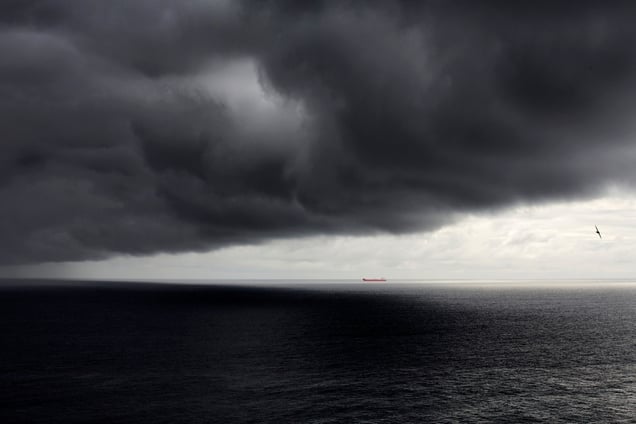
A tanker plies the Sumburgh channel, one of hundreds travelling to and from from the Atlantic deep-water frontier and distant oil terminals.
File: lenscultureKD008.JPG
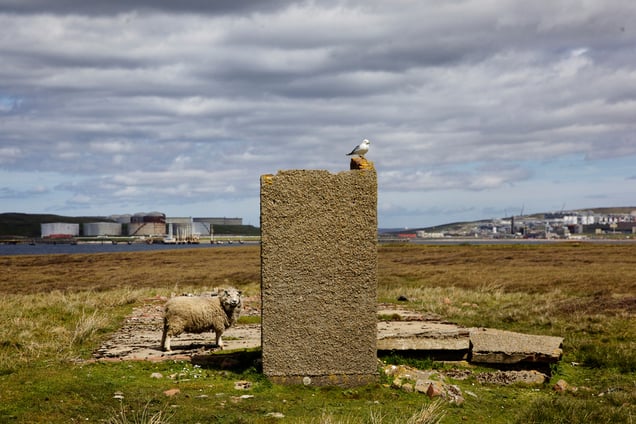
A sheep and a sea bird at the Sullom Voe Terminal which covers 1000 hectares of windswept moorland on the Mainland. It is one of the largest oil and liquefied gas terminals in Europe, and also one of the cleanest in the world.
File: lenscultureKD009.JPG
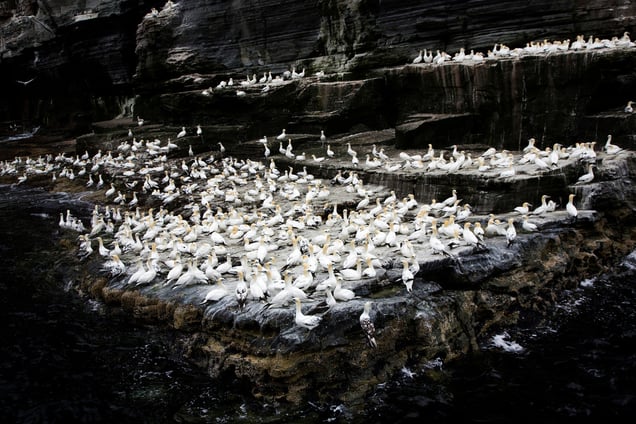
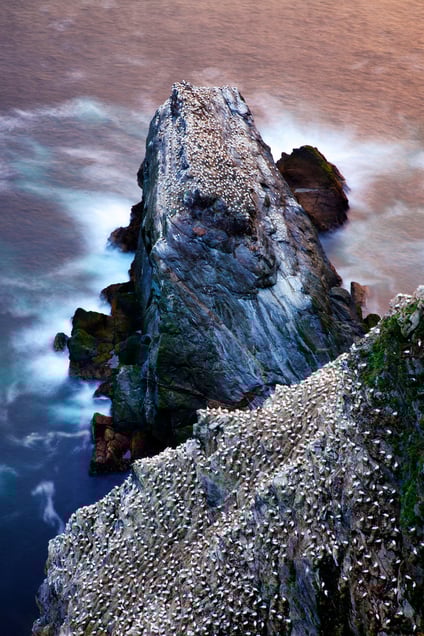
A large colony of Northern Gannet (Sula Bassana) on the cliffs of Noss.
File: lenscultureKD010.JPG
Scotland
File: lenscultureKD011.JPG