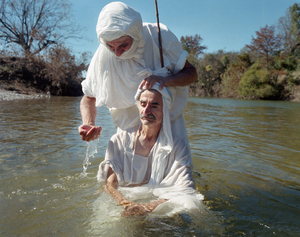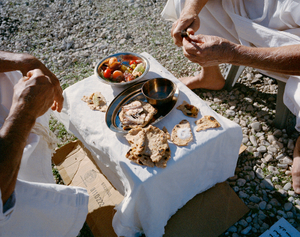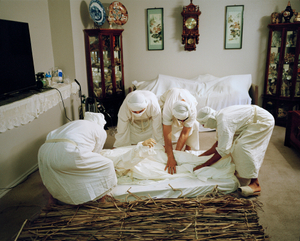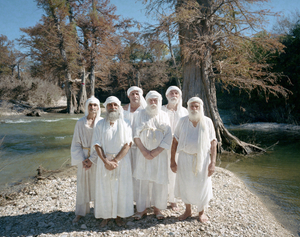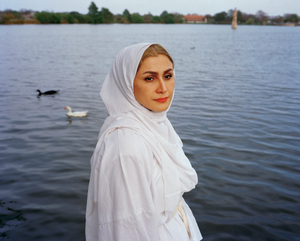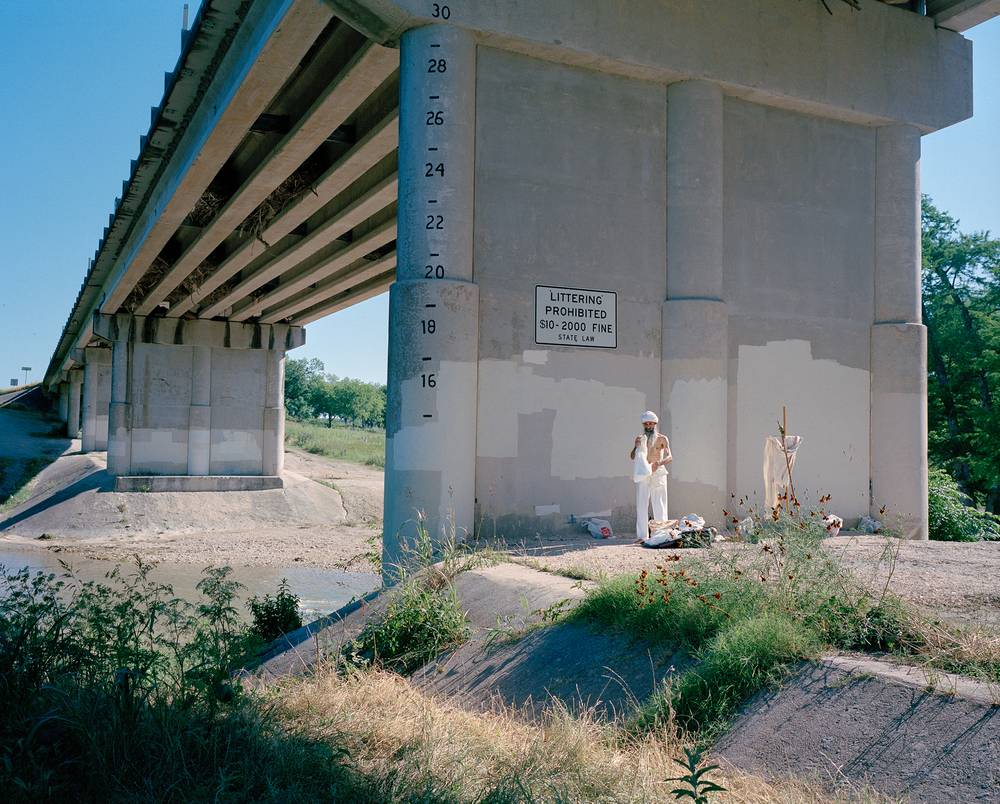
In the Texas waters of the Guadalupe River, an older man with a gray ponytail and piercing blue eyes named Shahram gathers along with his Mandaean companions to observe perhaps what their community is most known for, their ritual baptism. They don flowing white robes and take turns submerging themselves beneath the cool water to purify their bodies and spirits. Shahram says to me, “When I look at the river, I see life is running… The river will show you that life is always in movement… As a Mandaean, when I look at the water I see a place of life, when there is water, there is life.”
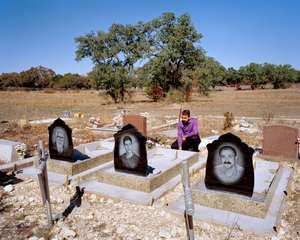
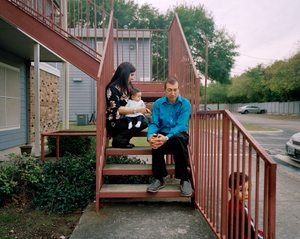
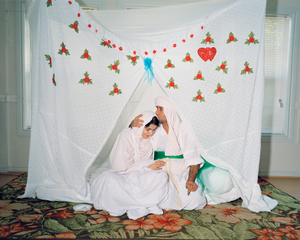
Shahram’s life as a Mandaean priest has brought him, of all places, to Texas. The conservative state, for years now, has quietly become an unlikely haven for this small religious community from the Middle East. Mandaeans are an ancient and closed community, meaning that they do not accept converts and that their members cannot marry outside the faith. Originating on the banks of the Euphrates and Tigris rivers, on the present-day border of Iran and Iraq, political upheaval and instability in the region have forced them to migrate abroad. With a population of close to 3,000 in San Antonio, Texas alone, (the largest of any U.S. city) the community here constitutes a large swath of the only 70,000 estimated to remain worldwide. My project photographically documents this community as they struggle to maintain their ancient traditions and acculturate into a new society.