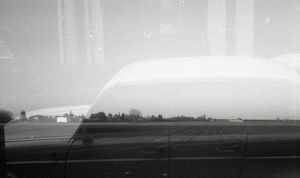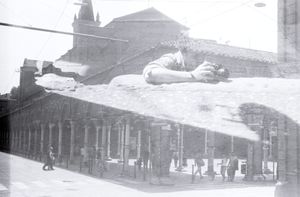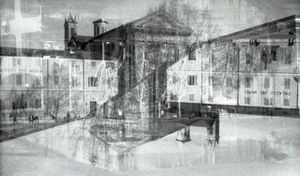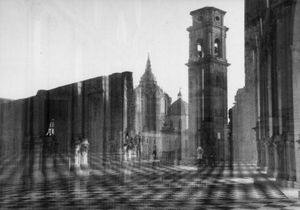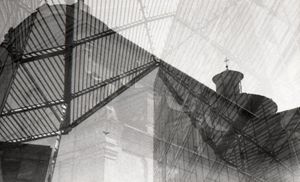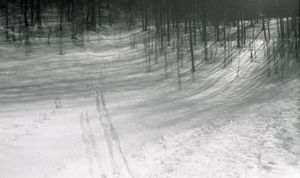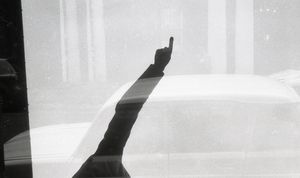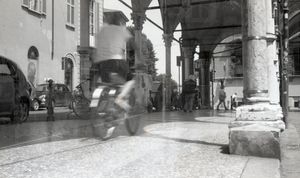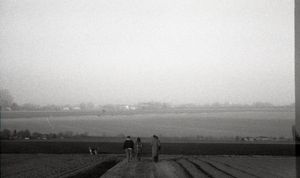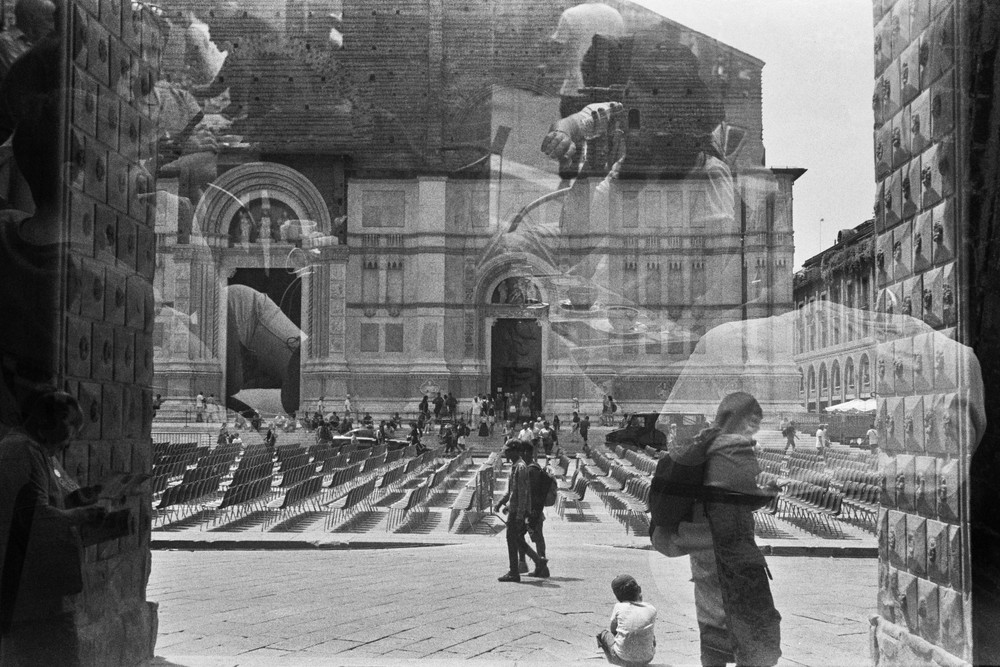
We live in the Anthropocene era, the geological age in which the Earth's environment, in all its physical, chemical, and biological characteristics, is strongly influenced by the effects of human action. The impact of man shapes and scares, becoming the primary cause of permanent change on the planet. At the dawn of the third millennium, the human hand is increasingly absent and replaced by the sign it leaves through algorithms and automatisms. The process of anthropization accelerates inexorably to the point of revolutionizing our perception of time: analog time, slow and cumbersome, is supplanted by digital time, which is fast and dynamic. The analog medium contradicts the space-time of the Anthropocene: matter is bulky, and processes require times that do not belong to contemporary man. The "analog Anthropocene" antithesis guides the reflection of the man who wanders deliriously, in balance, in search of the mystery of his existence. Thus the Antropomorto is born, whose research creates blurred images as if it was an ethereal dream. Anthropomorto is a compound word from the suffix àntropo meaning "man, being a man," and morto, which means dead. Thus, the play on words expresses