Saving Orangutans
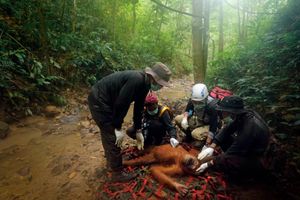
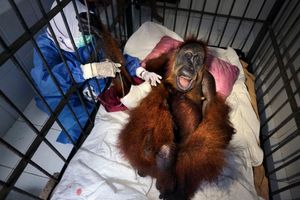
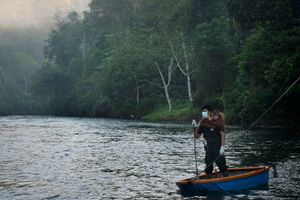
Indonesia’s Sumatran orangutan is under severe threat from the incessant and ongoing depletion and fragmentation of the rainforest. As palm oil and rubber plantations, logging, road construction, mining, hunting and other development continue to proliferate, orangutans are being forced out of their natural rainforest habitat. Organizations like the OIC (Orangutan Information Center) and their immediate response team HOCRU (Human Orangutan Conflict Response Unit), rescue orangutans in difficulty (lost, injured, captive...) while the SOCP (Sumatran Orangutan Conservation Programme) cares for, rehabilitates and resocializes orangutans at their purpose-built medical facility, aiming to reintroduce them into the wild and to create new self-sustaining, genetically viable populations in protected forests. That we share 97% of our genetic heritage with orangutans seems obvious when you observe their human-like behavior. Today, with just over 14,000 specimens left, the Sumatran orangutan (Pongo Abelii) along with the 800 specimens of the recently discovered Tapanuli species (Pongo tapanuliensis), are listed as critically endangered by the International Union for Conservation of Nature (IUCN).
No categories selected
Photos (10)