Epitaph
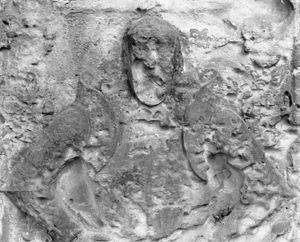
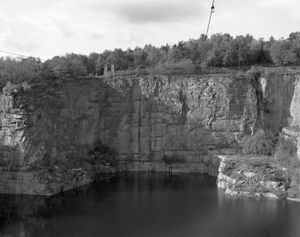
After taking repeatedly visits to former nazi concentration camp Gross-Rosen (Rogoznica) in Lower Silesia (Poland) and attempting to photograph this (non-)place, there soon arose dilemmas associated with the issue of representation. It was only until I found the epitaph in the Gross-Rosen (Rogoznica) village, which is located next to the former camp, built into the wall of the church grounds, which was almost all worn down, when I realized that in the dialogue between it and the photograph of the quarry (which, moreover, was active for a long time before and after the war) may appear the strength of this parallel. The juxtaposition of the epitaph, destroyed by time, with a blurred and dehumanized silhouette, together with the granite wall of the quarry, worn away with hand tools during the backbreaking work of thousands of forced prisoners of the Gross-Rosen camp, allowed me, to some extent, to experience the unimaginable. Experience which is mediated by photography. Those two places were so different from each other in the past, but remain one.
No categories selected
Photos (2)