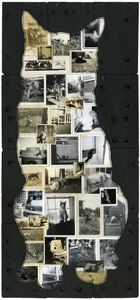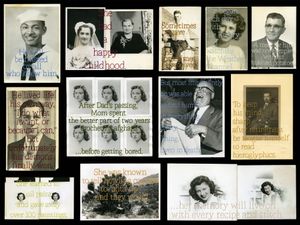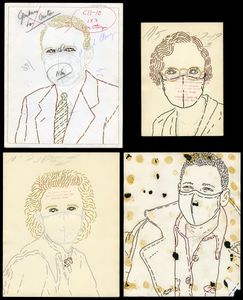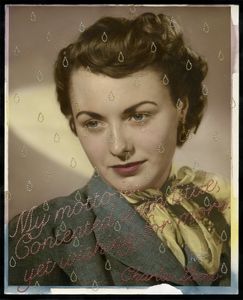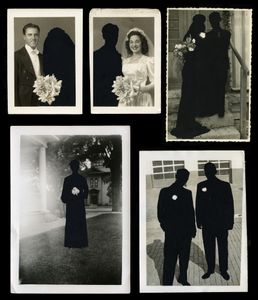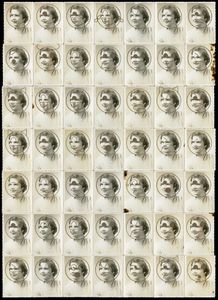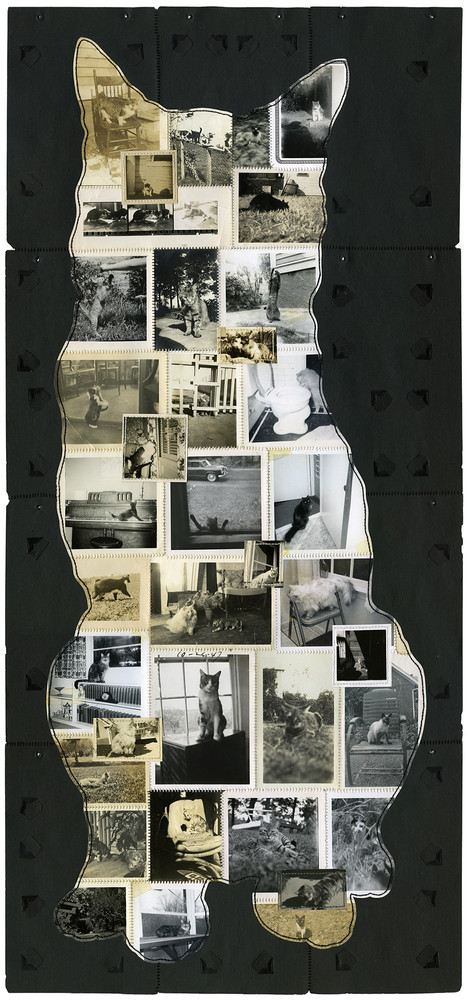
work from six different ongoing found photo series: silhouette, Remember me, PPE mask, maxim, blackout, symbol
Disappointing experiences and unmet expectations of “happy family” have zigzagged through my life— leading eventually led to my fascination with early and mid-twentieth century vernacular photographs. Nan Goldin wrote, “The snapshot (is) the form of photography that is most defined by love. People take them out of love, and they take them to remember — people, places, and times. They’re about creating a history by recording a history.” When I collaborate with another’s photo, I tease out a common humanity not confined by time, place or circumstance. There is a richness in vernacular photos whether or not we know the person, place or time. By asking viewers to look carefully — to react to quotations, decipher symbols and signs, and/or puzzle out juxtapositions — I renew and transform their experience of looking at old photographs. By engaging them with other people’s family photos, I alter the way they see their own. They come to realize, as I did, how universal this form of expression is — and how precious. I explore our shared human condition to better understand my own.
No categories selected
Photos (6)