
St. Sebastian Celebrations
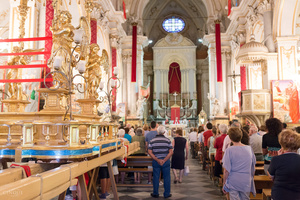
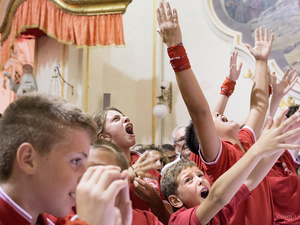
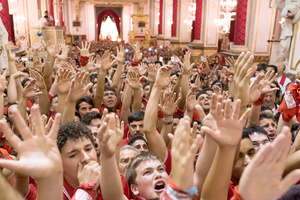
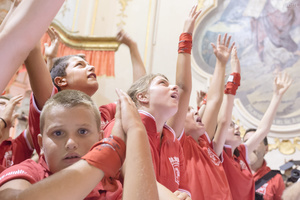
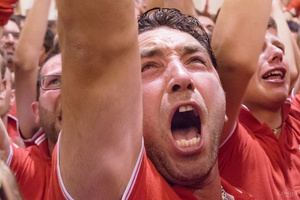
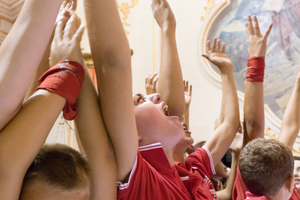
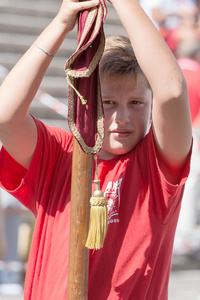
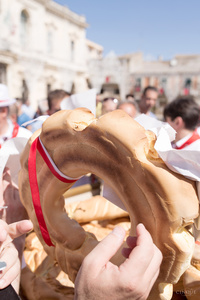
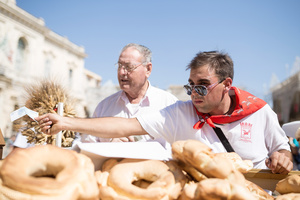
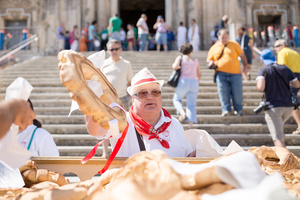
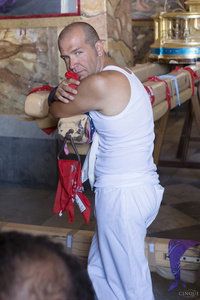
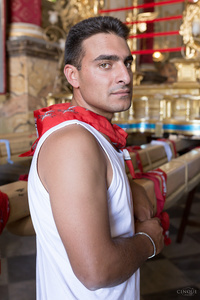
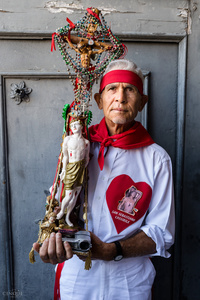
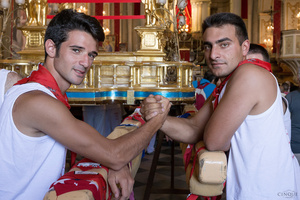
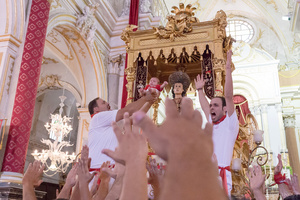
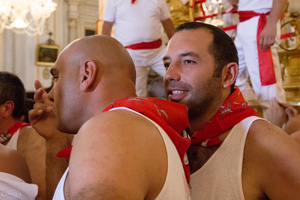
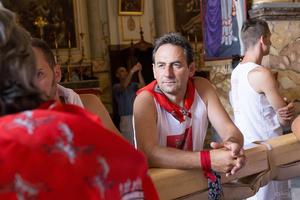
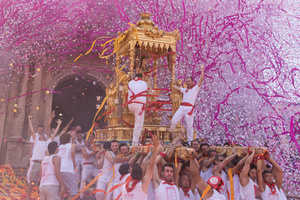
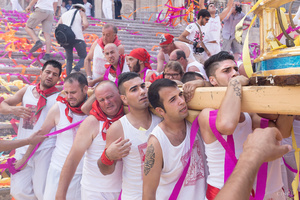
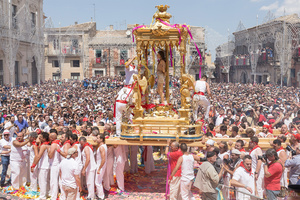
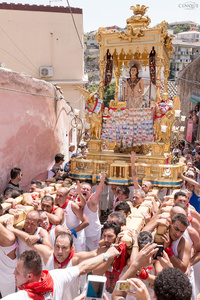
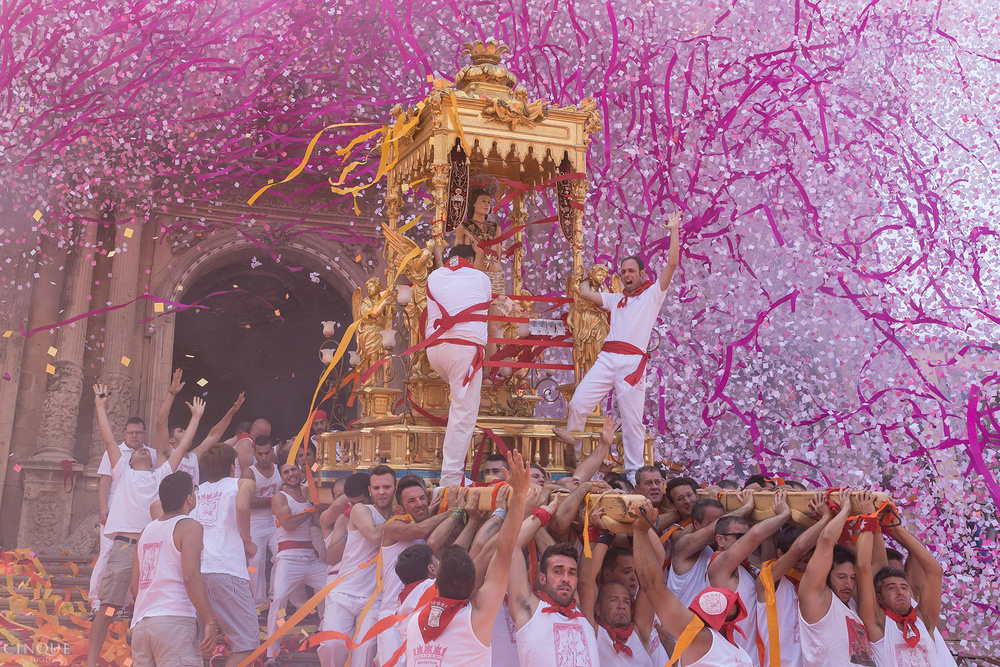
The festival of Saint Sebastian is one of the most dramatic and intense I have ever attended to. I would like to start by saying that I am not a man of faith. Nevertheless, the energy the population of Palazzolo Acreide (Syracuse) can spread is really infectious. They involve you in this huge whirlwind of tears, sweat and shouts: read joy and emotion. The festival is mainly held during two days, August 9th and 10th. In the evening of August, 9th, the believers gather in the small Basilica of San Sebastiano (UNESCO World Heritage Site) and keep silent, waiting, their heads held out towards the altar, until, at a certain point, a man shouts: “E chi siemo, tutti muti?” (“Who are we, nobody speaks?”) and the whole crowd replies: “Vastiano della vita Patrò!” (“Sebastian, saint of our life!”) Thus a ritual begins, in which men, in turn, repeat the question and all the present people reply, in unison. The shouts continue, in a crescendo of fervour, until the “svelata” of the Saint (the moment when the statue of Saint Sebastian is heaved on the altar). The day after, August, 10th, is the most strenuous and intense day of the whole celebration. While the parish priest celebrates Masses inside the Basilica, the organisers outside keep working hard. First of all, 21 cannon shots. Then, a small cart pulled by hand goes round all the bakeries in town, collecting round bread. The cart then gets back to the centre of the square, in front of the church, where the believers may buy it as a tribute to the Saint. In the meantime, small cannons of various dimensions are placed along all the steps of the church. They are real cannons, loaded with confetti of various sizes and connected to one another with electric wires (like TNT charges). Shortly after, they will be giving life to an incredibly colourful show, which summons spectators from all over the world (little curiosity: during this festival I have spent all the time next to Ferdinando Scianna, but I only realised it when I came back home and watched my pictures). When all the Masses are finished, the benches inside the basilica are removed and replaced by two altars, one of which (the biggest one) houses the statue of Saint Sebastian and the two bearers who have had the honour to get on it. The whole is supported and carried on the shoulders by dozens of believers, all dressed with the colours of the festival, the ones representing the Saint. They get ready for leaving. On their faces you may see a mix between tension and joy. They well know that the strength of every single man will be necessary to transport this huge and very heavy altar. Before going out, parents hold out their children to the carriers, who raise them up again: “Vastiano della vita Patrò!”, a sort of little popular blessing for these children. Once ready, the long-awaited moment of the “sciuta” (exit) of the Saint comes. The first altar, which carries the relics of the Saint, represents the opening of the ceremony and is accompanied with the shot of the first two cannons. The air starts filling up with “nsareddi” (coloured paper confetti). Right after, the biggest and heaviest altar follows (the one which holds Saint Sebastian). As soon as the believers get down the stairs, all the cannons are shot in sequence, giving birth to an enormous rain of confetti, which are made fiery by the gunpowder. While I try to shoot some pictures, I get literally covered by these little pieces of paper, so that I could not see the sunlight anymore. Among screams and shouts, some more new-born babies are raised up to the sky, in a propitiatory rite. After the tour of the square, the bearers bring the altar along the streets of the town and, before getting back to the Basilica, they face the last challenge: a very steep rise which, at first sight, reminds of the festival of San Firmino, in Pamplona. Instead of bulls, though, there is the giant altar, supported by a real human chain which carries this huge weight along the last stretch of road. Pushed by tears and worn-out by the strain, they make this last effort to take their saint back “home”.
No categories selected
Photos (21)