
Surface
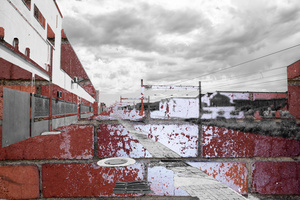
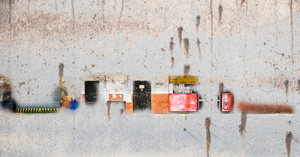
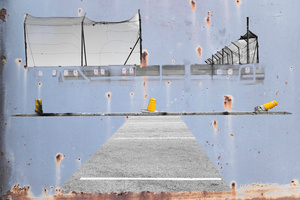
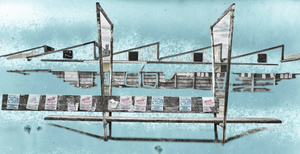
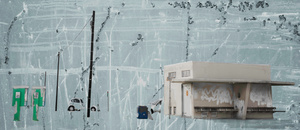
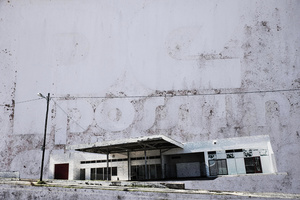
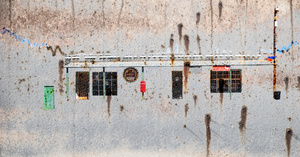
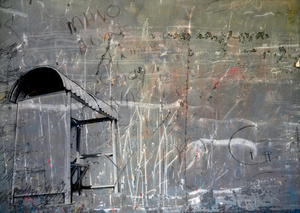
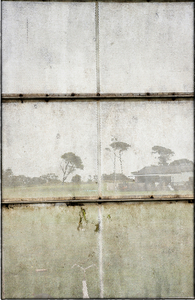
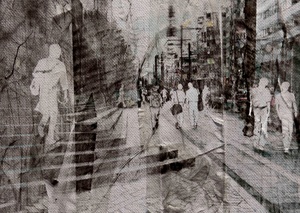
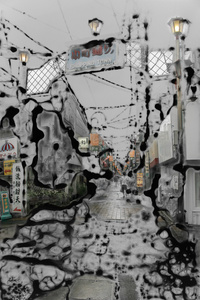
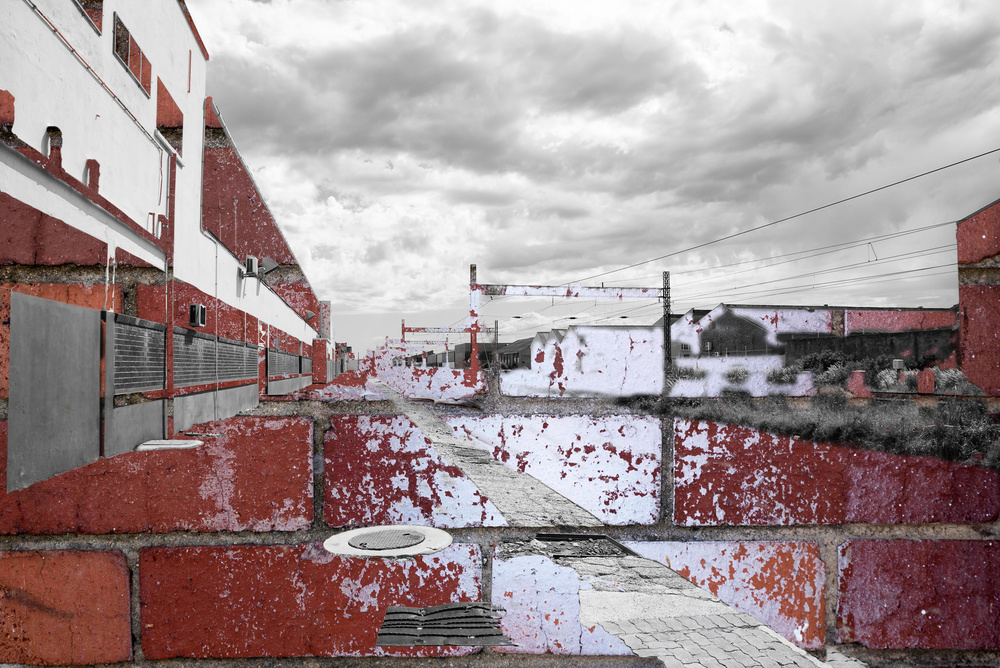
Most of the art works in this series are double images. Two images that co-exist on the same picture plane. My approach involves attention to detail as I walk and photograph. I move in closely to photograph textures and surfaces. I stand back and document scenes. Usually these photographs are taken in quick succession in the same area. However, though many of the images include photographs of surfaces my primary interest is in experimenting with the photographic surface itself. In the digital darkroom I disrupt the picture plane by breaking through the surface of one photograph to reveal the other. As I do this I reveal elements that originally caught my eye. How we see is very personal. By choosing to reveal only certain aspects of a particular image I push that subjectivity further. The process of digitally rubbing out one photograph to reveal the other is a considered and often time consuming process. In “Swartkops road” your eyes anticipate the perspective created by the buildings as they recede into the distance, but this is juxtaposed by the brick surface competing for your attention. Hamamatsucho station” is an investigation into how much information is retained after the surface of a photograph is removed, fragmented and reassembled. This is done both digitally and manually. It is an attempt to represent the “feel” of a place and the process by which we remember and forget; which impressions last and which fade away. The final image was constructed by lifting ink from the surface of the print using broad tape. This was followed by repositioning the pieces on canvas and photographing them. “Kamakura” was a result of experimentation. I printed the original photograph on acetate. The printing ink clung to certain parts of the acetate tenuously , but the rest remained liquid and viscous. I wanted to incorporate the painterly quality of the ink “brushstrokes” which reminded me of Japanese ink paintings . I did this by photographing the acetate and digitally layered it over the original photograph. And finally, by way of contrast, “Victoria Park is a single photograph, but one which also explores dual surfaces.
No categories selected
Photos (11)