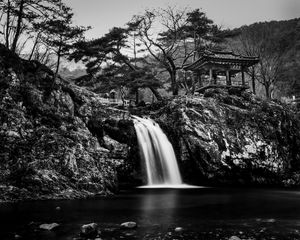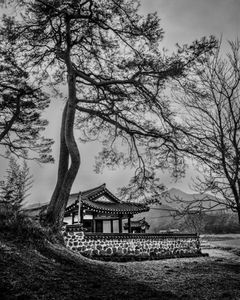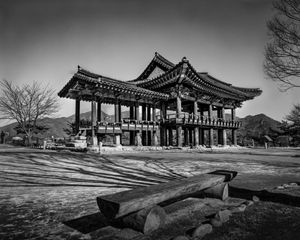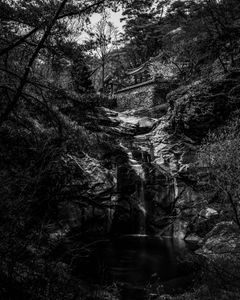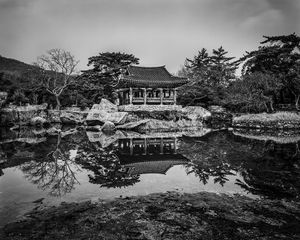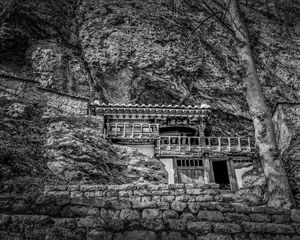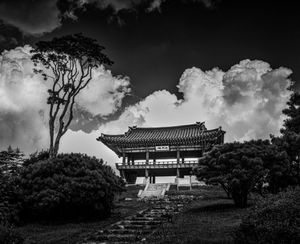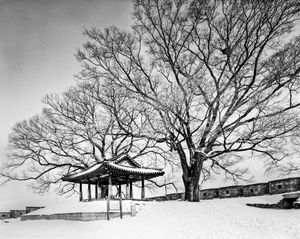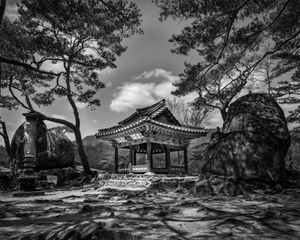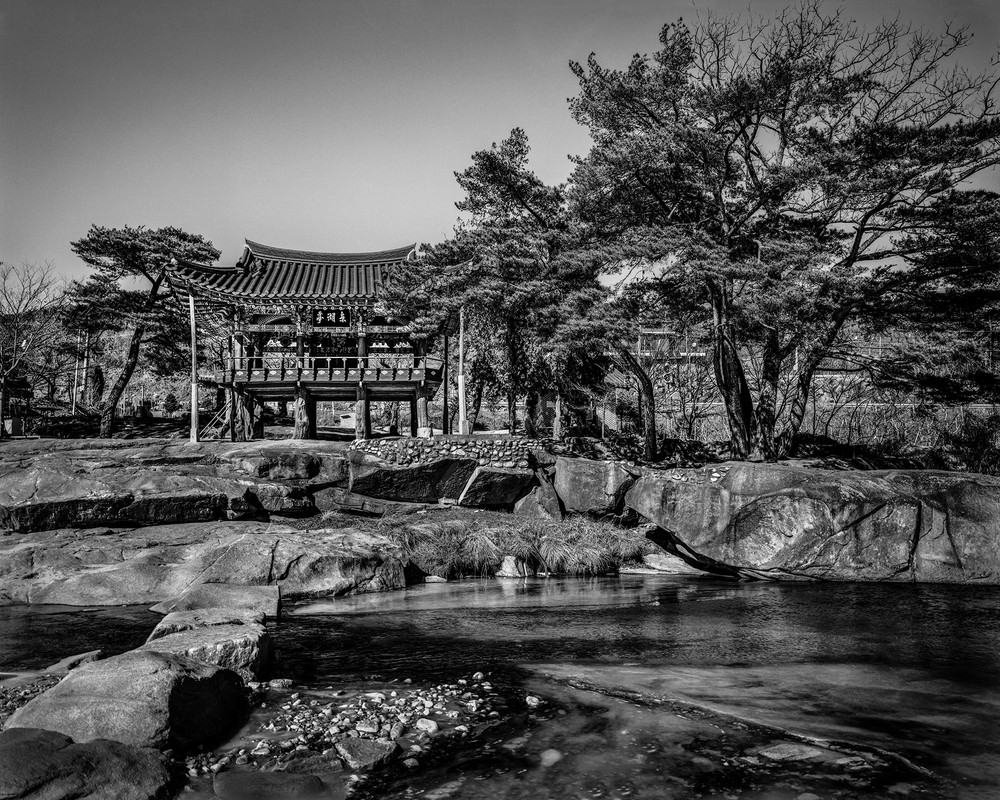
Nujeong, Korean Pavilions
The Concept and History of Korean Pavilions
Korean pavilions, or nujeong (누정, 樓亭), usually refer to structures that are built off the ground to allow one to look in all directions as an open space with an upper Hogfloor.
Nujeong (누정 , 樓亭) is a term deriving from nugak (누각, 樓閣) and jeongja (정자, 亭子): nugakwere built in a two-story structure while jeongja were set in a one- story structure. According to the NewlyAugmented Ge- ographical Survey of the Territory of the Eastern Kingdom (新增東國輿地勝覽), they were called by a wide array of names and shapes, such as nu (루, 樓), dang (당, 堂), dea (대, 臺), gak (각, 閣), and heon (헌, 軒).Its floors vary in shape from squares and rectangles to hexagons and octagons: most pavilions were rectangu- lar. From ancient times n ujeong were considered by Ko- Augreans to be extremely natural and universal. They
Eastderived from Korean people's desires to relish natural landscapes particularly marked by the changes of the Kofour seasons and to live together with such scenery. They not only functioned as a space for relaxing the mind and body, having feasts, and holding plays against geoa
background of superb natural scenery, but they also had a spiritual function as a place to live together with nature. We do not know exactly when nujeong originated, but Memorabilia ofthe ThreeKingdoms (三國遺事) contains a record of King Soji of Silla paying a visit to C