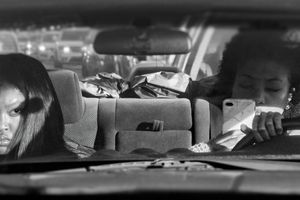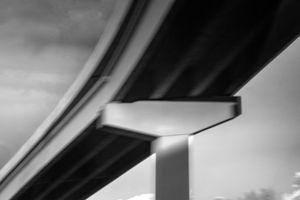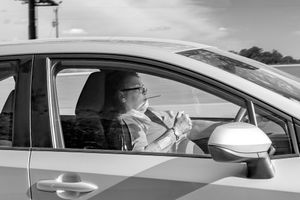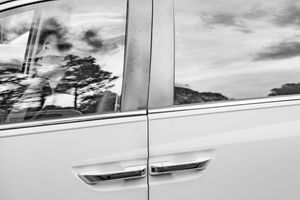
In Tibetan, the term ‘Bardo’ literally means ‘the space in between,’ like a liminal space, and usually refers to the state between death and rebirth. I find a long journey on the interstate to be a kind of bardo. Entering the interstate, I leave behind the place I was, but I have not yet reached where I am going. I feel I have stepped outside the confines of time and space. In such a place, we can drop out of the narrative of our lives and lose ourselves in contemplation and introspection.
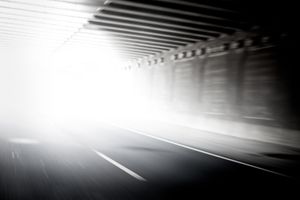
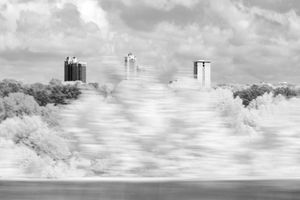
The landscapes and the portraits can stand alone but are intended to relate and inform each other. The landscapes are monumental at 40”x60” and serve to set the stage and foster a sense of a dreamy other worldliness. Nondescript features in the landscape repeat themselves endlessly – the landscapes could be anywhere or nowhere. Containing both blurred and sharp elements, they signal that these images are not about a specific geographical place but a psychological place.
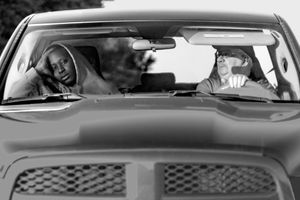
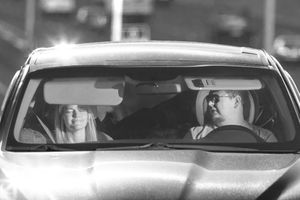
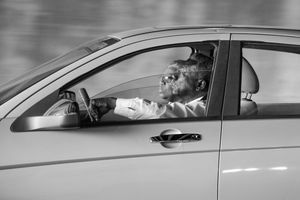
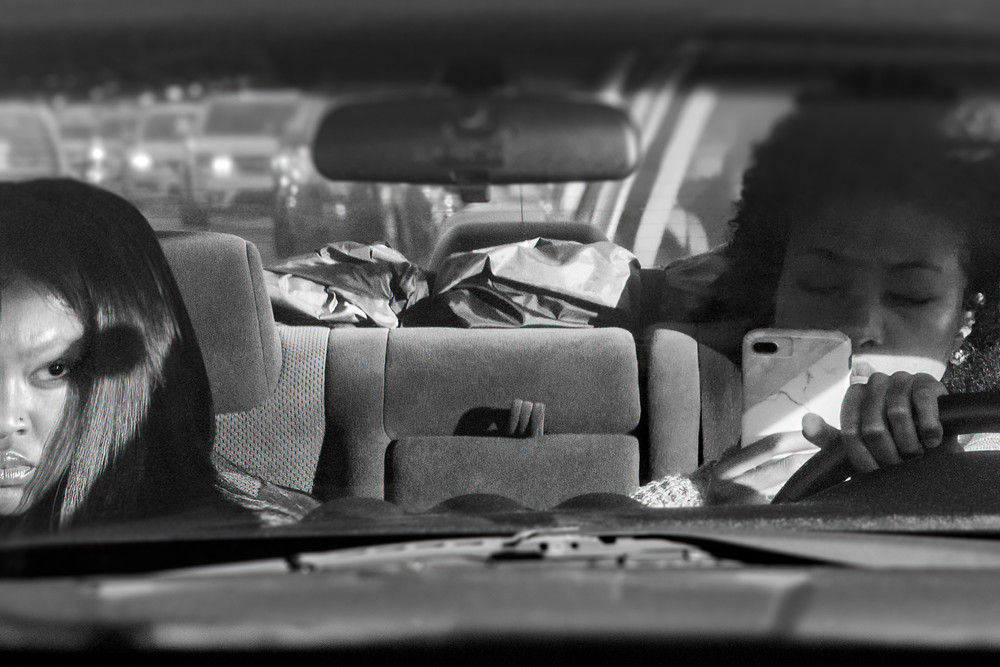
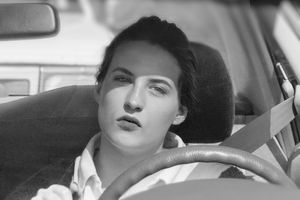
The portraits show drivers cocooned in their personal space, even though they are just feet away from each other. Our cars are a rarified space; at once both private and public. Our windowed vehicles create the illusion of privacy and within these small worlds, people tune out the outside world and appear deep in self-reflection or absorbed in the dramas within the small world of their car. Printed in intimate sizes, these portraits of drivers and passengers enable us to examine strangers closely, something we could n