Liminal Spaces
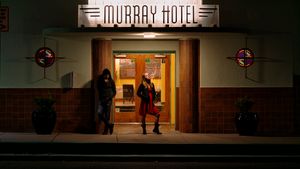
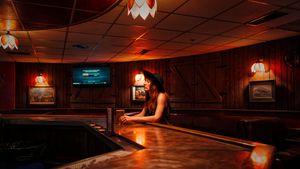
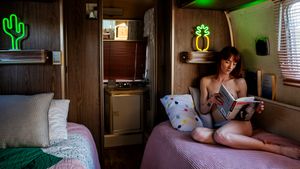
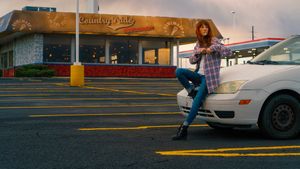
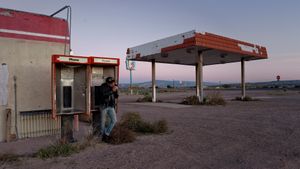
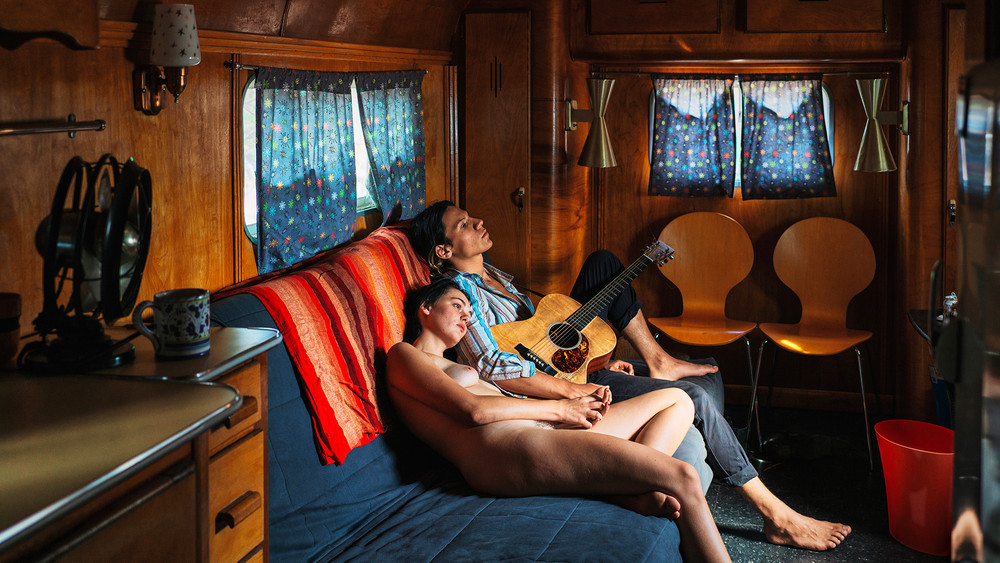
Similar to Jack Kerouac’s use of his underwood, Liminal Spaces uses autobiographical fiction to explore our current American epoch by using the artist's own lived experiences. And like Kerouac, the artist uses those experiences as a vessel in the attempt of defining the cultural and psychological undertone that makes up the USA. The series often depicts its characters in an equal mix of longing and dread - a longing for the idealism that made up the 20th Century, and the dread of continuing forward into the unknowns of the 21st. Using New Mexico as a backdrop, the series becomes a critique of John Gast’s American Progress, where we find its characters in the liminality of the middle class, in search of the American Dream. The chosen 16x9 aspect ratio, vivid colors, set locations, and the poetic look at these character’s psychological state are all used as a reference to American culture. In its totality, it becomes a lived immersive experience of Americana, where even the photo titles reference music from our American Golden Age. And just as the series blends autobiographical and fictitious elements, we also see a blend of poetry and narrative. In that regard, the visual story has the potential to grow and evolve with the lived experience of its characters, in relation to the ever-changing cultural shifts in our nation.
No categories selected
Photos (10)