THE MIES’s PILE
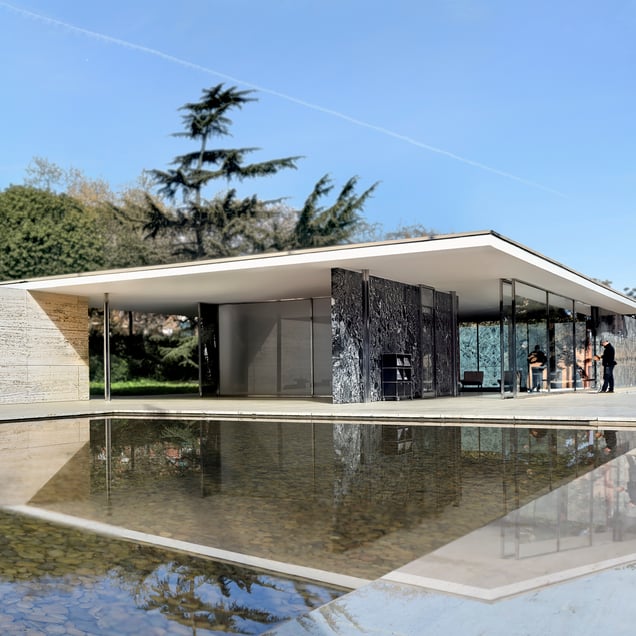
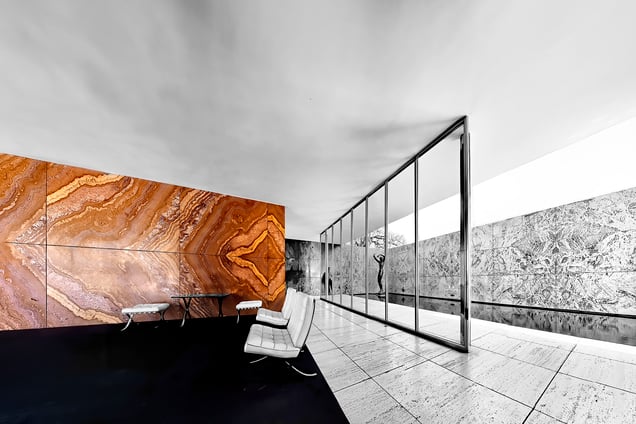
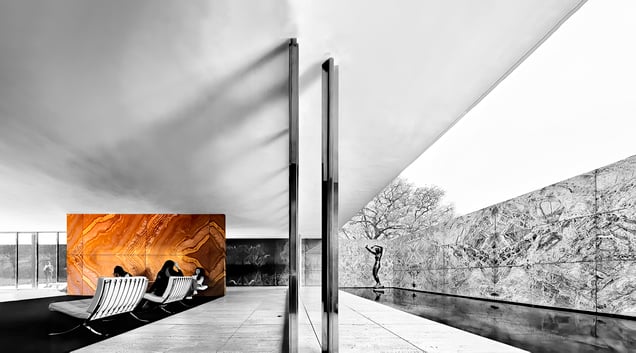
In the iconic German pavilion for the 1929 expo in Barcelona promoted by Lilly Reich, Mies Van der Rohe showed and at the same time pushed to the limit the spatial conception of the architecture of the modern movement. The building is configured as a kind of open box with hardly any added or masking ornaments and in which the elements that support it acquire relevance as shapers of space and an essential language of expression. In the room of the building, two structural elements stand out as a dialogue, the wall and the pillar, the first or traditional one is presented as a sheet embellished by natural stone cladding while in the second, the “pillar”, the architect designed it. It is configured with a highly contemporary material with a connotation of the future such as stainless steel. But the linguistic discourse of this element does not end there as it takes it to its most minimal expression through a cruciform section aligned with the traces of the main axes of Marcus's Theorem used for the structural calculation of plates. The dialogue established through both vertical support elements is the attractive message of the scene captured in this series of photographs…
No categories selected
Photos (15)