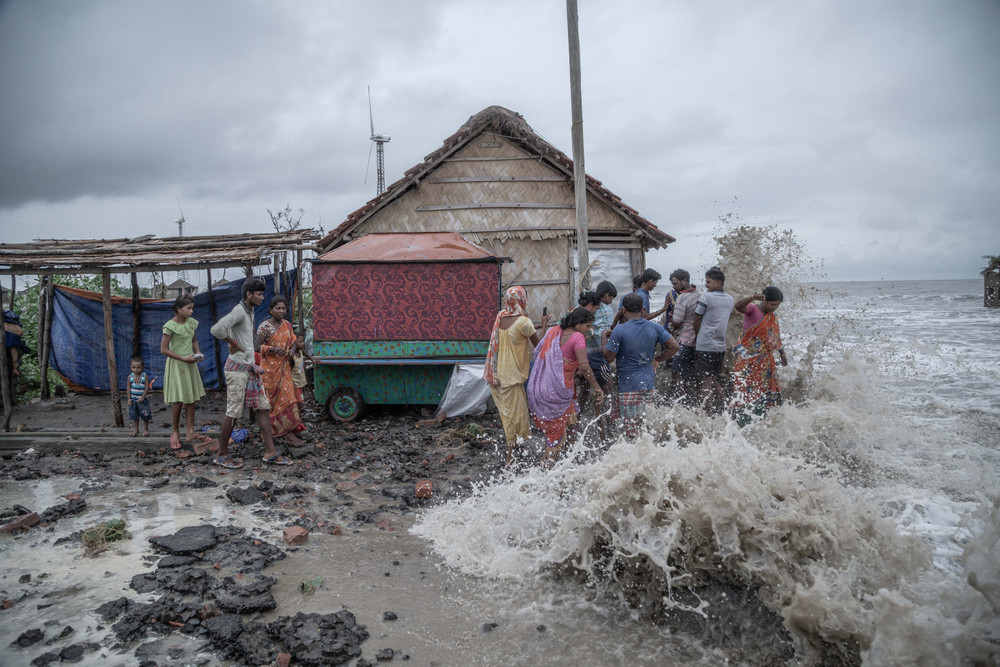

Sinking Sundarbans
The Sundarbans, a collection of low-lying islands in the Bay of Bengal, are shared between India and Bangladesh, with 40% found in India, covering roughly 40,000 square kilometers. These mangroves, which were once the region's protectors are now exploited for economic survival. Overexploitation has resulted in deforestation, diminishing the mangroves' ability to combat global warming and leading to soil erosion. Consequently, the sea has swallowed a large portion of the mangrove, unprotected from high tides and heavy rains, causing the Sundarbans to bear the brunt of cyclonic disturbances. The escalation of water levels has aggravated the existing food and water shortages, simultaneously diminishing agricultural yields and degrading the quality of tillable land. The COVID-19 pandemic and the following lockdown substantially reduced locals' earnings, leading to widespread unemployment. Migrant laborers who previously worked in various regions of India found themselves without any income. Catastrophic events such as cyclones Amphan and Yaas caused extensive damage, leaving these individuals without food or shelter. Despite these trials, the impoverished locals of these coastal villages, devoid of any substantial income, have adapted to their circumstances. Recent years have witnessed the transformation of the landscape due to super cyclones like Aila, Amphan, Yaas, and others. The devastation could have been limited if the mangroves had been safeguarded. Fifty-two out of the 102 inhabited islands in the Indian Sundarbans are rapidly sinking, with areas like Barisal and Khulna in Bangladesh also under threat. While environmental impacts are notable, the most urgent issue is the large-scale displacement triggered by land loss. Empirical evidence and scientific forecasts indicate extreme vulnerability of the delta region. The sea has already claimed parts of the Mousuni and Ghoramara Islands. Over time, the Sundarbans are projected to witness the largest outward human migration in history, with Kolkata predicted to be the next area under threat of submersion.
No categories selected
Photos (30)


