
Chernobyl
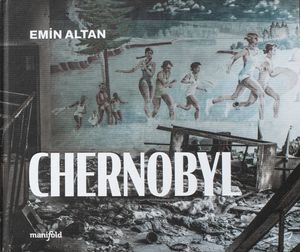
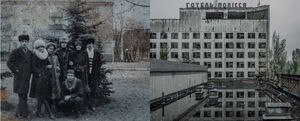
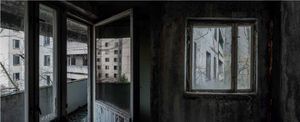
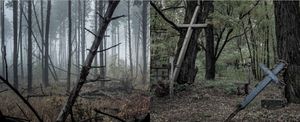
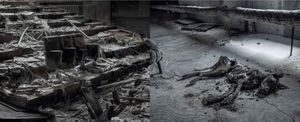
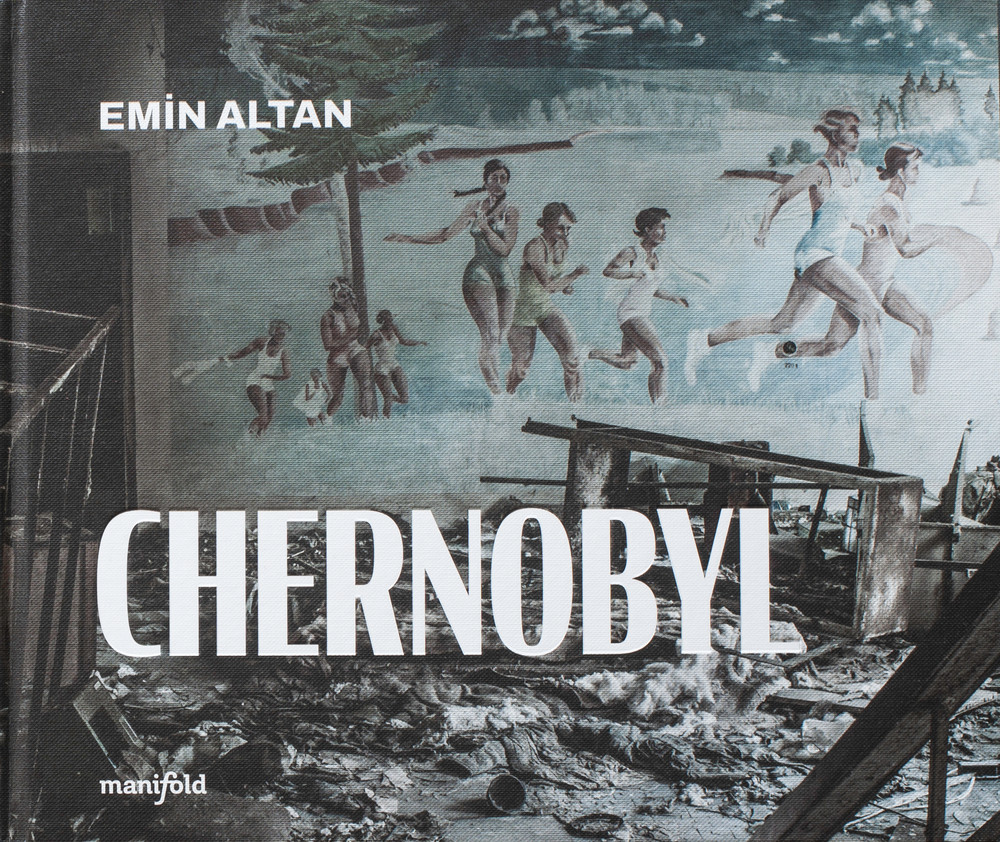
I started the Chaosmos project in 2012 as soon as giving an end to my professional life as a naval architect after taking a radical decision to complete the twenty-five-year career on a world tour of five years, I began to write a visual story a quest to confront with a dystopic fiction based on subjective perception and personal observations, as opposed to a documentaristic one which focused on the traces of the post-industrial crisis and the ensuing collapse. It was a work that combed through the traces of a process in which humankind’s unbounded urge to dominate nature and the “other”, triggers their alienation from their labor along with themselves, which ultimately causes the destruction of all humankind. For me, Chaosmos simultaneously contained Narcissus within itself. With a slightly different reading, I could envision humankind’s glorification of his/her own production causing its eventual demise. Chaosmos which evaluated the photographs as present day reflections of the absolute end of nature and humanity quickly brought forth in a world where existence is equated with the concept of growth, and where the process of producing more, consuming more and even reproducing more as a result of competitive policies becomes increasingly restrictive. The photographs taken across a worldwide journey ending in 2017, and spanning 25 countries extending to many locations in pursuit of fallen civilizations. I intended to access the viewer’s emotions through my photographs rather than to convey information, introduce a location or witness a process. I chose not to tell the story of these photographs or disclose information regarding where and when they were taken. I sought to collate the photographs in which I could find common aspects of different places. I wanted these photographs taken in distant lands to affect the viewer in a way that prevents them from sheltering in the comfort of looking at the pain of the so-called “other”. Another common feature of my chosen locations was that many of these places bore traces of the developments of my childhood (late 60's, early 70's), and the times when we looked forward to the future. I first went to Chornobyl in July 2015. In time, the Chornobyl adventure transformed into something more than just an important component of the Chaosmos project, and metamorphosed into a medium where a new project would be developed. But this time, the time and place were fixed. I had to dig deeper, and convert my work into an archaeological excavation. Pripyat was fascinating. The city was deserted; time seemed to have frozen. The wildness of nature was slowly reclaiming what it had formerly lent to people; a forest surrounded the city. Trees were growing inside buildings. Schools, hospitals, apartments, and gyms were all silent. The sarcophagus, which harbored a legend, was visible from afar with all its magnificence. Those villages that were inaccessible for the tourists, who constantly took selfies, were even more impressive. Many of these villages were uninhabited, essentially absorbed by the jungle. There were also villages with 3-5 residents—either new settlers or people who had returned. Women, most of whom were over 80 years old, lived here in peace. When they died, their homes were sealed shut, and pillaged soon after like all the other houses. The branches drooping to the ground with the weight of the fruits they beared, swayed along with the blowing wind as the Przewalski horses watched their intruders from afar. In October 2018, my attention was drawn to photographs hanging on a kindergarten wall. Photographs I had passed by many times before, unaware. Dust, humidity and mold! Photographs of children and families who had once lived there. The suggestion opened up new horizons for me. During my subsequent visits, I focused on these photographs. I spent days with the photo albums I found inside drawers in schools, official buildings, and village houses. These photographs provided me with the most direct path to the traces and the special moments of the people who once lived here. Their faces seemed to seek something, like they wanted their voices from the past to be heard in the present. My final visit to Chornobyl was in February 2020. The World Health Organization had not yet declared the pandemic, and what had happened in Wuhan in December 2019 was still the problem of the ‘Other’ for us. But in the globalized world, the ‘other’ was now amongst us, and in March 2020, we were all shaken up with a brand new process that would impact our lives deeply.
No categories selected
Photos (23)