Kreuzweg
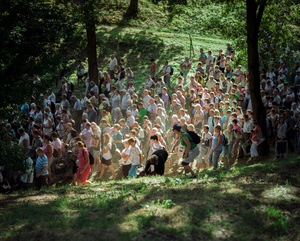
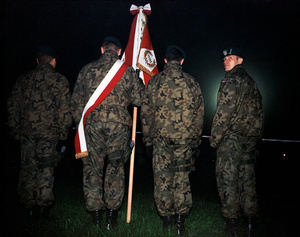
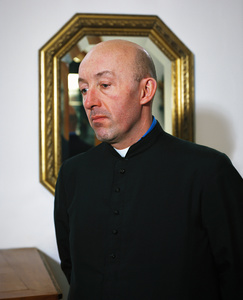
Each year many thousands of people make a pilgrimage to the Black Madonna of Częstochowa. No other place of pilgrimage is bound so closely to a nation as is the monastery on the luminous mount. They come from all over the country. Some pilgrims journey for over six hundred kilometres whilst singing and praying, only to arrive at their destination after many weeks. A pilgrimage embodies the yearly pinnacle of religious culture in Poland. Nowhere else does such a close and seemingly inextricable relationship between belief, religion and national identity exist, as during the summer months during which pilgrims traverse across the country. These are loud and extrovert occurrences, which resemble a collective self-assurance rather than a personal spiritual experience. The images do not offer explanations; actions are only outlined rudimentarily. A narrative order is not recognisable. All points to a deep collective attachment to the clergy. All difficulties and actions are taken on for a moment of seeming transcendence. Small moments of ecstasy caused by exhaustion and group dynamics allow the worldly borders to seem penetrable for a moment. Ultimately none of these promises are kept. Everything breaks in view of the triviality of the worldly condition.
No categories selected
Photos (12)