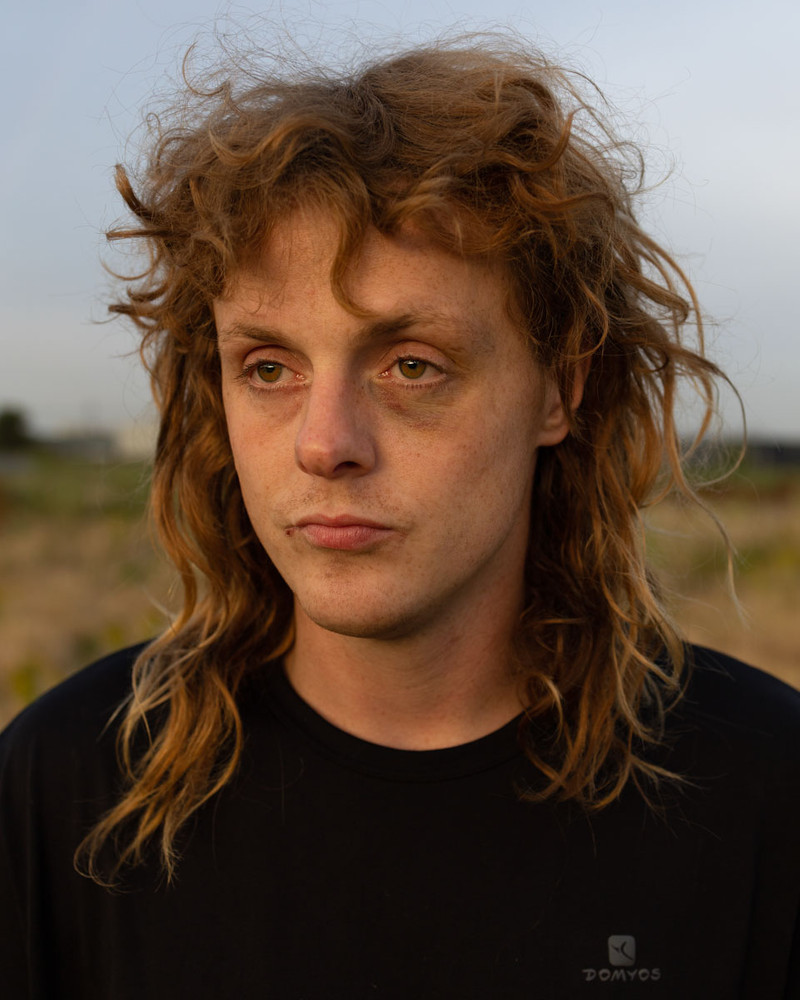
Max
Max is 28 years old and the youngest resident of the Landje. 't Landje is a small piece of land, currently located on the Westpoortweg in the Westelijk Havengebied, Amsterdam. The location is facilitated by the municipality and changes every 2 to 3 years. More than forty residents live on this small piece of land. They live in caravans and usually lead a liberal, creative and small-scale life. For many residents it is not possible to participate in normal life due to psychological problems. For some, Landje offers the solution. A place where they can 'be'; For most people without a phone and social pressure, but with the freedom to shape the life that suits them. That offers freedom and sometimes looks like a nice holiday, but think of winter, it also offers the necessary hardships. Additional: Max (28) enjoys his life on the Landje. It is a conscious choice. And I enjoy visiting him. Wondering whether life for him on the Landje is a choice or an escape. 't Landje is a counterculture to life in the city and allows me to move between resistance and desire. Is this freedom? What can I learn from these people? And why do I want to go back every time? In a world where societal norms often determine the path one should follow, it is essential to ask questions about why these norms exist in the first place. These norms, whether they concern career choices, lifestyle or personal relationships, are deeply ingrained in our society. They are intended as a blueprint for a “successful” and “fulfilling” life, but in doing so they also inadvertently provide a benchmark for judging those who deviate from this prescribed path. Max's life is in stark contrast to what many consider 'normal'. Instead of pursuing a traditional career, Max has followed a less conventional path. A path that breaks social chains of expectations. Max's story invites us to step outside our comfort zone and reevaluate our definitions of "normal" and discover beauty that exists on the margins of societal norms. Doing this allows us to connect more deeply with our shared humanity and creates a greater appreciation for the richness of the human experience. With Max's work I hope to encourage people to judge less.
No categories selected
Photos (11)


