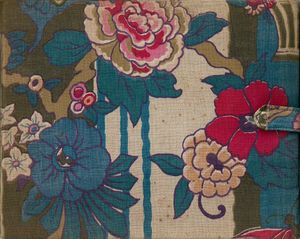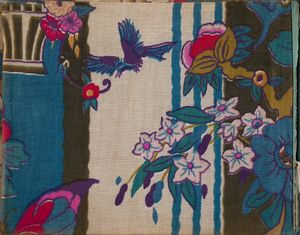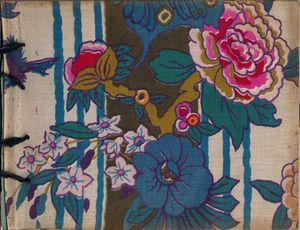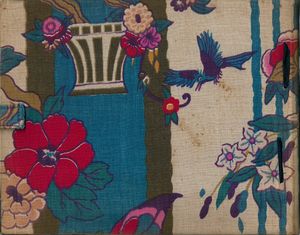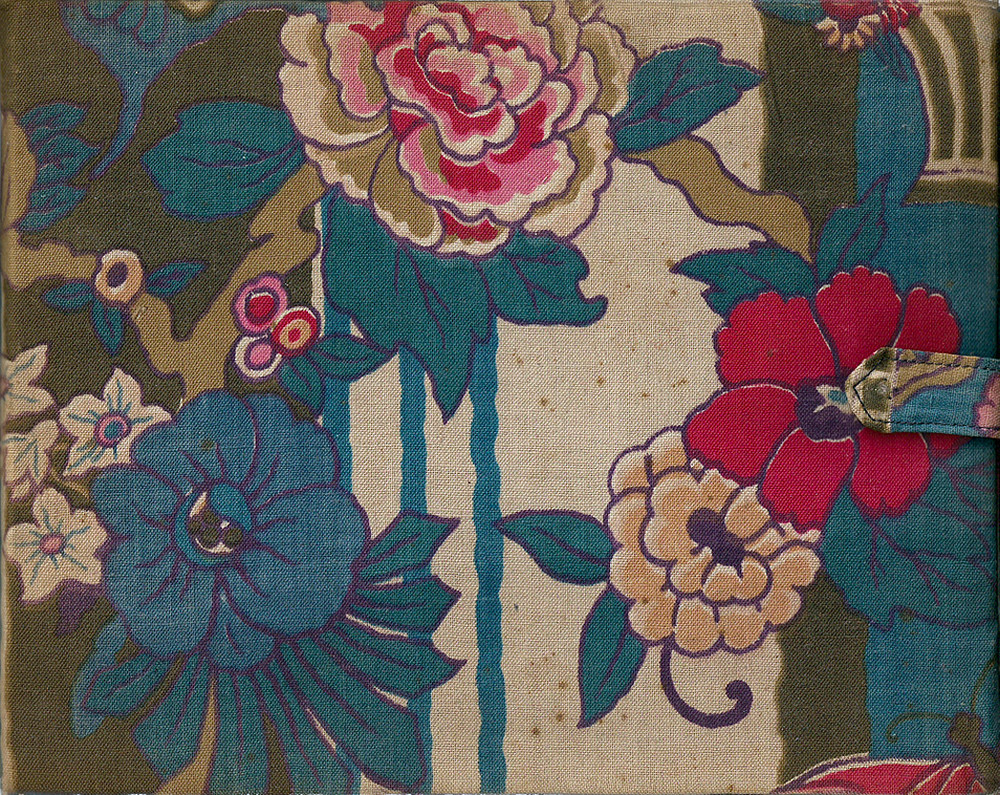
Puss in Boots, a rebus scrapbook by Helen L. Ardrey (1925)
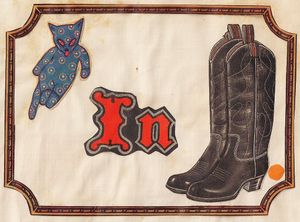
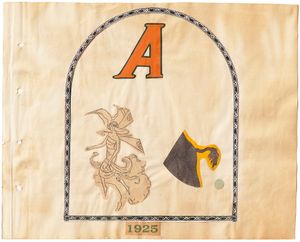
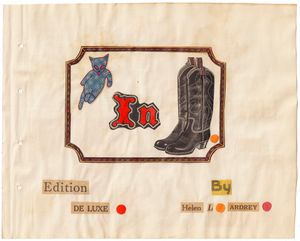
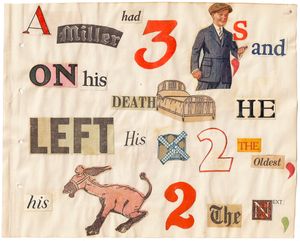
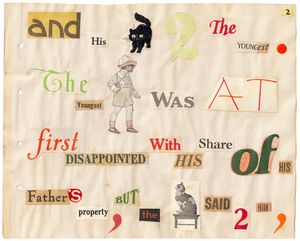
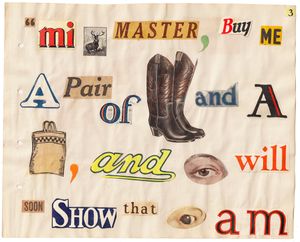
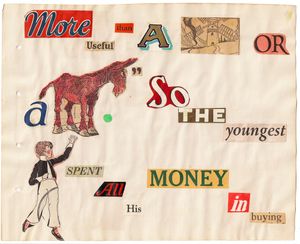
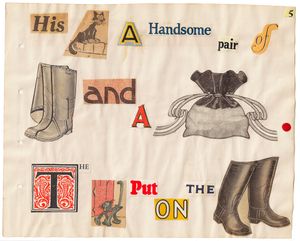
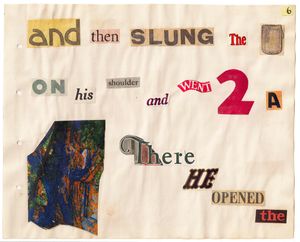
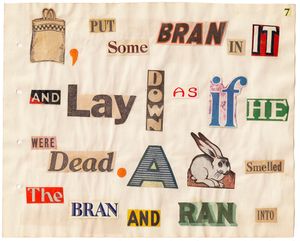
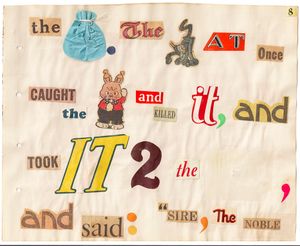
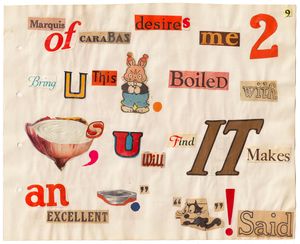
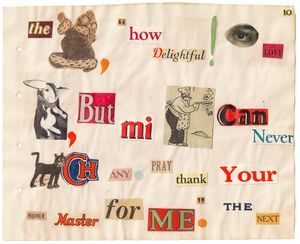
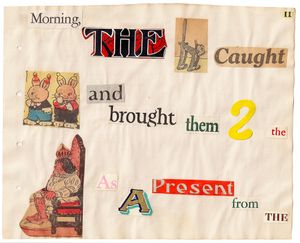
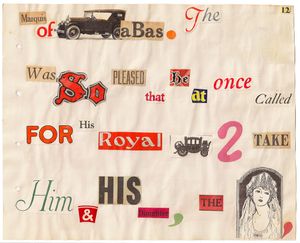
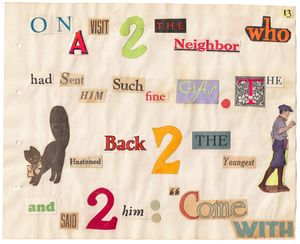
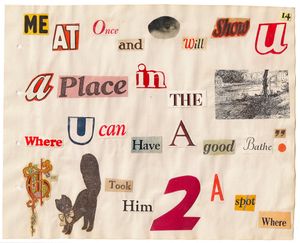
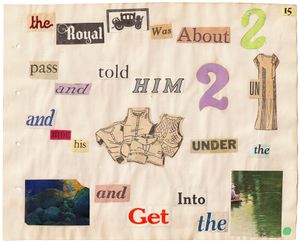
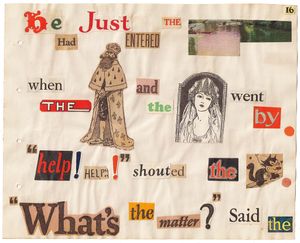
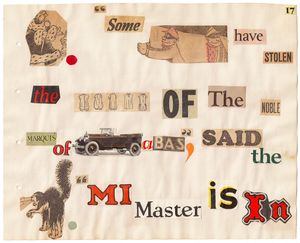
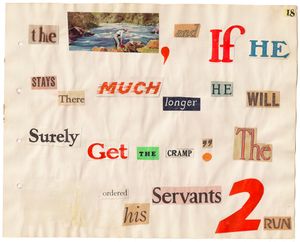
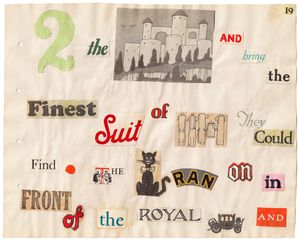
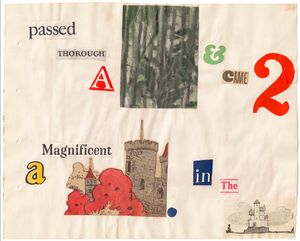
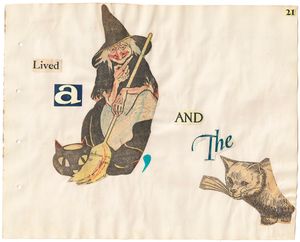
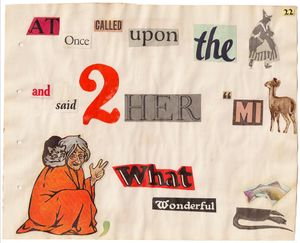
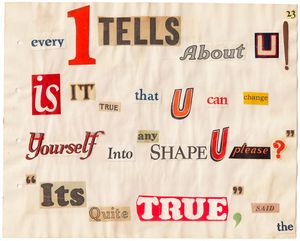
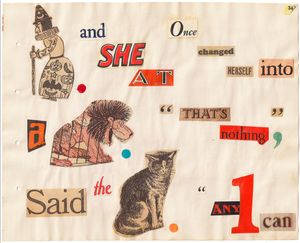
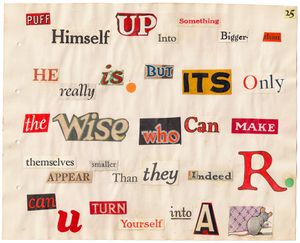
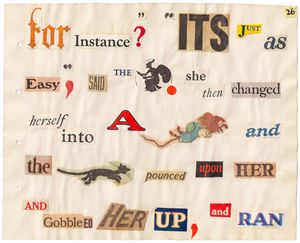
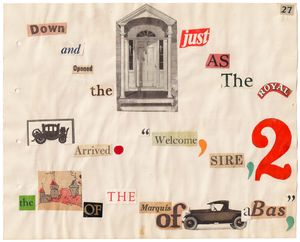
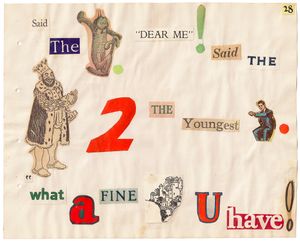
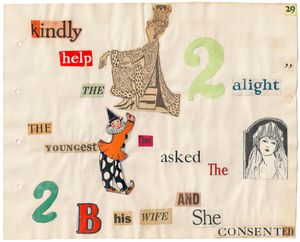
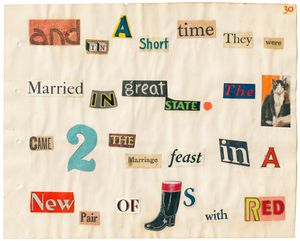
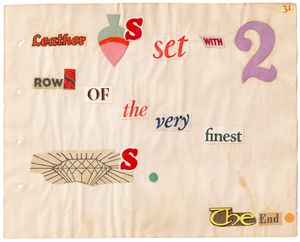
This scrapbook retelling of the “Puss in Boots” story was found in an old steamer trunk at the time my father was moving from his home of nearly 60 years, the home I grew up in. There was so much to sort through in the house, so many memories and little treasures, that I did not think to ask him about this little handmade book at the time. Now that he and my mother are both gone so too is any memory or information they may have had about it. My recollection is that the scrapbook (dated 1925) was given to my mother by her older cousin, Edith Greenburg. Edith grew up in Dallas where the scrapbook’s maker, Helen L. Ardrey, also lived, though other than that I know nothing about their connection. Perhaps they were childhood friends? In any event, the scrapbook tells the story in the delightful picture-and-text “rebus” style which was often found in popular culture from the 16th century well into the time of my childhood in the mid-20th century. I remember eagerly looking forward to each new year’s edition of the curiously retro Old Farmer’s Almanac which always included a clever tale told in the rebus-style. The “Puss in Boots” story has its historical antecedents as a children’s tale from the Renaissance. The first printed version (circa 1550), in Italian— Il gatto con gli stivali, is attributed to Giovanni Straparola, whose last name is an amusing pseudonym, a nickname which translates as “babbler.” An instant success, Puss in Boots has been retold often in many variations and languages since its original publication. The story’s popularity is considerable even though, as a fable, its moral dimension is of somewhat dubious value and has been critiqued widely. That said, it endures as an empowering tale for small children who continue to derive great pleasure from the magical cat and his master, the youngest son. -LK, 2014 ----- Transcription. Half-title page: A fairy tale. 1925 Title page: Puss in Boots. Edition Deluxe. By Helen L. Ardrey. Page 1: A miller had three sons and on his death bed he left his mill to the oldest, his donkey to the next, Page 2: and his cat to the youngest. The youngest son was at first disappointed with his share of his father’s property, but the cat said to him, Page 3: “My dear master, buy me a pair of boots and a bag, and I will soon show that I am Page 4: more useful than a mill or a donkey.” So the youngest son spent all his money in buying Page 5: his cat a handsome pair of boots and a bag. The cat put on the boots Page 6: and then slung the bag on his shoulder and went to a forest. There he opened the Page 7: bag, put some bran in it and lay down as if he were dead. A rabbit smelled the bran and ran into Page 8: the bag. The cat at once caught the rabbit and killed it, and took it to the [king], and said: “Sire, the noble Page 9: Marquis of Carabas desires me to bring you this rabbit. Boiled with onions, you will find it makes an excellent dish.” “Cat!” said Page 10: the king, “how delightful! I love rabbit, but my cook can never catch any. Pray thank your noble master for me.” The next Page 11: morning, the cat caught two rabbits and brought them to the king as a present from the Page 12: Marquis of Carabas. The [king] was so pleased that he at once called for his royal coach to take him and his daughter, the princess, Page 13: on a visit to the neighbor who had sent him such fine gifts. The cat hastened back to the youngest son and said to him: “Come with Page 14: me at once and I will show you a place in the river where you can have a good bathe.” The cat took him to a spot where Page 15: the royal coach was about to pass and told him to undress and hide his clothes under the rocks and get into the river. Page 16: He had just entered the river when the king and the princess went by. “Help! Help!” shouted the cat. “What’s the matter?” said the Page 17: king. “Some thieves have stolen the clothes of the noble Marquis of Carabas,” said the cat. “My master is in Page 18: the river, and if he stays there much longer he will surely get the cramp.” The [king] ordered his servants to run Page 19: to the castle and bring the finest suit of clothes they could find. The cat ran on in front of the royal coach and Page 20: passed through a forest and came to a magnificent castle. In the castle Page 21: lived a witch, and the cat Page 22: at once called upon the witch and said to her “My dear witch, what wonderful tales Page 23: everyone tells about you! Is it true that you can change yourself into any shape you please?” “It is quite true,” said the Page 24: witch. And she at once changed herself into a lion. “That’s nothing,” said the cat. “Anyone can Page 25: puff himself up into something bigger than he really is. But its only the wise who can make themselves appear smaller than they indeed are. Can you turn yourself into a mouse Page 26: for instance?” “It’s just as easy,” said the witch. She then changed herself into a mouse and the cat pounced upon her and gobbled her up, and ran Page 27: down and opened the door just as the royal coach arrived. “Welcome, sire, to the castle of the Marquis of Carabas,” Page 28: said the cat. “Dear me!” said the king to the youngest son. “What a fine castle you have! Page 29: Kindly help the princess to alight.” The youngest son then asked the princess to be his wife and she consented Page 30: and in a short time they were married in great state. The cat came to the marriage feast in a pair of new boots with red Page 31: leather tops set with two rows of the very finest jewels. The End.
No categories selected
Photos (71)