Drag/Strip, The Diptychs
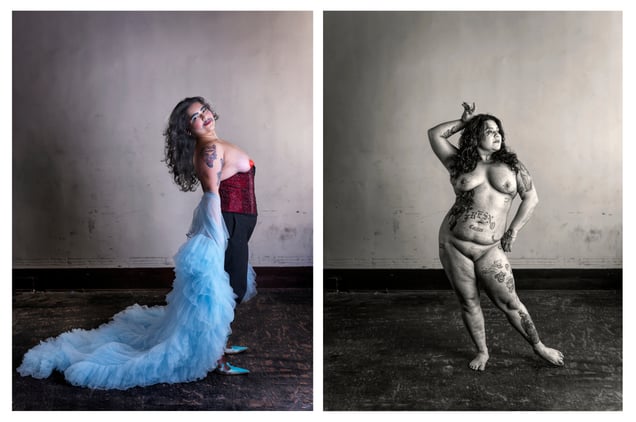
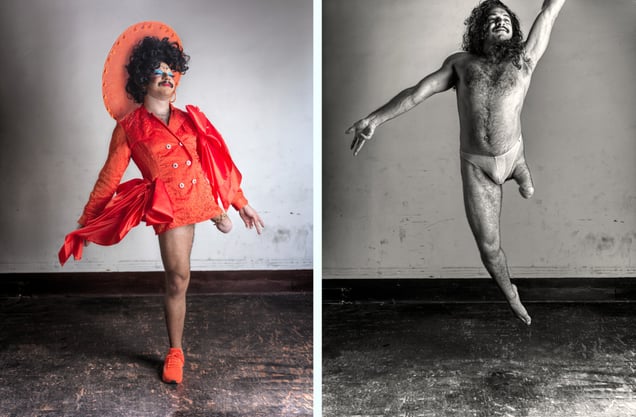
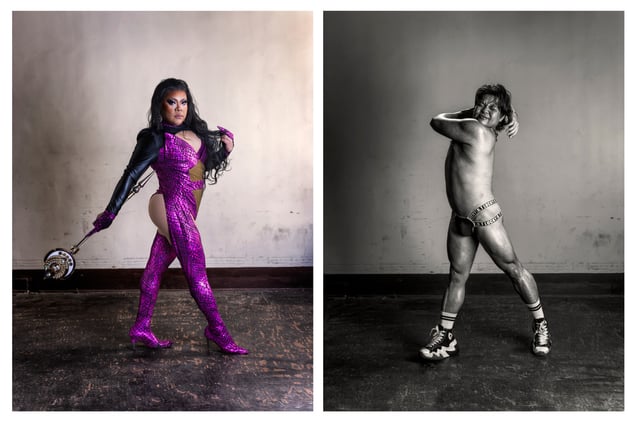
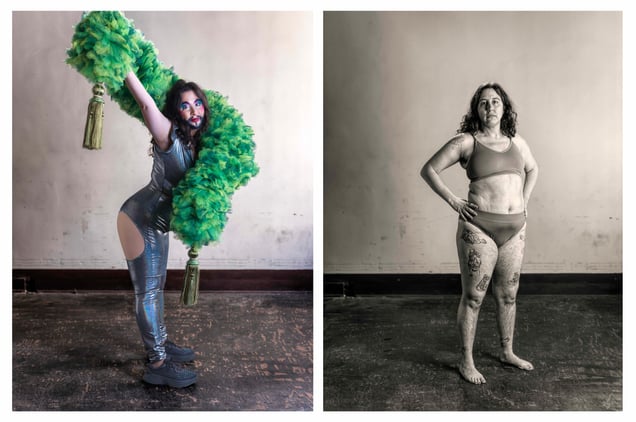
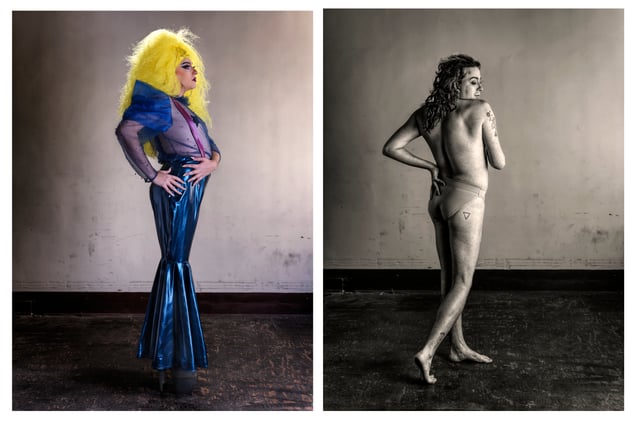
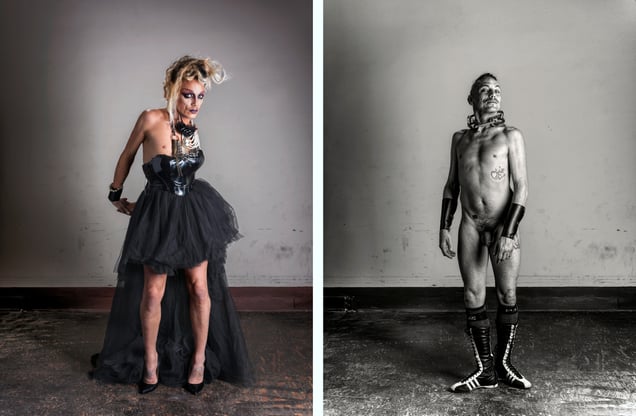
Drag is international kabuki—both are performance-art forms that feature spectacular costuming, storytelling, and gender illusion. This portrait series recognizes the San Francisco Bay Area’s foremost drag exponents, presenting them with diptychs that juxtapose caricature and character. Drag’s history spans centuries and cultures. In ancient Greek and Roman theater, men played female roles with masks and costumes. Japan’s Kabuki (1600s–present) saw the rise of onnagata—male actors specializing in women’s roles—after female performers were banned. Elizabethan theater followed suit, likely coining “drag” from the long, trailing garments worn on stage. By the 18th century, England’s Molly Houses provided underground spaces for cross-dressing queer men. British pantomime and American vaudeville later popularized “dame” characters—men in exaggerated femininity for comedic effect. The Harlem Renaissance (1920s–30s) birthed drag balls, particularly in Black and Latino queer communities, laying the foundation for modern ballroom culture. Despite drag’s rich history, photography often flattens it into stereotype—high-key lighting, busy backgrounds, exaggerated poses. While these images rightly serve entertainment and promotion, they miss the artistry’s depth. This project takes a different approach, capturing drag’s exponents as they truly are—fiercely independent icons revealing themselves beyond performance. Drag is more than entertainment; it’s activism, challenging gender inequity and promoting LGBTQ+ visibility. The diptychs compare each performer’s exaggerated persona side by side with a black-and-white portrait stripped of makeup and costume, exposing the vulnerability that lies underneath. From the Stonewall Riots (1969) to RuPaul’s Drag Race on TV, drag has evolved alongside political and cultural shifts. Once clandestine, now global, it remains both dazzling spectacle and sharp social commentary. As cultural ambassadors, drag queens continue to push boundaries and advocate for inclusivity. Drag/Strip, when complete, will include biographies and statements from each performer, ensuring their voices are heard alongside their images. The series will also present drag culture in other regions, worldwide.
No categories selected
Photos (40)