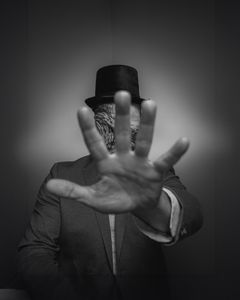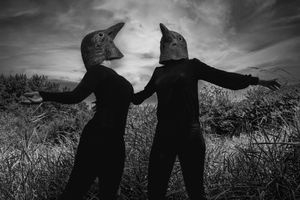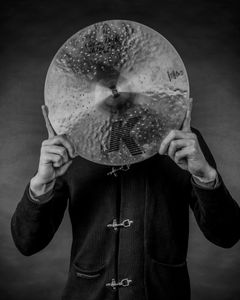

Hommage à Magritte
The Covid-19 pandemic has reshaped our daily lives in numerous ways, one of which is our enhanced ability to recognize masked people with only the upper half of their faces visible. Over time, we have become more adept at identifying friends, family, and colleagues through subtle cues such as the shape of one’s eyes, eyebrows and forehead. This phenomenon interestingly parallels the artistic themes explored by the surrealist painter René Magritte (1898-1967), known for his recurring motif of partially or totally obscured faces. Magritte’s works, such as “The Lovers” and “The Son of Man,” challenge viewers to look beyond the obvious and seek deeper meaning, mirroring our challenge of recognizing masked individuals. The masks in Magritte’s art symbolize the hidden aspects of identity and perception, much like how we manage to identify masked individuals with fewer data points. Thus, the pandemic has inadvertently trained us in a form of visual perception that resonates with Magritte’s exploration of concealment and identity, underscoring the complex interplay between visibility and recognition in both art and everyday life.
No categories selected
Photos (5)