Return to exposure.
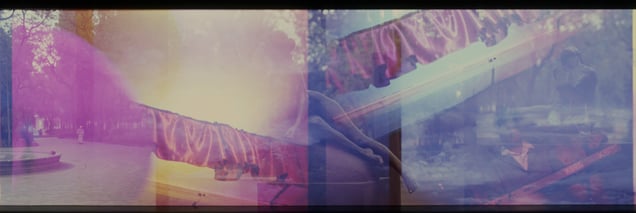
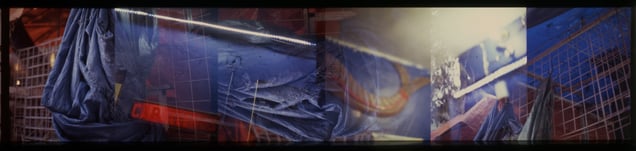
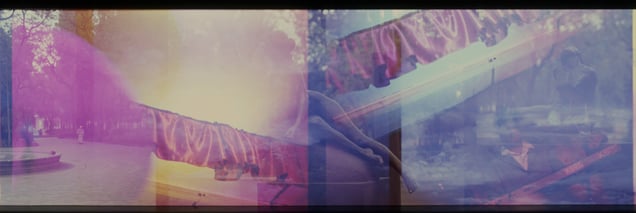
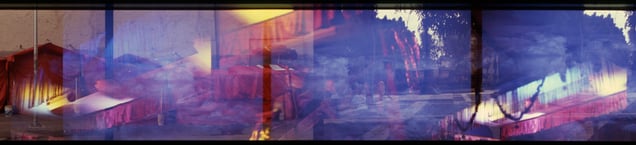
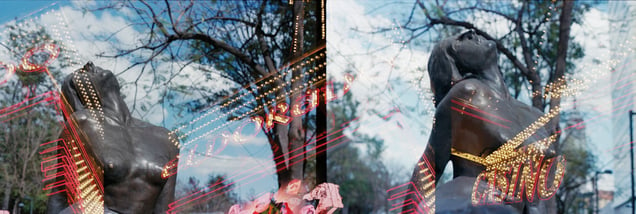
The Mexicanas is a game of double series and double exposures; a game whose board reminds one of an old variegated slideshow. The first of these series, from the beginning of 2015 consists of images that seem to come out of the drawer of a forgotten photo collector:lost scenes from travel journals that would have passed through too many hands and too many removals; over-exposed, accumulated, disassociated from a specific time or space. Images of Mexico City, so charming in its surface effects - veiled, dyed, perforations, overlaps - as seemingly unintentional. Thus, more than show, these images are first and foremost small exercises in obstruction of the gaze: fabrics, velvet folds, raffia curtains and unfolded canvases that interpose one sieve after another;branches and trees that are rather looms or laces; veils that are also crystals, reflections and textures. After this gauze parade, stereotypical images appear and disappear in front of the eyes to the rhythm of the turn of a postcard cart in a chacharitas market: gringo cars in apparent disuse, hotel facades, street cake stands, billboards with charro figures, deco illustrations of elegant women, from miniature cheap plastic dancers, embodied in a v-neck pachuco shirt, Chinese lamps, double-brimmed straw hats, the long feather of a pheasant, images that do not arrive on time: closed gates, raw canvas awnings secured by ropes that seem to compose a urban camp, or a police unit crossed, in the first place, by a figure on horseback to point of disappearance. But also, and finally - as an intruder in this series that seems to announce the following - we see the headless body of a woman; the hands at the height of her hips and the fold of her skirt yellowed by celluloid chemicals. As if this other world, between stereotype and opacity, was not hers at all.
Wraith
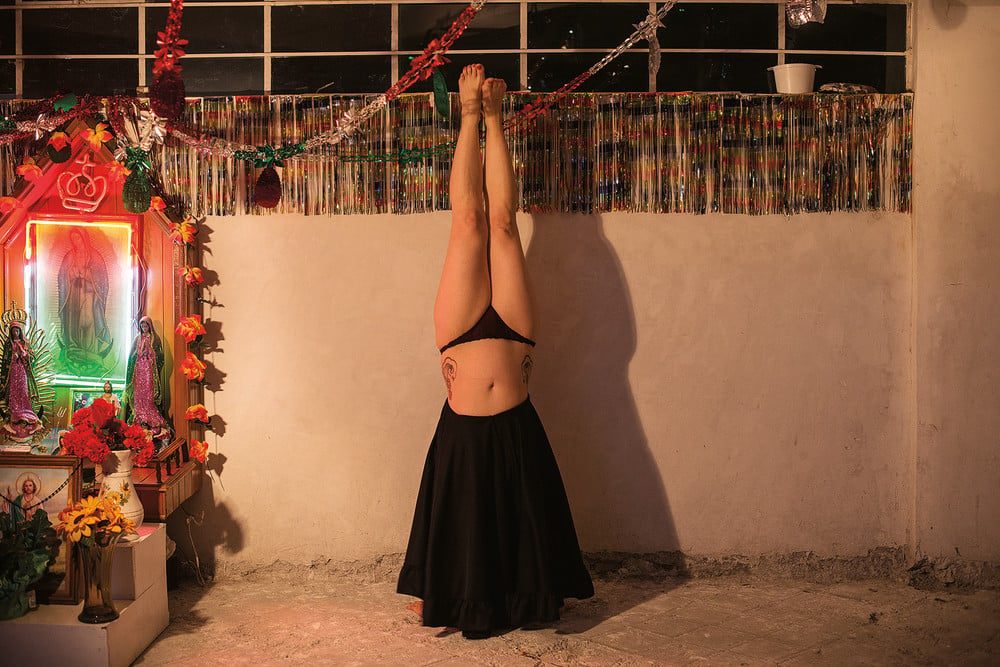
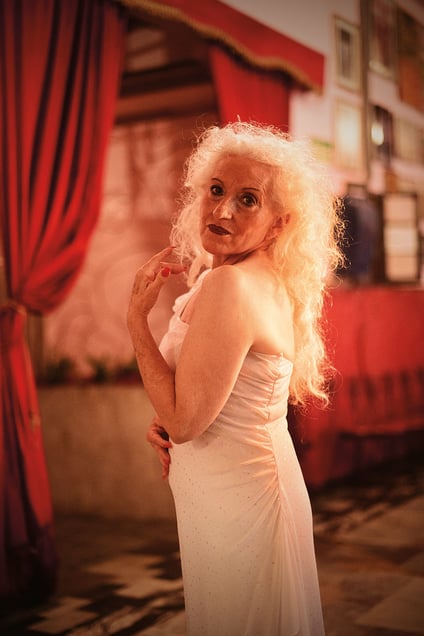
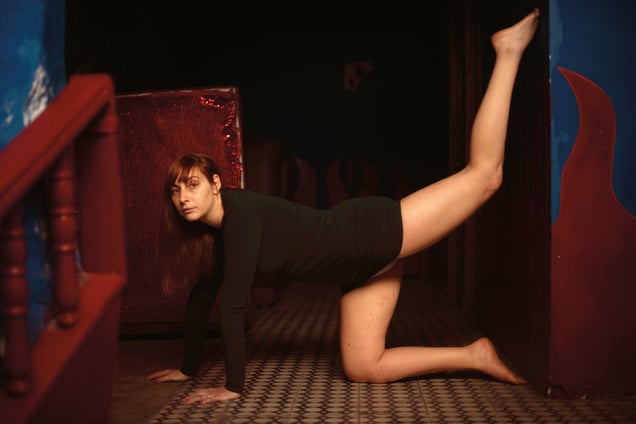
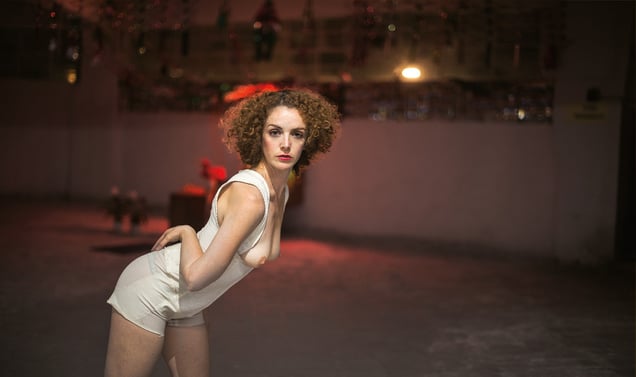
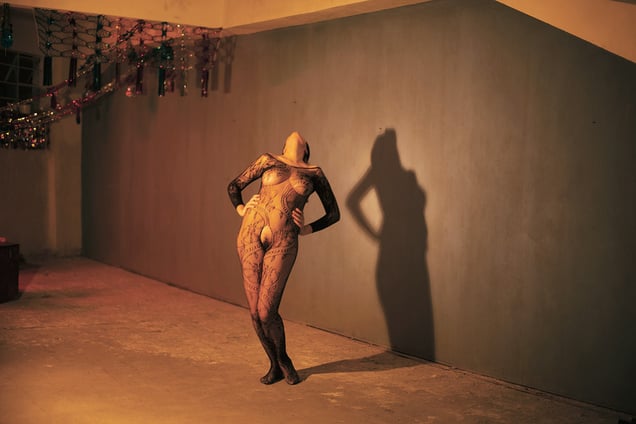
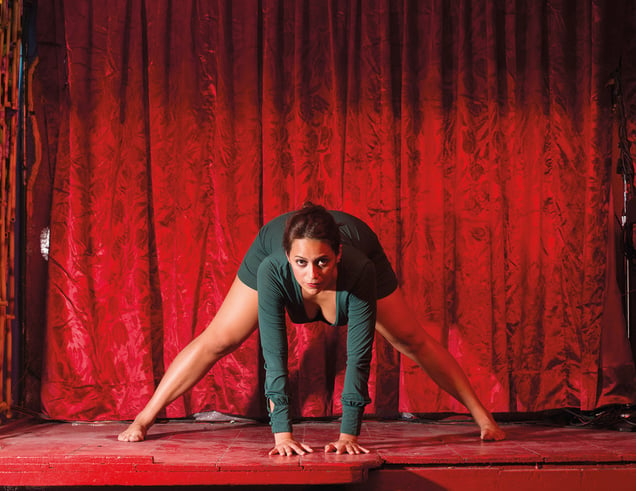
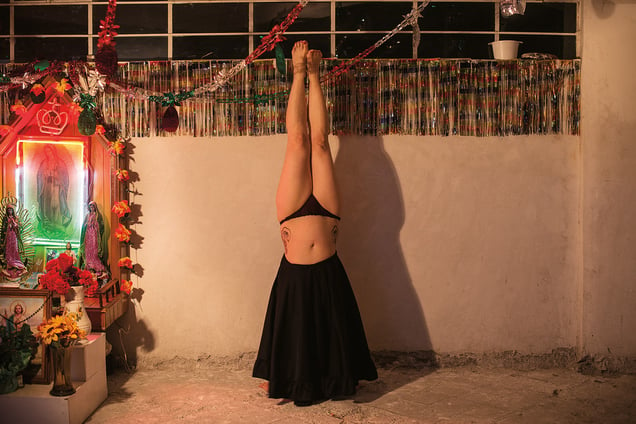
An enchanted world, no doubt. But what kind of enchantment is this? Who lurks, and who is haunted by the ghosts that roam it? The spectral and overexposed city in these photographs is nothing but the materialization of a background noise over which other images -The Mexicans- strive to appear. Mexican, but also Spanish, Brazilian, Colombian... the images of these women, overexposed and interspersed in that carousel of worn-out stereotypes, make up a second series and obey another working procedure. They are portraits of women who, in the interior halls of the Barba Azul cabaret in Mexico City where they work as singers, have lent their image to make a gesture appear that is no longer their own: neither the spectacular gesture that stigmatizes them inside the ballroom, nor the documentary gesture that naturalizes them in the closed circuit of their intimate spaces. On the contrary, the poses try to pull out a figure that is rehearsed in the encounter with the camera, and thus embody a joint effort to give themselves an image. Against the spectral quality that exposes them to disappear, the effort to appear and invent a common gesture.