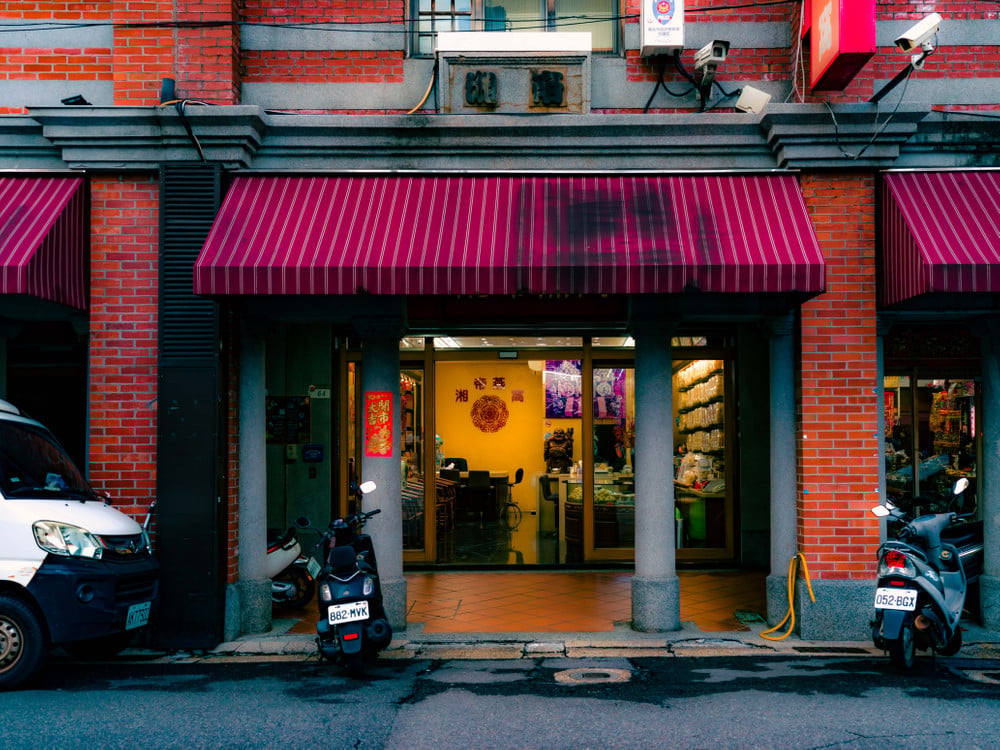
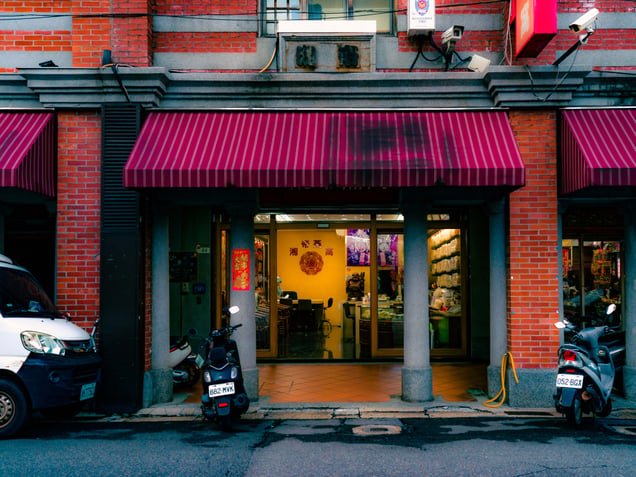
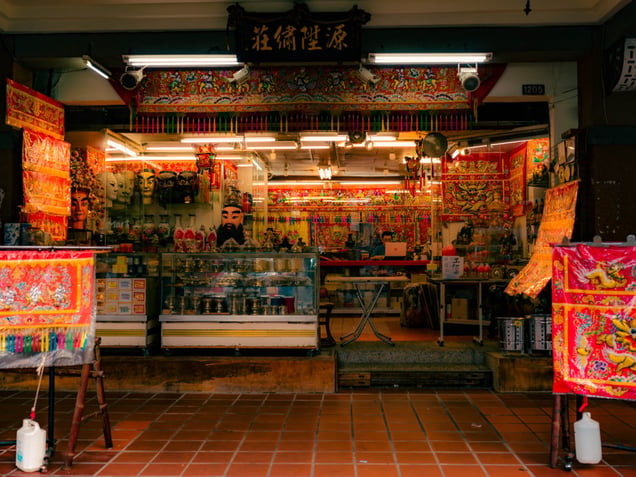
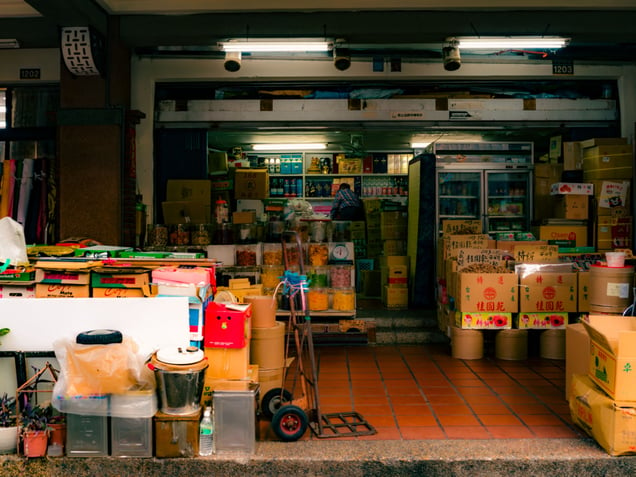
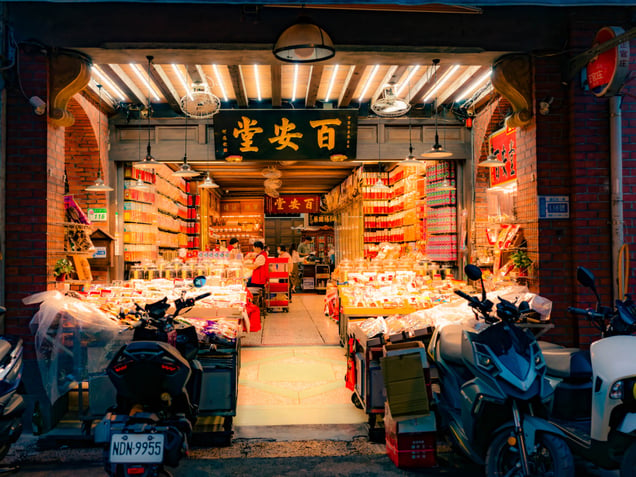
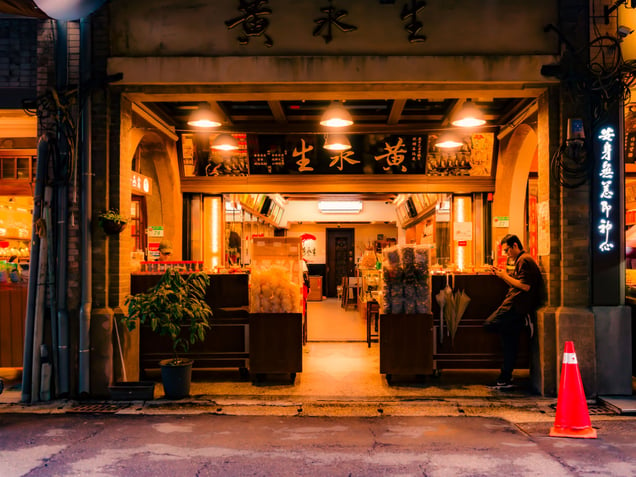
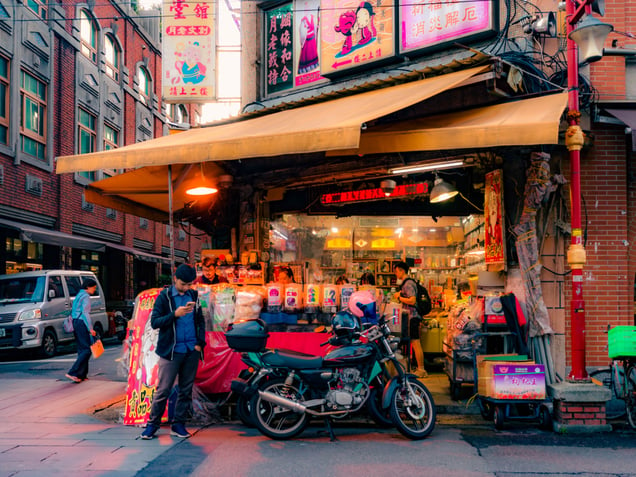
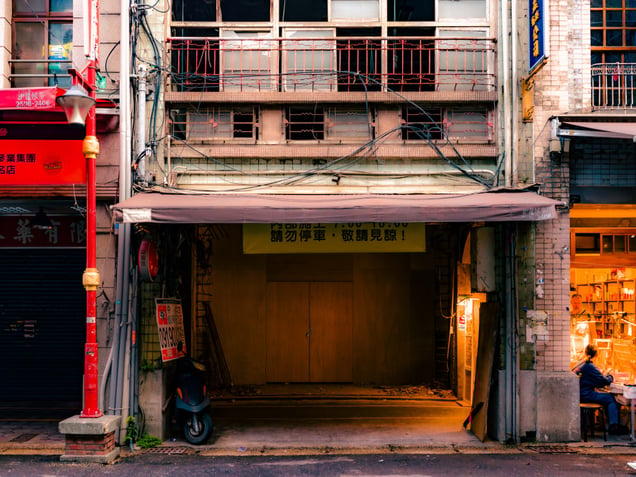
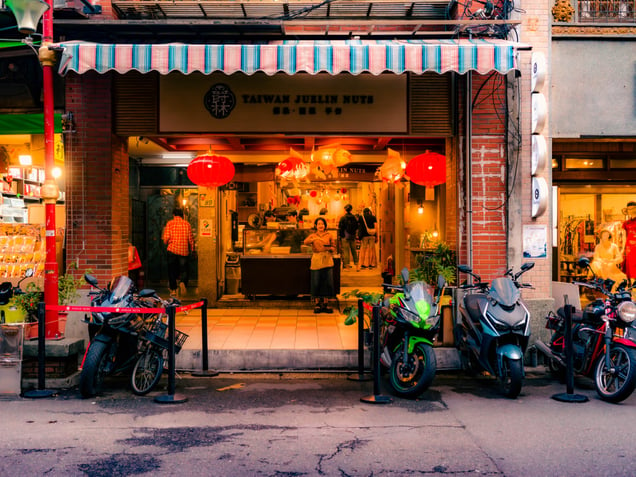
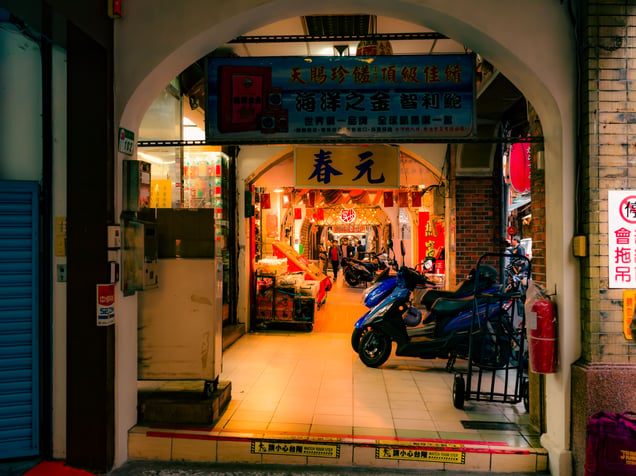
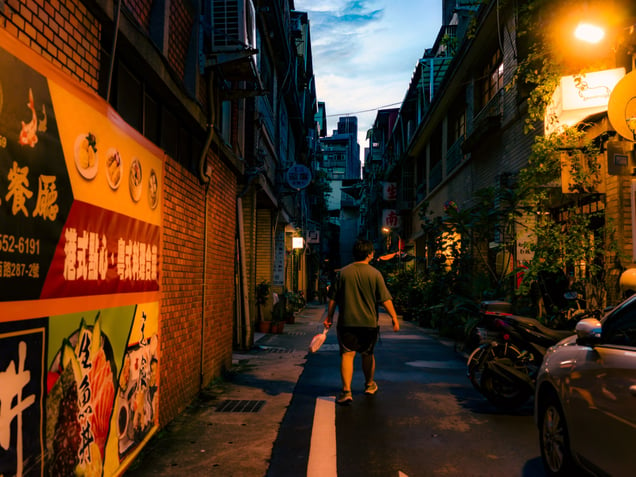
As I wandered down a shopping street in Taipei, the city unfolded before me like a series of perfectly framed stage sets. Each shop front felt like a miniature theatre—its lighting, props, and architecture forming a self-contained world. Though they shared a structural rhythm, every space told its own story, like distinct acts in a larger play. And within them, the cast of characters shifted constantly: the focused businessman hunched over his laptop, the hopeful lover pausing to read a message, the bored waiter standing watch over an empty restaurant, the dream-filled teenager on his way home. Archetypes, yes—but also stories I projected onto them, small fictions created by my own need to interpret, to understand, to connect.
As I stood there, camera in hand, I wasn’t just witnessing these street scenes—I was reflecting on the universal theatre of urban life. I thought about the invisible threads that bind people in cities all over the world: our longing for connection, our need for safety, our hunger for meaning. How much of our freedom are we willing to trade for a sense of security? And once we have it, are we any closer to happiness?
Taipei, like every city, hums with contradictions. You can learn so much by watching how people navigate their surroundings—how they walk, work, wait, communicate, buy, and resist buying. These small behaviours are the vocabulary of urban life, quietly revealing our fears, desires, and dreams. Yet, within the chorus of the city, individual voices often get lost—reduced to background noise in the collective buzz of survival.
And still, we persist. As Symmachus once wrote, “We see the same stars, the sky is shared by all, the same world surrounds us. What does it matter what wisdom a person uses to seek for the truth?” In these fleeting, ordinary moments, there is something shared—something quietly profound in the ways we live beside one another, whether we speak or not.