

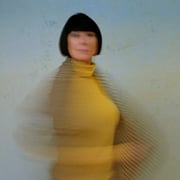
Insomnia
As all photographs are fragments of a larger reality, so are these images by Lucy Besson (1959, Russia). Together, however, with time itself no longer measured, they also elucidate the cause of their creation. They are mythical in the sense that they ignite a state in which we can revive the stories that do not need retelling but that are merely experienced as a faint illumination of our waking lives. According to the famous anthropologist Claude Lévi-Strauss, the most powerful and significant myths provide an imaginative way of living with them, and coping with them so that they do not become too disruptive and do not produce too much (cultural) anxiety. From Freud he developed the idea that the analysis of myth is the cultural equivalent of the analysis of the dreams of an individual. A dreamer will know that he or she is dreaming, but will know only the dream’s (often absurd) surface meaning: its deeper, ‘real’ meaning is available only to the analyst. As dreams arise from anxieties and unresolved traumas that have been repressed in the subconscious of the individual, so do myths arise from the repressed anxieties and unresolved contradictions hidden in the social or cultural controlled experience. Not unlike children, we believe them because we need what we are in them. This is the highest degree of illusion, in the sense that we actively underestimate the extent to which images have actually supplanted reality for us. It is in images like those presented by Lucy Besson that we are reminded of our lucid dreaming. We should not underestimate the importance of sleep, of course. But we just don’t have enough time to get everything done in our waking hours and so we - sufferers of insomnia – simply need this other reality to safe ourselves from insanity. - by Erik Vroons (GUP Magazine, Amsterdam)
No categories selected
Photos (24)


