
The Slaughterhouse and War: Between Necessity and Justification
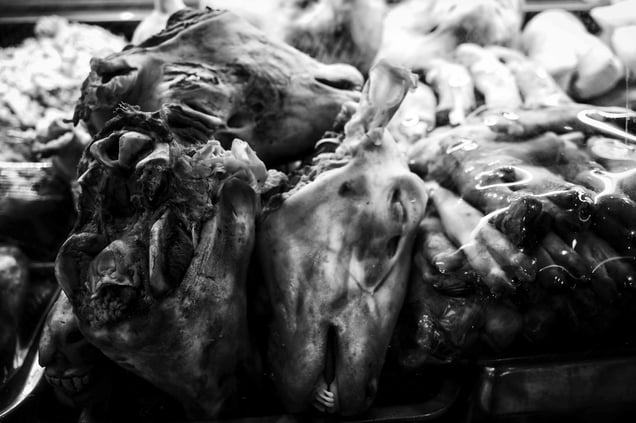
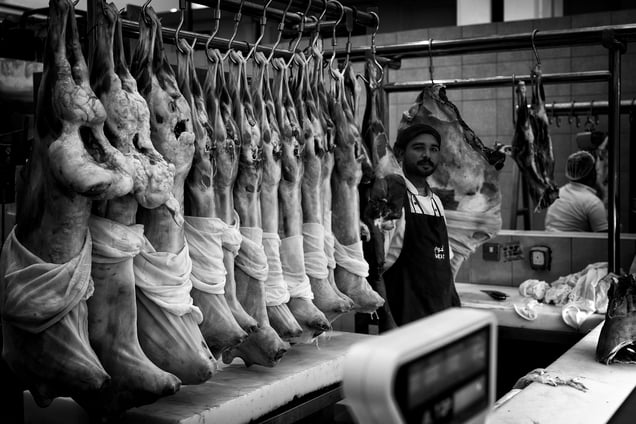
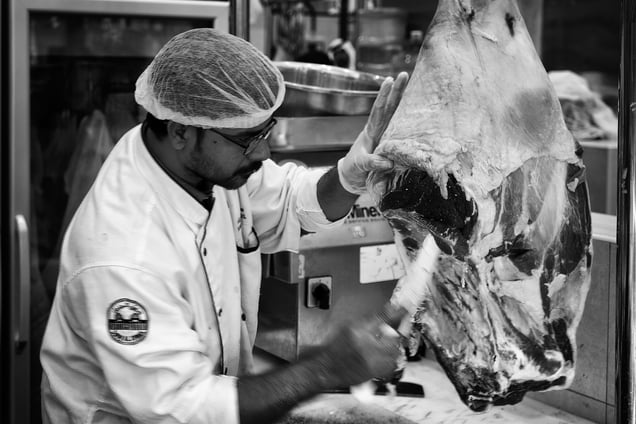
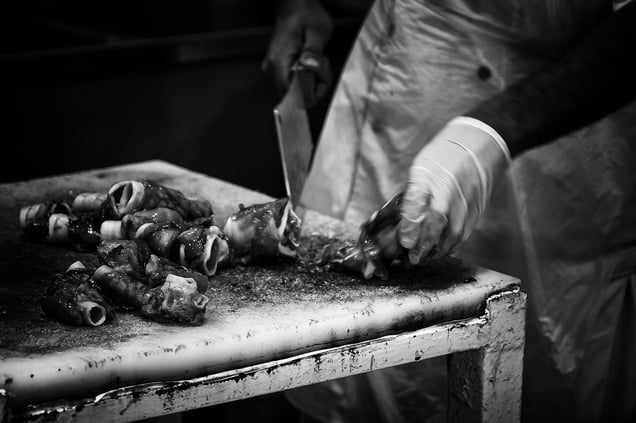
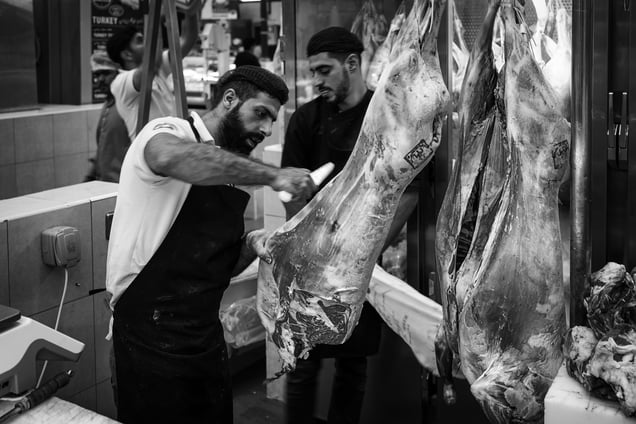
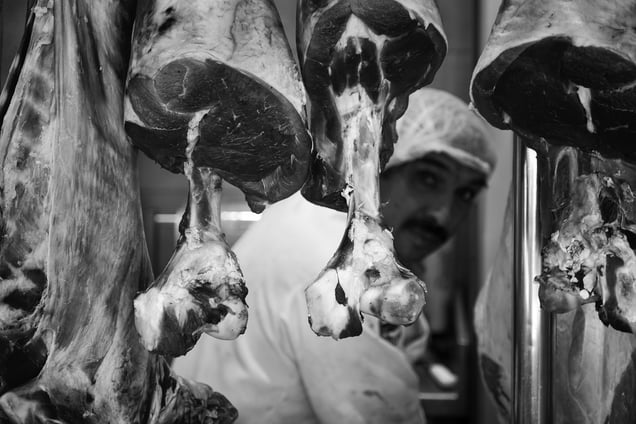
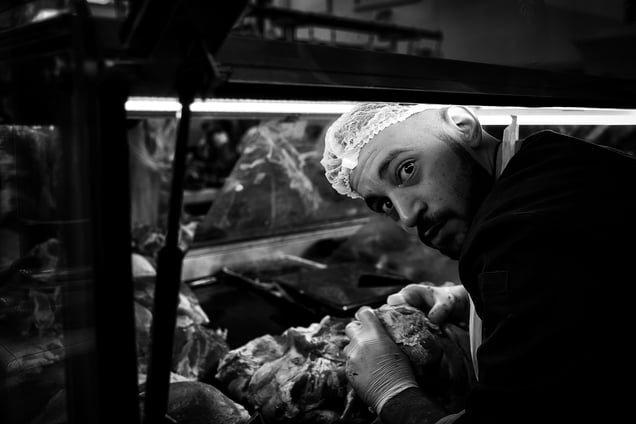
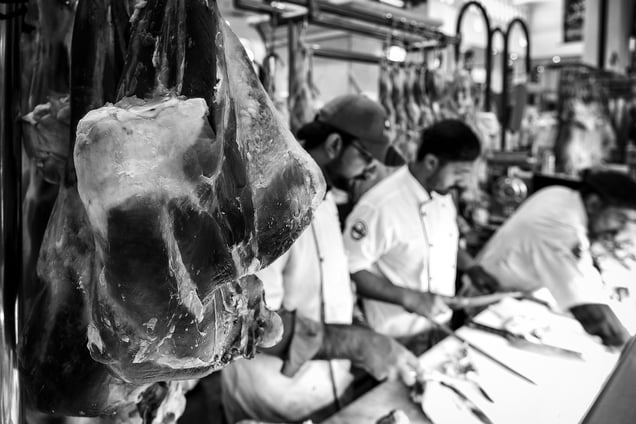
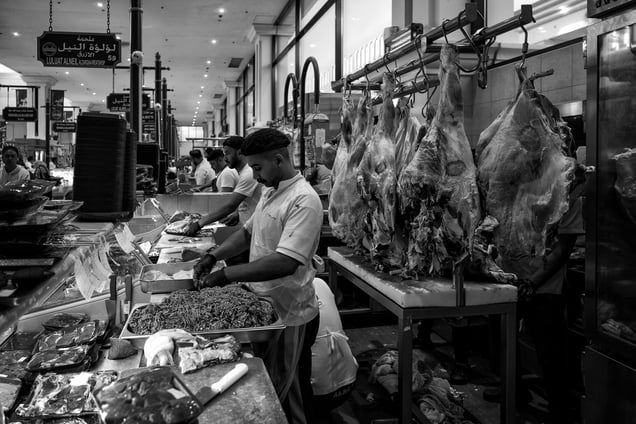
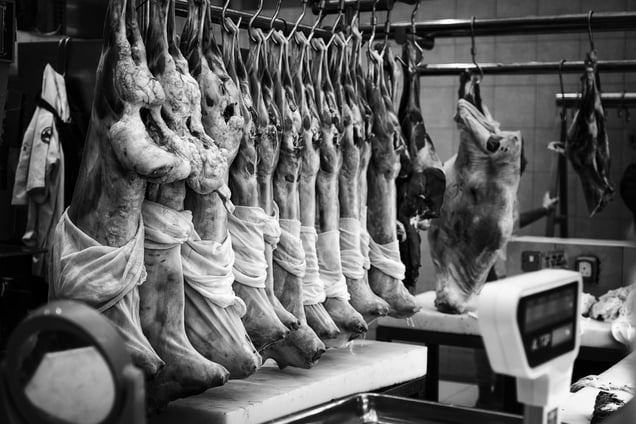
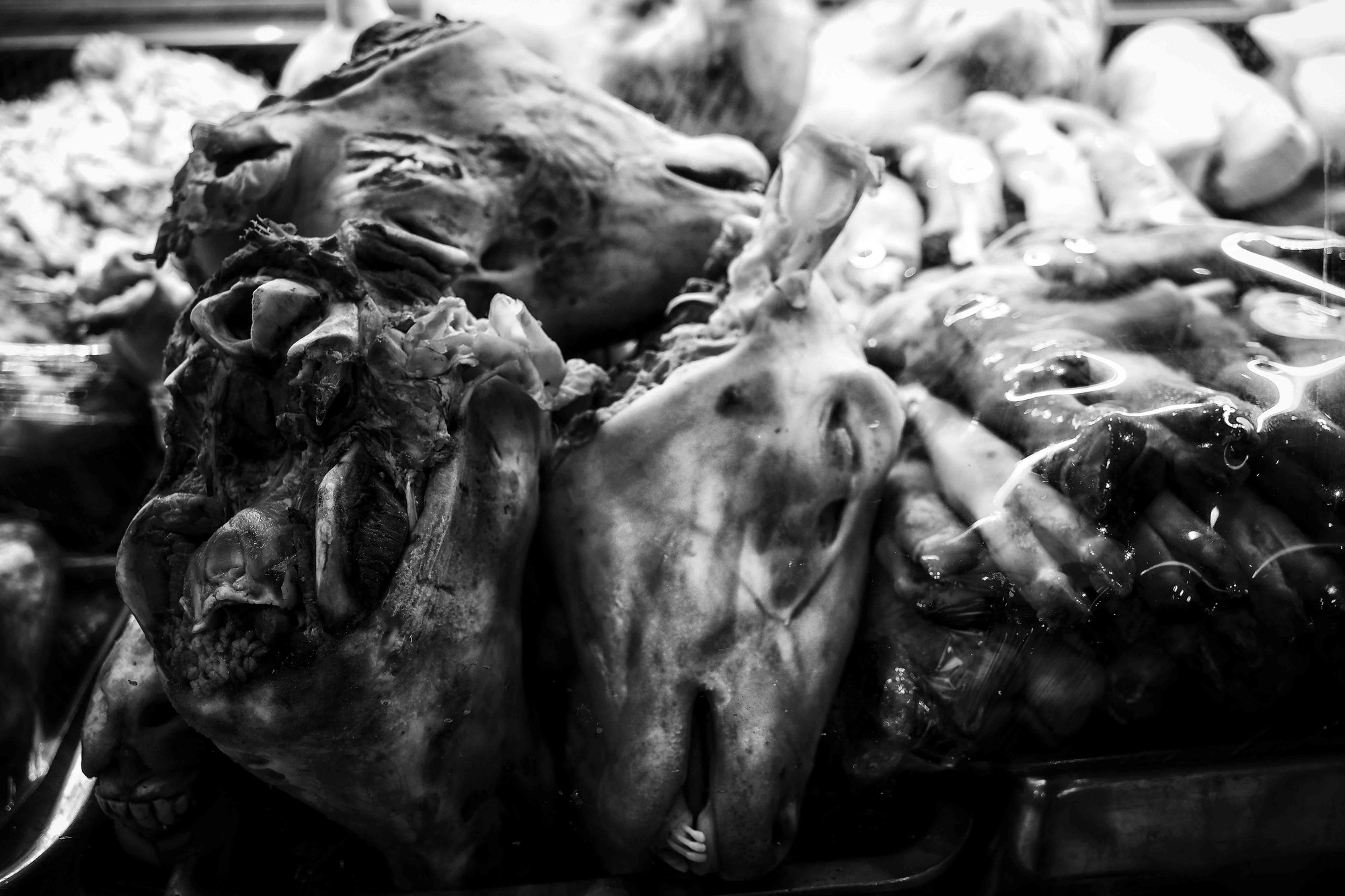
The Slaughterhouse and War: Between Necessity and Justification This project documents the complex relationship between humans and living beings within the space of the slaughterhouse, where violence shifts from an exceptional act into a normalized daily practice. Through black-and-white imagery and visual repetition, the photographs reveal a form of “organized savagery” practiced not as deviation, but as a structural component of a productive system that continuously redefines violence and grants it legitimacy. In this context, the slaughterhouse is not presented merely as a functional site of food production, but is reimagined as a conceptual space where power intersects with the body, habit with violence, and the human with the post-human. Implicitly, the images evoke Michel Foucault’s notion of biopolitics, in which life itself becomes an object of regulation and administration. Here, the living body is not simply governed; it is redefined and transformed into material within a precise productive system, where beings are reduced to divisible, suspended, and commodified units. Simultaneously, the project may also be read through Giorgio Agamben’s concept of “bare life,” wherein the living being is stripped of its value as life and reduced to a removable biological existence devoid of genuine ethical accountability. The suspended bodies within the images do not merely signify the end of life; they embody an unresolved condition between being and objecthood, between life as value and life as material. Yet the project does not merely deconstruct this institutionalized violence; it exposes a more complex paradox: violence here is not enacted as visible evil, but as necessity. Killing, in this framework, is not ethically erased, but continually justified through a pragmatic logic that frames it as a condition for producing good—food, continuity, and survival. Consequently, good no longer stands in opposition to evil, but emerges as one of its outcomes within a system that continually redraws the boundaries between them. This transformation raises a fundamental question regarding the authority that possesses the right to define evil and determine its necessity: Is it the system? Necessity itself? Or the human being when granting themselves the legitimacy of domination and control? Within this framework, the human figure in the photographs appears less as an inherently violent actor and more as part of a system that normalizes violence and reproduces it as an ordinary practice emptied of ethical tension. Indirectly, this logic intersects with the structure of war as the most extreme form of organizing and legitimizing violence. If the daily massacres within the slaughterhouse are practiced as productive necessity, wars are often framed as political or historical necessity, despite both sharing the same underlying structure: transforming killing into an organized, repeatable act stripped of its ethical weight. In both contexts, violence is reproduced within justificatory discursive systems that conceal it behind concepts such as “security,” “sovereignty,” or “survival.” Visually, the project relies on repetition as a discursive strategy, whereby the suspended bodies become a visual pattern resembling industrial production lines. This repetition does not empty meaning, but intensifies it, shifting the scene from an isolated event into a systemic structure. The use of black and white further removes the sensory seduction associated with color, directing the viewer toward a structural and contemplative reading in which textures, shadows, and lines become the primary language. Ultimately, the project does not offer a direct condemnation, but instead opens a contemplative space around a profound fracture within contemporary systems of value—where evil is redefined as necessity, and violence is reproduced as system. Leaving the viewer before an unresolved ethical question: Does savagery reside in the act itself, or in our ability to justify it and coexist with it without feeling its moral weight?
Photos (10)