Drug trafficking in Guinea-Bissau

Photos (15)

Cover
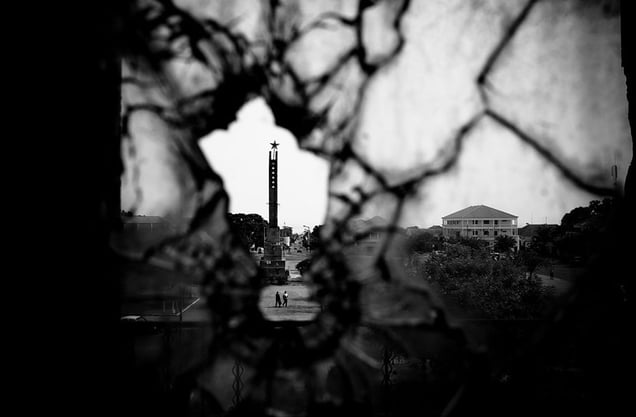
Since 2007, Guinea-Bissau, a former Portuguese colony and one of the poorest nations in the world, has become the new hub for cocaine trafficking in Africa. Drug cartels from South America and the voracious appetite for cocaine in Europe has transformed this tiny country into a living hell. 
© Marco Vernaschi, 2009
File: vernaschi-01.jpg
On March 2nd at 5:00 am, President Joao Bernardo Vieira was killed by order of a few generals trying to make new alliances with drug cartels. According to Interpol, Vieira was personally involved in drug trafficking and was trying to keep his generals at the edge of his business dealings. When they became too eager for power, he started to eliminate them. 
© Marco Vernaschi, 2009
File: vernaschi-02.jpg
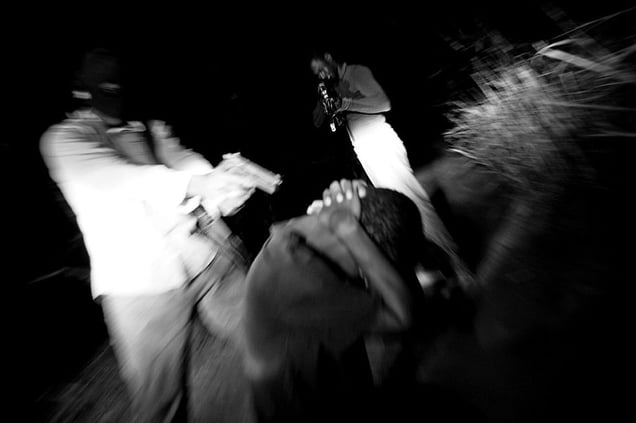
Local drug traffickers have successfully organized a strong criminal network in Bissau. Over the last two years, abductions, murders and threats have gradually became normal practice. In this picture, an account is settled between drug dealers.
© Marco Vernaschi, 2009
File: vernaschi-03.jpg
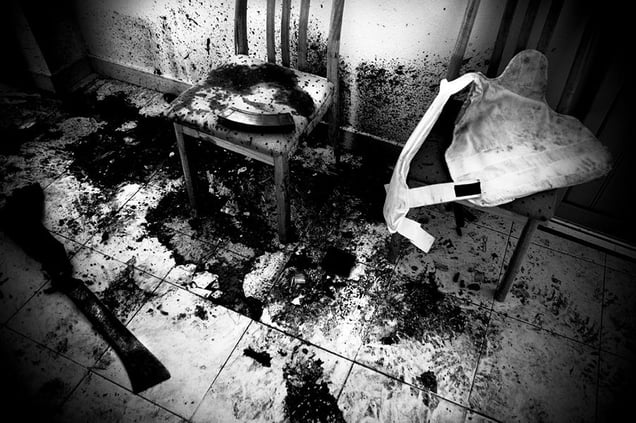
The President was shot to death and slaughtered with a machete in his kitchen. This picture depicts the place where he was killed. Vieira, who ruled this small African nation for nearly a quarter century, was killed upon order of a few generals who are trying to make new alliances with drug cartels in order to transform the country into a military controlled point of shipment, where no force would be allowed to interfere. 
© Marco Vernaschi, 2009
File: vernaschi-04.jpg
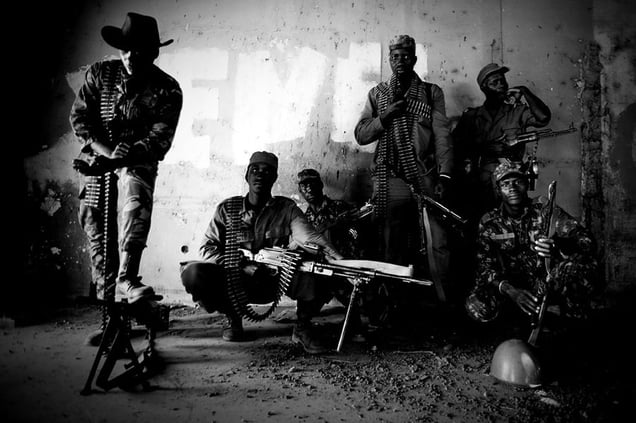
The team of soldiers who executed the President, photographed seven hours after they accomplished their task, in the Military Headquarters in Bissau. 
© Marco Vernaschi, 2009
File: vernaschi-05.jpg
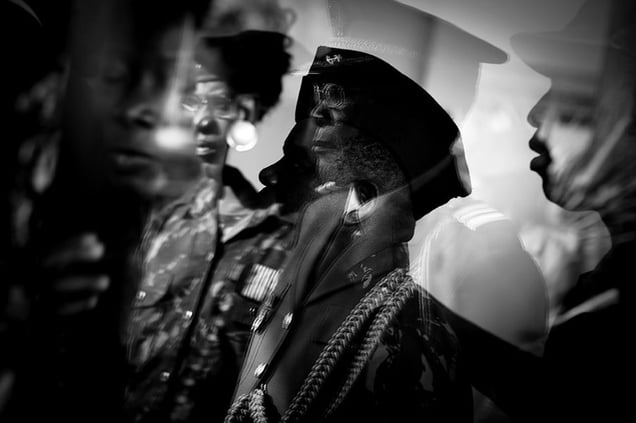
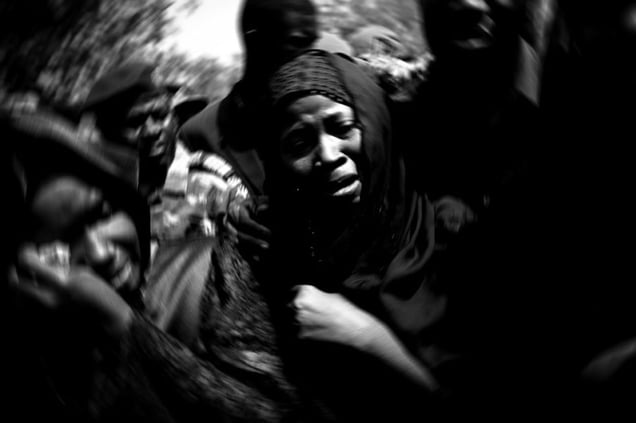
During the President's funeral, Guineans gathered by the graveyard, though only a few were crying for the loss. Most were more concerned about the possibility of another civil war. In this picture, a family member of the President mourns. 
© Marco Vernaschi, 2009
File: vernaschi-06.jpg
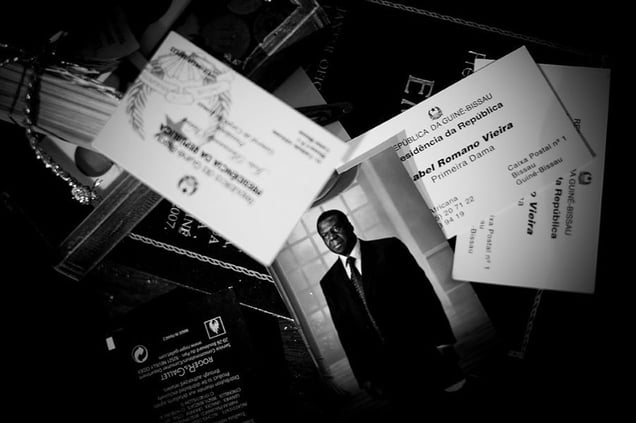
Minutes after the assassination of President Vieira, the soldiers looted his home. They stole everything they could: his satellite phone, video sets, clothes and even food. The commandos rummaged through all of the drawers in his bedroom to steal personal documents and family pictures, and ended by destroying the house with machine gun shots. 
© Marco Vernaschi, 2009
File: vernaschi-07.jpg
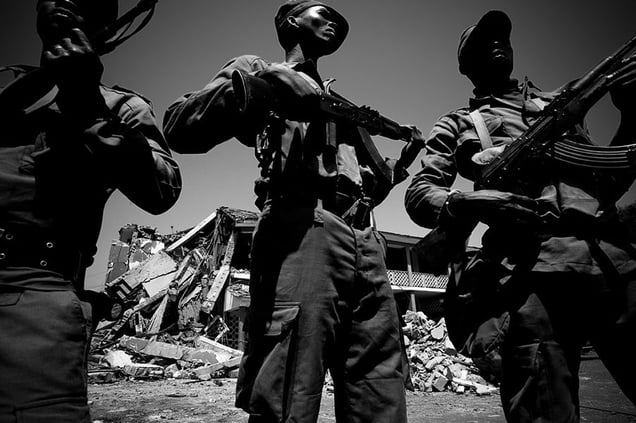
Soldiers standing in front of the military headquarters that was blown up by a remote controlled bomb that killed General Tagme Na Wai, Chief of the Army. 
© Marco Vernaschi, 2009
File: vernaschi-08.jpg
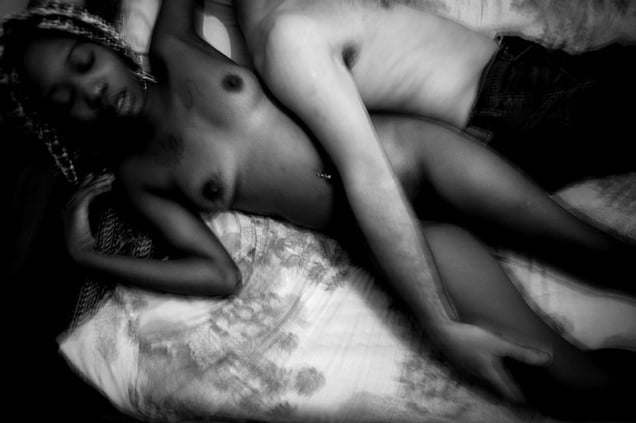
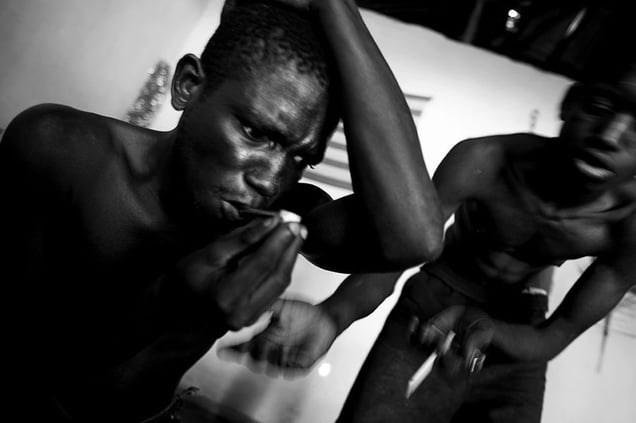
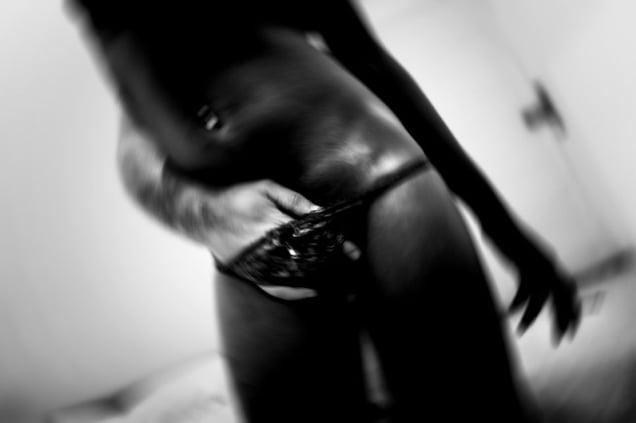
Beside the violence and corruption, drug trafficking also brought marginalization among locals. Crack addiction, a consequence of the drug trade, increased prostitution and caused an unseen wave of HIV and AIDS in the capital, Bissau. 
© Marco Vernaschi, 2009
File: vernaschi-09.jpg
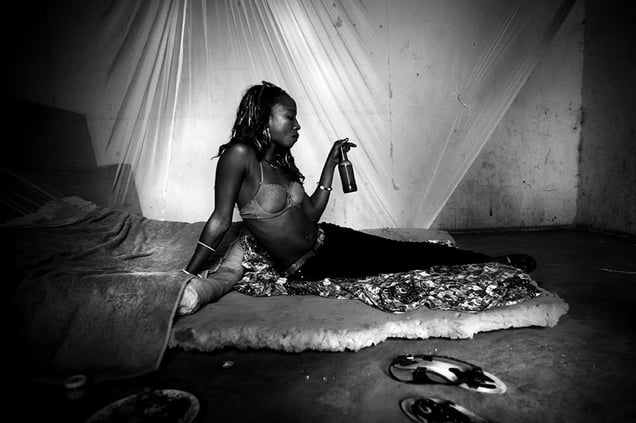
Crack-fed prostitution is just one of the consequence of drug trafficking in Bissau, and it's not for locals, who can't afford to pay a prostitute. For the most part, sex among the local community isn't something you need to buy since, for cultural reasons, women cannot refuse a man. All the prostitute's clients are foreigners. Sometimes sailors, but mostly people who work for NGOs, the UN or Embassy employees. None of the prostitutes that I met use condoms. 
© Marco Vernaschi, 2009
File: vernaschi-10.jpg
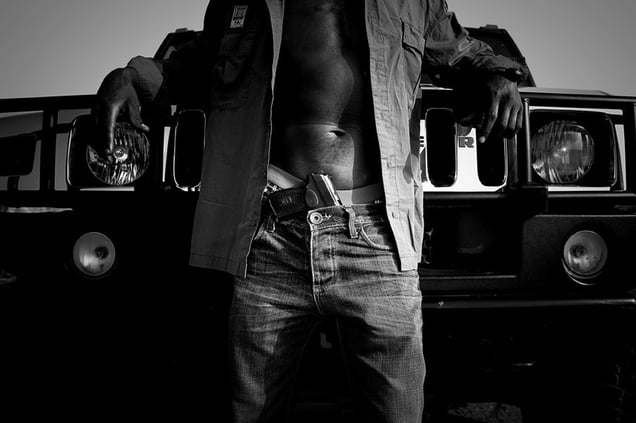
Guinean drug traffickers try to emulate U.S. gangsters' lifestyles. Gold chains, Hummers and expensive villas are a must for drug dealers in the fifth poorest country of the world. The gangster lifestyle and consequent ostentation is a curious contrast in a country that doesn't even have electricity. 
© Marco Vernaschi, 2009
File: vernaschi-11.jpg
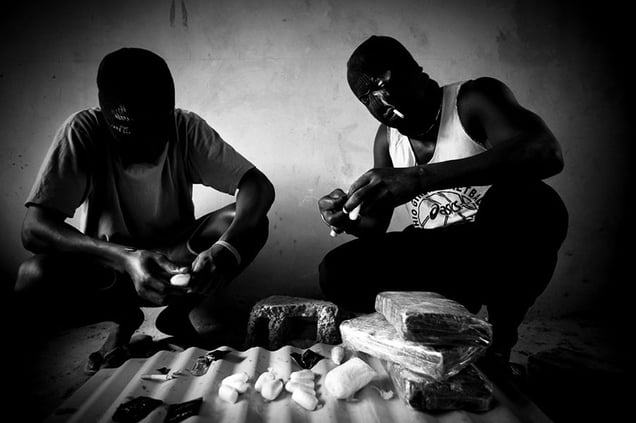
Two Nigerians affiliated with a Guinean drug trafficking ring prepare capsules containing cocaine that will be swallowed and then smuggled into Europe. 
© Marco Vernaschi, 2009
File: vernaschi-12.jpg
Crack was an unknown drug in Bissau until 2007, when drug traffickers started their business in Guinea-Bissau. The drug issue is so new that there is no data available, making it impossible to say how many people are lost in crack addiction. Worse, there is no consciousness among the people about the long-term effects of this plague. The drug situation in Bissau is particularly sad. There is no prevention, no rehabilitation. 
© Marco Vernaschi, 2009
File: vernaschi-13.jpg
A crack addict prostitute, with a western client. 
© Marco Vernaschi, 2009
File: vernaschi-14.jpg
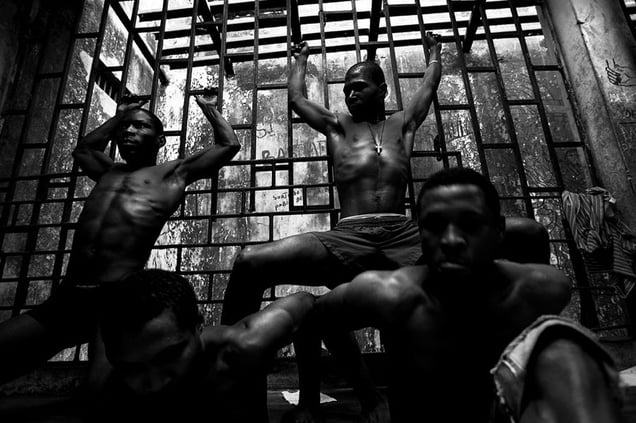
Guinea Bissau doesn't have a designated prison. One of the locations used to imprison criminals is an old colonial house. Prisoners are free to leave the prison from 2 to 6 pm, but they usually return since they have at least a free daily meal. During my visit, there were three prisoners charged with drug-related crimes, for smuggling capsules of cocaine. Two of them were from Liberia, and one from Ghana, and they were all freed. 
© Marco Vernaschi, 2009
File: vernaschi-15.jpg