Agriculture
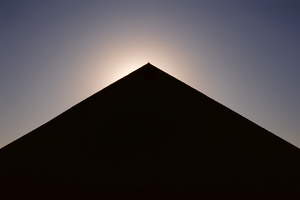
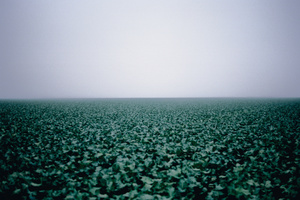
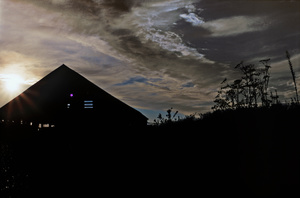
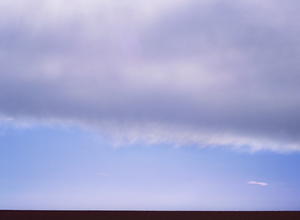
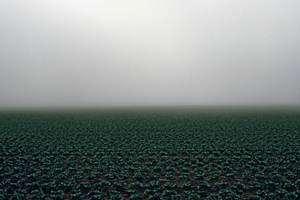
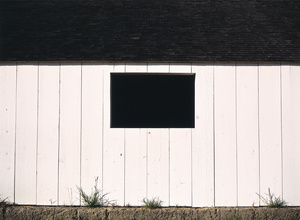
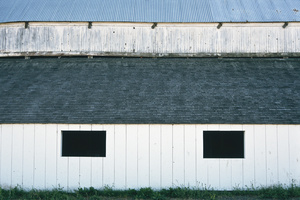
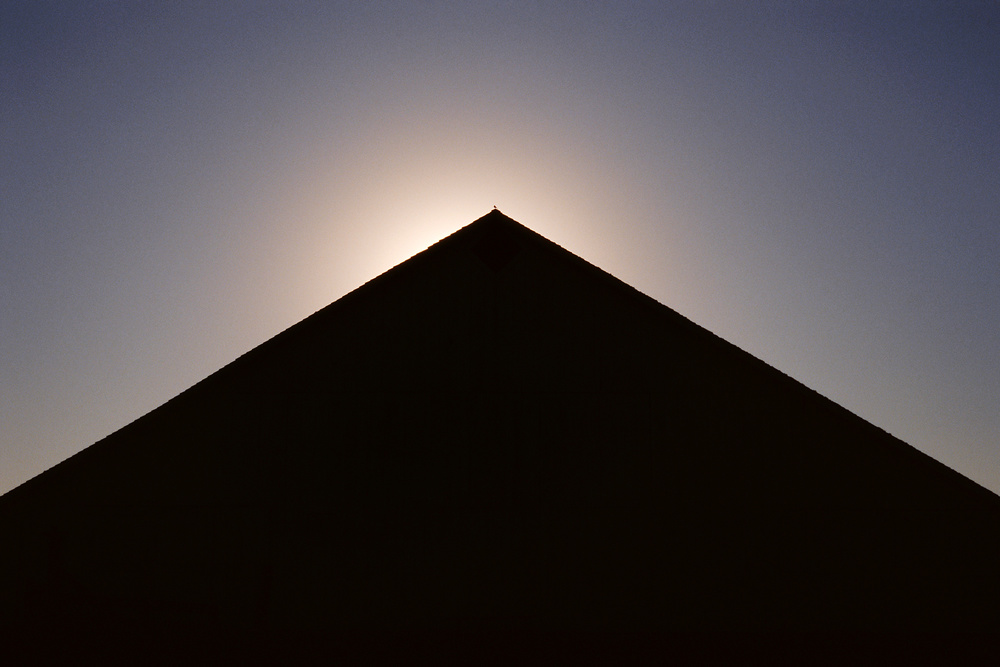
Suggestive of Precisionism, the work is characterized by the reduction of compositions to simple shapes and underlying geometrical structures, with clear outlines, minimal detail, unexpected viewpoints and framing, and an emphasis on the abstract form of the subject. In the style of American Precisionists, the subjects are from the American landscape, regional American culture, and long-familiar American scenes, such as agricultural structures and domestic architecture. Even such conventional motifs as a still life of fruit or flowers were treated to a fresh assessment in the Precisionist style. Precisionists also showed the influence of recent work by American photographers, such as Paul Strand, who were utilizing sharp focus and lighting, unexpected viewpoints and cropping, and emphasis on the abstract form of the subject. The style is evident in Ellsworth Kelly's photographs, from 1950s through the 1980s of barns, their interlocking forms evoking the planes of his own paintings and sculptures. Central to many of these images are windows, roofs, and the shadows they cast. "Artist friends would say to me, snickering a little, 'What can a camera do in making art. It is just a camera'. Then one of them asks for help in making an image with a camera (a backlit telephone pole with just the foot pegs lit). We made it, he showed it at Otis (College of Art and Design) and people said 'Wow, that's cool'." By using just a camera and film, and not altering the film image in printing a photograph, what kind of images can be made? Really the image should be an experience. It should shift you. Make you smile maybe. Remember when you were a child how a simple little thing could galvanize your entire being - time stood still and you felt totally connected to the world - there was a feeling of total contentment? And, an image made with film has a feel to it. The photograph should be an accurate record of what the camera and film captured, with the absolute minimum disturbance of the captured image during the processing and finishing stages. A transparency film image processed through standard chemistry is the paradigm for an unmanipulated image. So, just a camera and some film.
No categories selected
Photos (10)