The Minova Rape Trials

Photos (13)

Cover
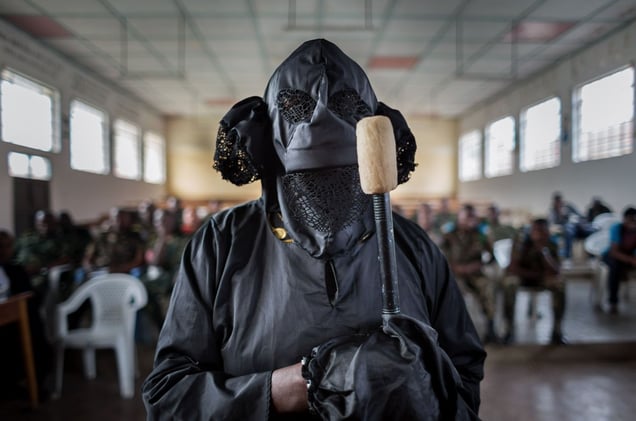
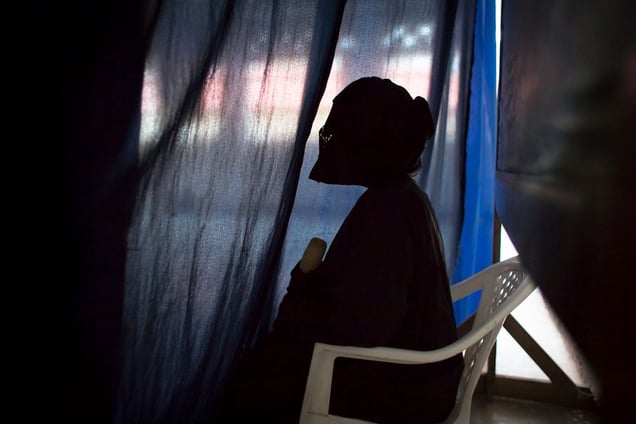
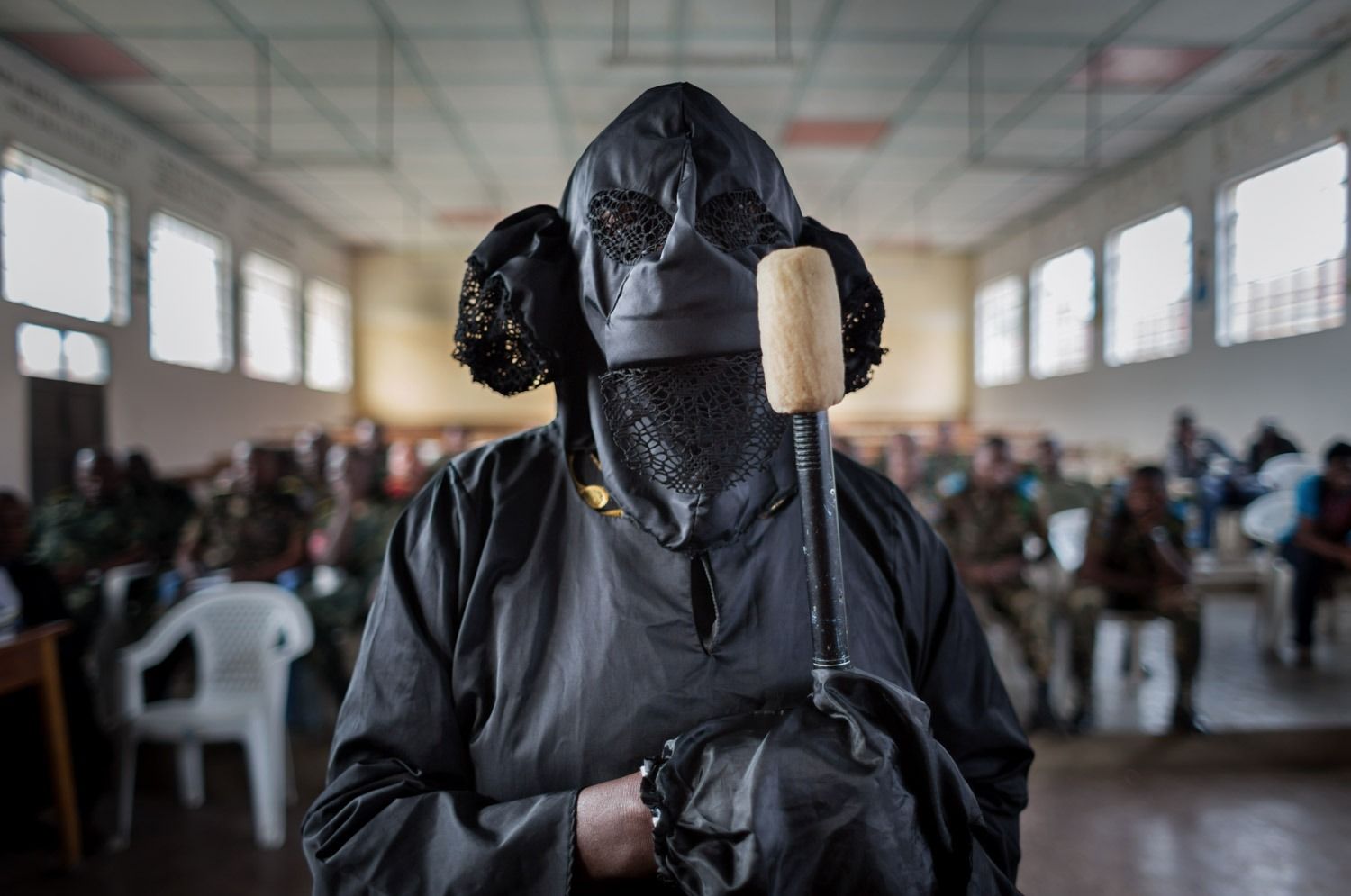
A victim, veiled to protect her identity, testifies. When FARDC soldiers entered her home, her 5 children hid. Her husband was not home. Two soldiers raped her while others carried off goods received from an aid organization: sacks of rice and corn, cans of cooking oil. Her husband returned in the morning. When he learned of the rape, he left and never returned. © Diana Zeyneb Alhindawi
File: DianaEdit-251626_93A5977_x01_A.jpg
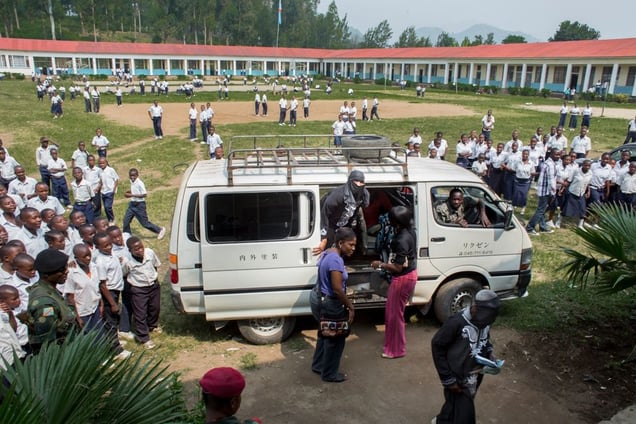
Students flock around a van delivering women scheduled to testify in a makeshift courtroom set up in the auditorium of a Catholic school in Minova.  Victims could not afford a trip to Goma, more than 30 miles away, so the court went to them in Minova. © Diana Zeyneb Alhindawi
File: _93A0648.jpg
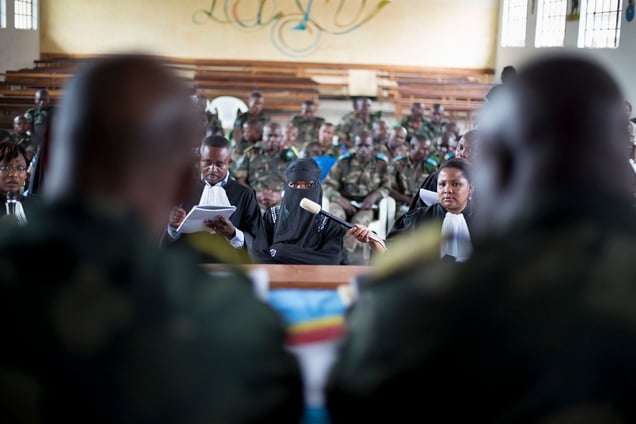
A victim testifies before the closed military tribunal.  A member of the prosecution team holds a microphone up for her while a defense lawyer makes notes. The accused soldiers are seated in the rear.  Victims are often extremely reluctant to step forward due to the stigma congolese society places on victims of rape. Even in Minova, only 47 victims testified.  © Diana Zeyneb Alhindawi
File: _93A4444.jpg
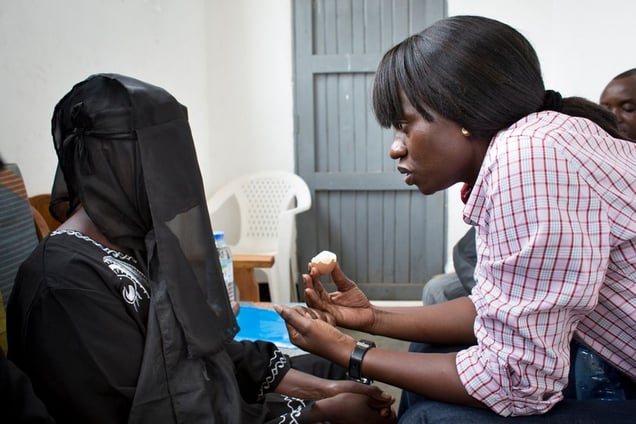
Many victims have post-traumatic stress disorder. Here, a woman about to testify had become afraid, her mind fixating on the events of the night she was raped. To calm her, a psychologist told her, “Do you know where you are now? There is nothing to fear here. You are safe. Look at this egg in front of you. Look at the shell that I peeled off. Focus on the present." © Diana Zeyneb Alhindawi
File: _93A6924.jpg
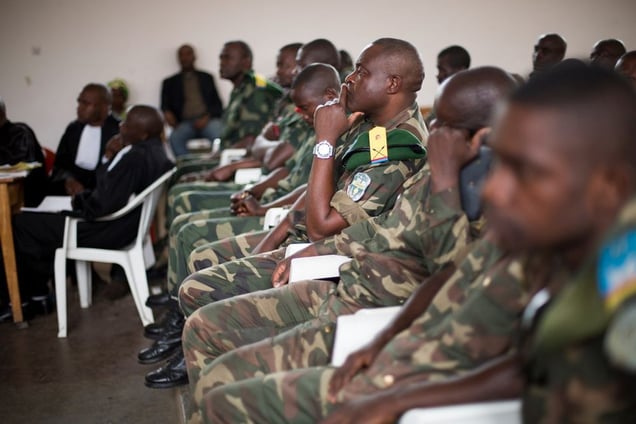
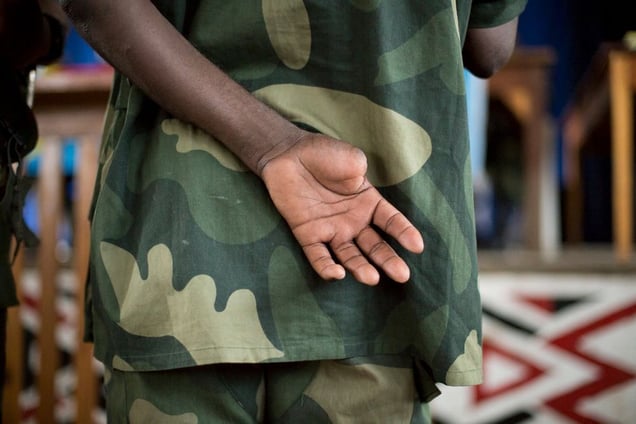
All but four of the 37 soldiers accused of rape sat in the trial room. The missing four were still on active duty in northern DRC. Twenty-five of the accused were lower-ranked soldiers, and 12 were officers in charge of those soldiers’ units. At a trial in nearby Mupoke in 2013, only one soldier stood accused of rape. The others fled before the trial took place. © Diana Zeyneb Alhindawi
File: _93A4958.jpg
A veiled rape survivor testified in court behind a curtain to further shield her from the eyes of those she accused. Special care is taken to provide rape survivors with disguises, curtains, veils, whatever they may need to feel secure when giving their testimony. The women are referred to by numbers instead of by name to maintain their anonymity. © Diana Zeyneb Alhindawi
File: _93A7090.jpg
A woman testified that she had been raped at night and couldn’t clearly see her attacker’s face, but she recalled a long scar on his forearm and that he had no thumb. The judges asked if that man was present in the trial room.  She hesitated. When the judges encouraged her, she firmly pointed out her attacker. He was then summoned to the stand for questioning. © Diana Zeyneb Alhindawi
File: _93A7538.jpg
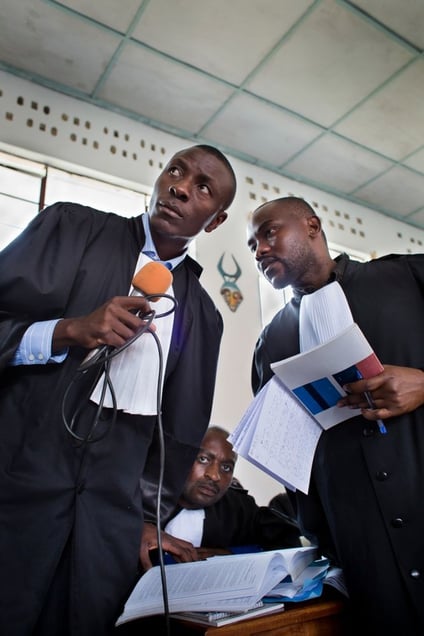
Defense lawyers listen to a testimony, compare notes and discuss their next response. © Diana Zeyneb Alhindawi
File: _93A6707.jpg
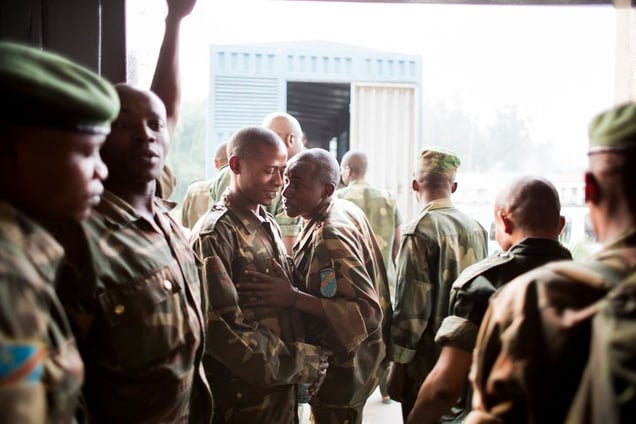
The lower-ranked accused FARDC soldiers pile into the truck that will transport them back to custody at the end of a trial day. The 12 higher-ranked officers on trial left on their own accord.  They were not in custody and able to move freely.© Diana Zeyneb Alhindawi
File: _93A0074.jpg
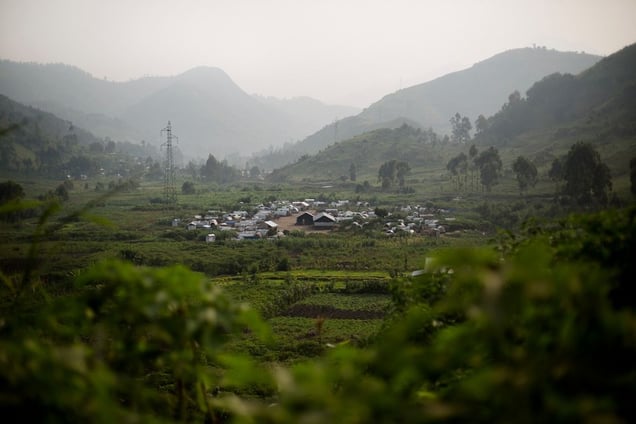
One mile south of Minova is Mubimbi, a small camp for those displaced by the conflict that has plagued Congo for nearly two decades. Eleven of the rape survivors who testified at the rape trial in Minova were living in this camp in November 2012 when they were attacked by FARDC soldiers who were moving from the army’s encampment in Minova to another town farther south. © Diana Zeyneb Alhindawi
File: _93A1067.jpg
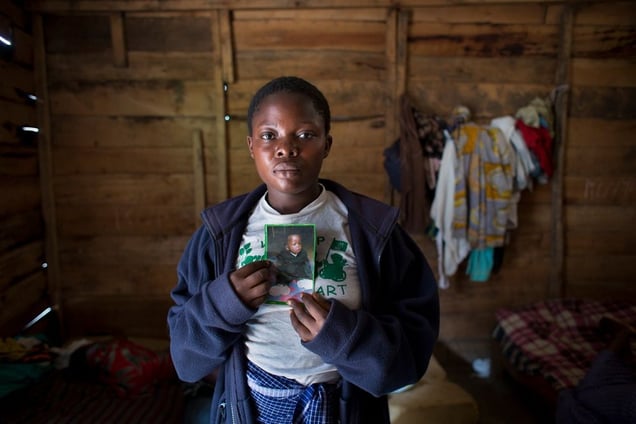
Micheline, now 18, held a picture of her son, Alain. She lived at the shelter for rape survivors when FARDC soldiers attacked. Her son had been conceived during the rape that landed her in the shelter.  Due to shame, it is not uncommon for a village to kick out a rape survivor. “When they pillaged, they also stole my son,” Micheline said. They found him later, so ill that he died a month later.
File: _93A0992.jpg
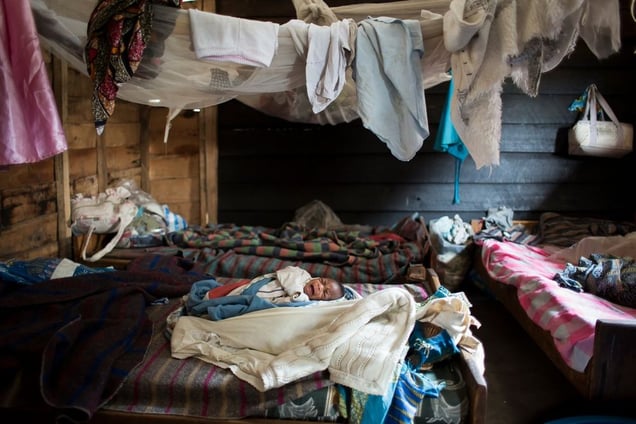
A 2-week-old infant cries in the shelter for victims of sexual violence in the village of Buganga, two miles south of Minova. Founded by activist Rebeca Masika Katsuva, a rape survivor herself, the center was home to more than 30 women and children during the attacks of November 2012. © Diana Zeyneb Alhindawi
File: _93A0780.jpg
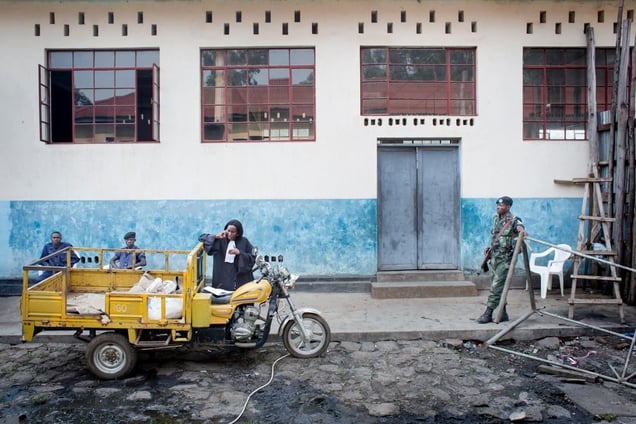
Amani Mireille Kahatwa, a lawyer on the team of prosecutors, steps outside to make a phone call.  The prosecution team is supported by the American Bar Association. © Diana Zeyneb Alhindawi
File: _93A0004.jpg