
1.2 cm =
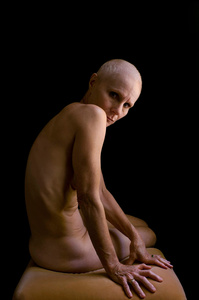
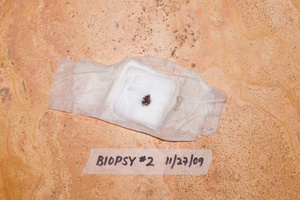
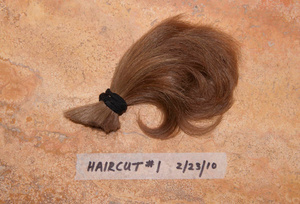
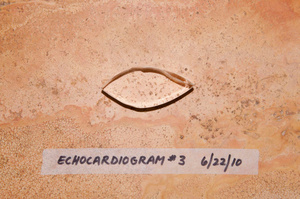
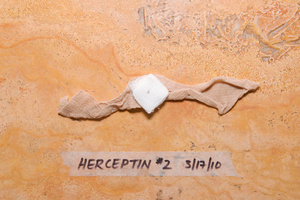
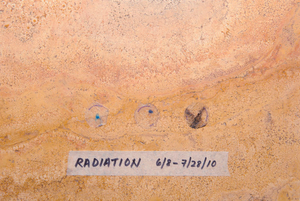
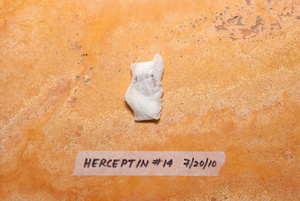
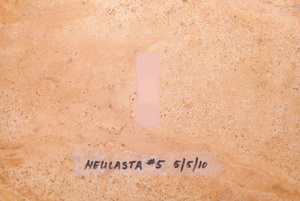
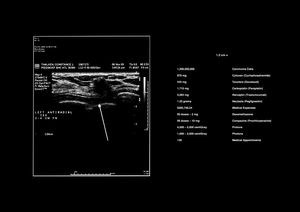
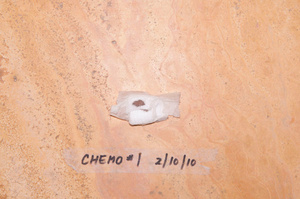
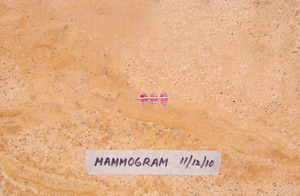
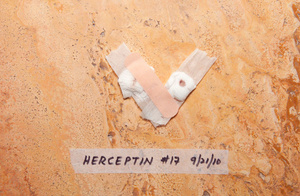
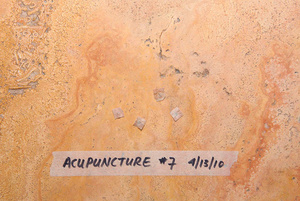
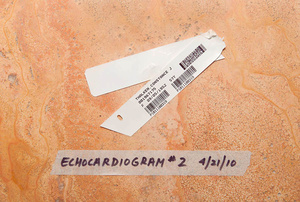
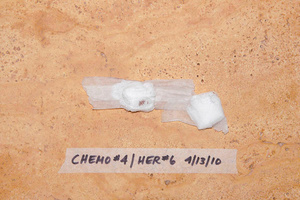
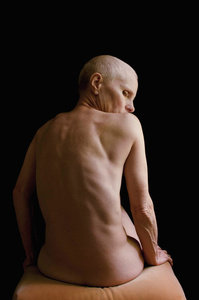
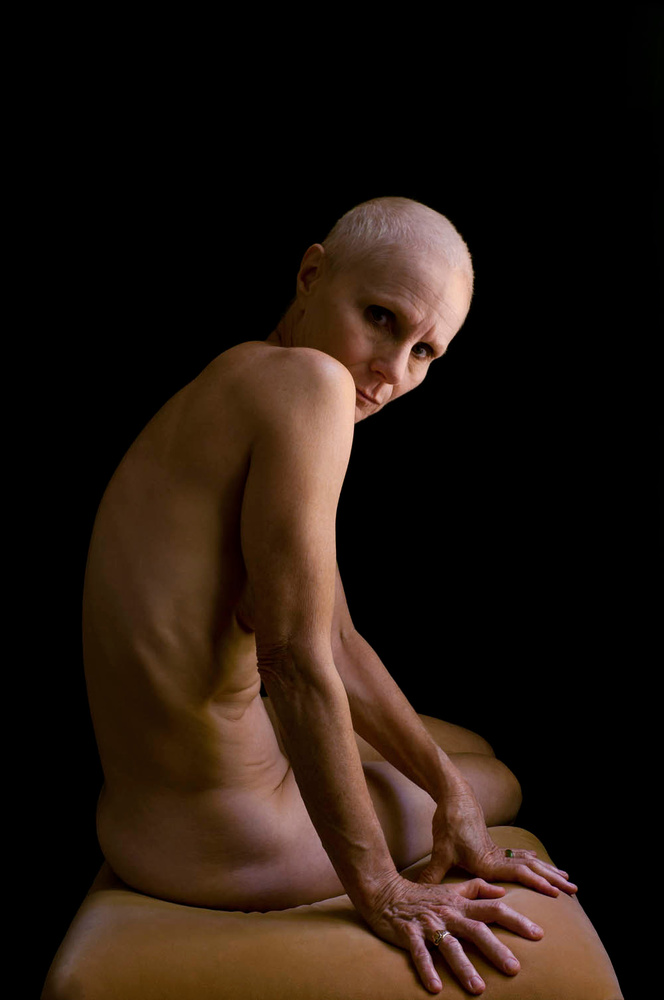
1.2 cm = addresses the paradoxical relationship between the smallness of an invasive tumor (1.2 cm) and complexity of its impact on the body and mind. The work speaks to concerns of mortality, the nature of disease and our unease with it, and the tension between the body as a medicalized object and as the embodiment of the human spirit. From December 2009 to February 2011, I underwent extensive treatments for breast cancer. Throughout this time I collected all the bandages that were applied to and removed from my body related to the treatments. Archived in Ziploc bags with dates and labels, I later photographed these “discard” on the surface of my bathroom floor. The collection of discards seemed at home on the stone floor when it came to documenting them. The surface has the warmth and color of skin and is patterned with veining and pitting, visually mimicking the micro world of cells from which the discard materials came. The sheer number of the discards and the specifics of their labels convey the intensity of cancer treatment and the consequent medicalization of the body while undergoing such treatment. At the same time, the discards allude to the process of taking care, of diligently managing the body as it navigates a foreign and difficult terrain. After completing chemotherapy and entering radiotherapy, I was compelled for the first and only time to photograph myself. I wanted to acknowledge my fortitude in passing through the most demanding phase of treatments but I also was physically transformed and no longer recognized myself. I was curious as to what the scrutiny of the lens would reveal. Photography critic and essayist Jason Francisco wrote, “The human creature that we behold defies categories, a strikingly androgynous figure with the attributes of both age and youth, sickness and strength, weakness and will, aliveness and decline. It is rare, in my experience, to encounter self-portraits perched so expertly – so victoriously – between countervailing truths.”
No categories selected
Photos (16)