
Lost Empires
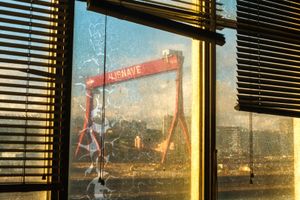
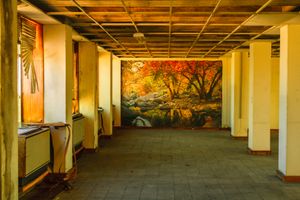
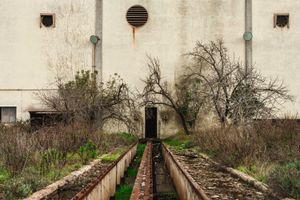
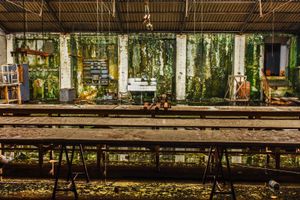
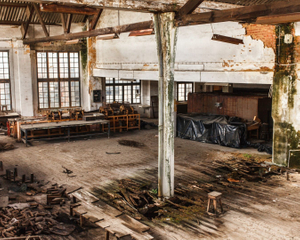
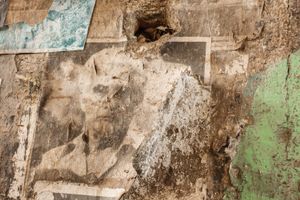
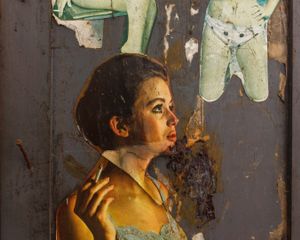
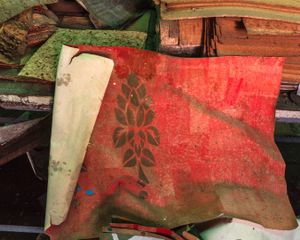
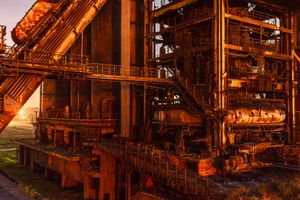
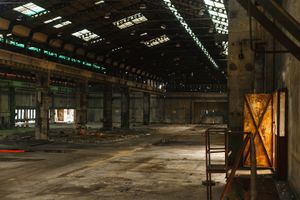
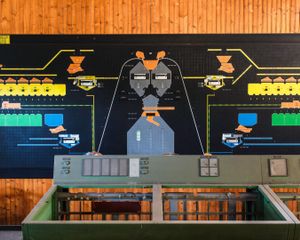
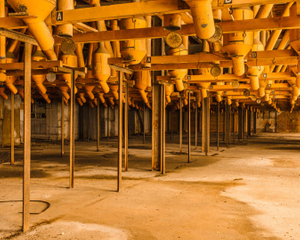
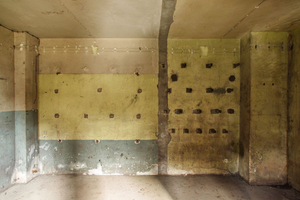
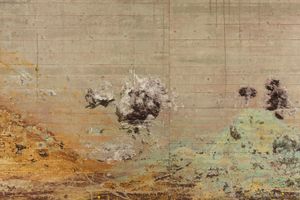
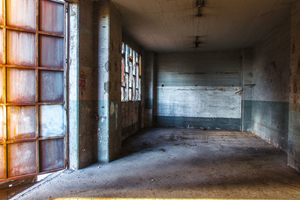
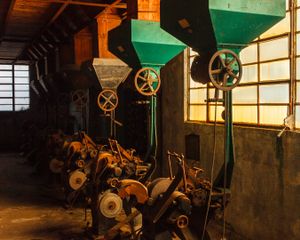
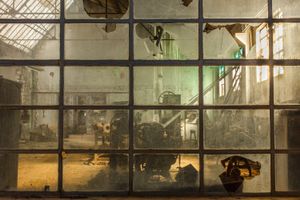
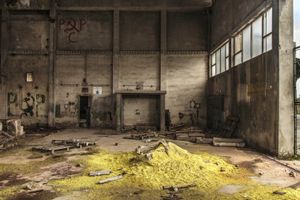
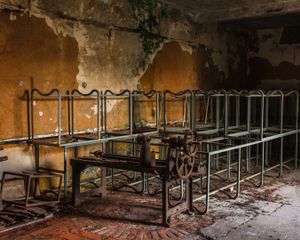
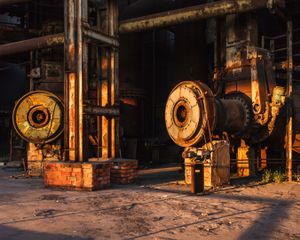
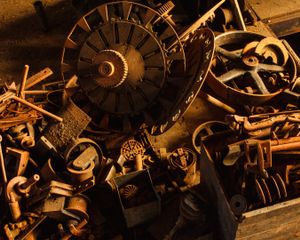
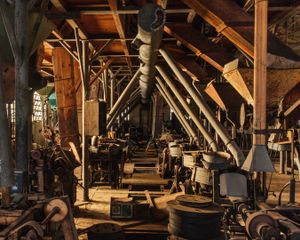
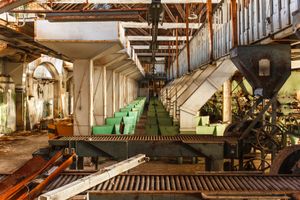
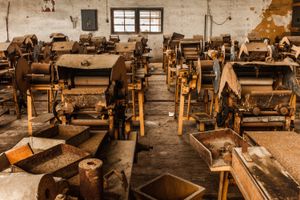
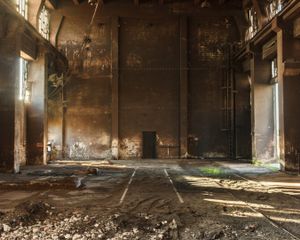
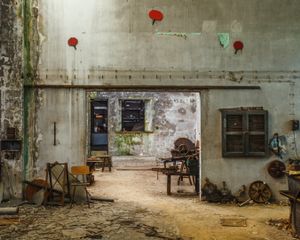
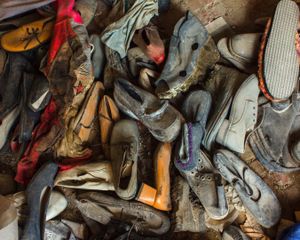
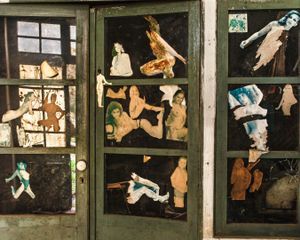
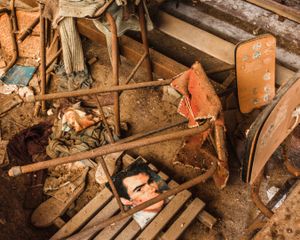
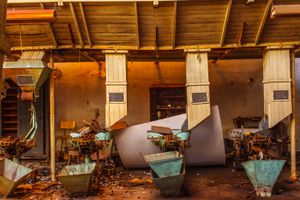
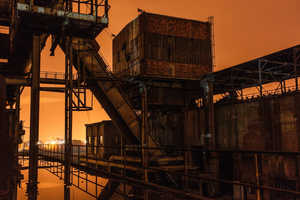
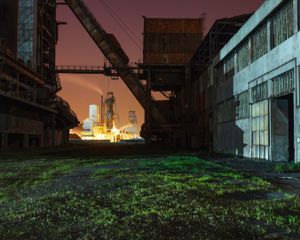
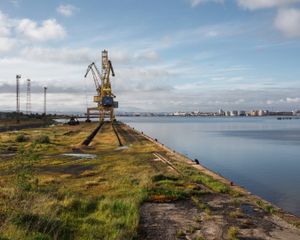
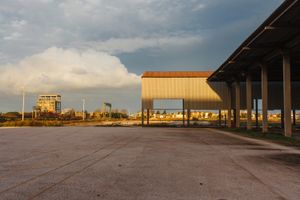
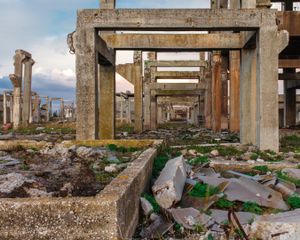
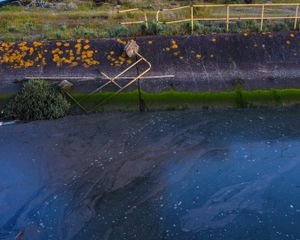
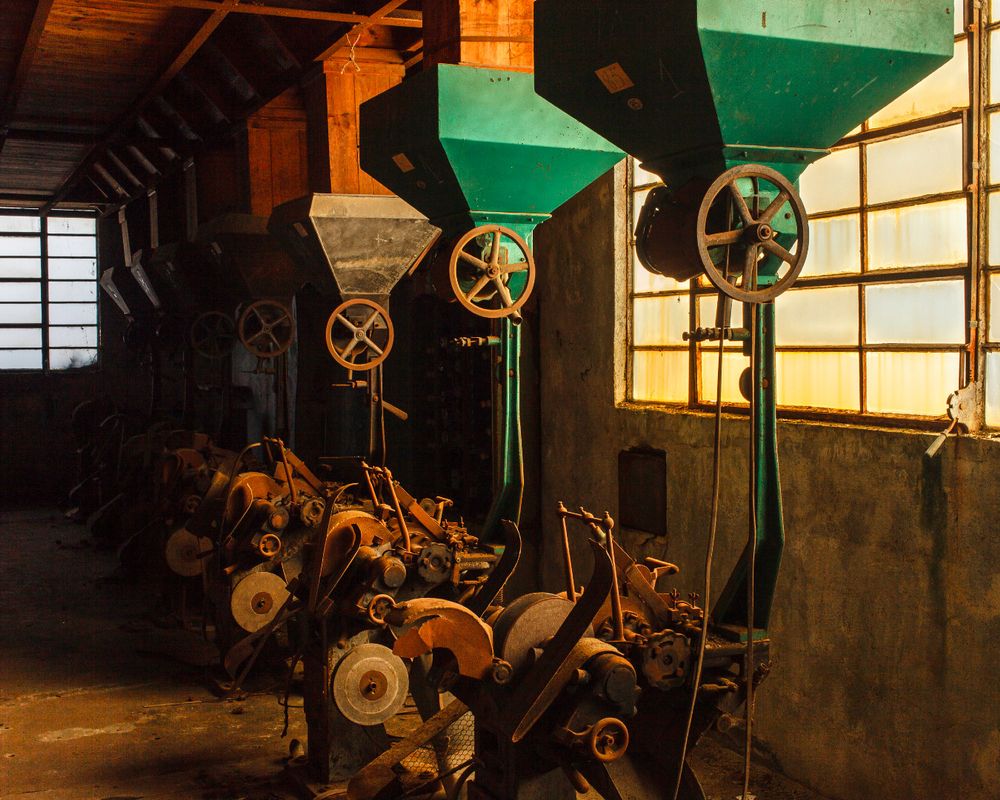
One more time, after going through the closed gates I enter this strangely silent place. Once again all you can hear is the birds’ sing who have set their nests on the top of the factory buildings. Decades of intense industrial activity remain present on the polluted grounds. Those are now mixed with high grass and all kinds of colors. Nature claims its place back as quickly as possible. A creaking sound comes out of the door as it opens. Then the sound of broken glasses laying on the floor follows my steps. I’m inside the control room. No strangers allowed to come in – this is the room where engineers operated the steel plant where thousands of people used to work day and night, weekends included. Now there is nobody else left. This place has been, once upon a time, the biggest investment ever made in Portugal’s industrial history. In 1961 a dream proclaimed several times in Portugal since the early 20th century was starting the production with 6.000 workers. That dream was a steel plant with a blast furnace, known as SIDERURGIA NACIONAL. Like it happened to other vital sectors of Portuguese economy in private hands when the Carnations Revolution happened in april 1974, the company was nationalized. Later on it was sliced into 3 different areas in 1994, and the most active part belongs to a foreign company nowadays, with less than 1.000 workers. The “heart of the factory”, as the workers called the blast furnace, was deactivated in 2001 along with other complementary facilities. 800 people fired. The iconic blast furnace where the government wants to build a museum is now very quite. Sun is already gone. An empty beer can, machines' leftovers, technical written details and calculations plus solitary chairs fill the room as I light it up with my lantern. While pointing it at the wall I'm suddenly faced with what seems to be a ?creature coming from another planet. But it’s merely a drawing made out of the electric circuits on the wall, now deactivated. I take a picture. And keep on going to the next room. It is absolutely empty and has nothing except some cabinets which can easily be identified as belonging to a former kitchen. It’s one of the refectories. No tables, no plates left. The same place was in an old photograph showing some workers having a lunch break, the food still releasing warm vapor. Not far away, today the sky is incredibly blue. No more vapor or smoke is coming out of the former high chimneys of CUF – COMPANHIA UNIÃO FABRIL. Most of the former factories have been demolished, and pink grass is now growing where factories of fertilizers, acids and other chemicals used to be active. Somehow nature continues to operate chemical reactions that took place on these lands over nearly 70 years. This used to be a former land of fishermen and farmers which then became the town where the largest Portuguese industrial and economic group decided to be settled from 1908 to 1975. Almost every inhabitant of Barreiro has a connection to CUF and will tell you that the constant toxic smoke was so dense that the air was nearly unbreathable and would even scare potential tourists. And even without considering the smoke, the borders were never clearly established between the neighborhoods and the hundreds of factories where more than 12.000 people worked in industries of chemicals, animal feed, textiles, tobaccos, oils, shipbuilding; among many others. Another day, driving 30 minutes away. In the dry dock there is no noise anymore too. Massive ships including the largest oil tankers sailing the oceans to feed the world’s need for black gold used to be stationed here, used to be built and repaired here. Right next Lisbon and to the Atlantic Ocean where back in the age of Discoveries the Portuguese sailors have also built their own ships to ‘discover’, colonize, enslave and trade with Africa, America, Asia. Following that geographic and vital connection of Portugal to the seas, LISNAVE’s first shipyard became the largest and most advanced of its kind in Europe, and one of the largest worldwide within a few years after it opened in 1967. It ruled the daily lives of 10.000 workers. The number of workers was so big that any demonstration would have an immediate impact on the public opinion. So LISNAVE became a perfect arena for political discussion and trade unions at the same time that Portugal came out of a 48 years long dictatorship and the oil crisis of the 80’s started to shake the world’s economy. Since it closed down in the late 1990’s, the same area is now a massive industrial graveyard waiting for a new uncertain destiny. ?Going up the stairs of LISNAVE’s administration building, more than 10 floors high, the capital Lisbon is still watching the former shipyard from the other side of the empty waters. Opening the door to the inside, the elevator is now a dangerous hole next to office halls without any desk left and where green moss fills the ground. In the foreground of the windows the shipyard crane is still there, ready to hold 800 tons over the dry dock. Pigeons now occupy the room, and some dead animal skeletons laying on the floor assume the perfect metaphor of how dead this place is. Tripod set. Click! Slowly. Each step I take must be carefully measured. It will not take long until this floor starts to collapse. Water droplets fall from the roof, slowly creating holes on this wood floor dated from the 1920’s. In this room hundreds of female workers were transforming and giving different shapes to cork, a wood resource widely available in Portugal. Active since 1905, MUNDET imported foreign knowledge and once led the Portuguese cork industry. It exported worldwide to countries such as USA, India, Japan, South Africa, and all over central and northern Europe. In the 1940’s this single factory with more than 100 different sections had nearly 2.500 workers. Most of them women. Next to the heavy machinery it’s possible to find personal objects, memories of distant times. Piles of newspapers and documents, a calendar from 1987, stickers and posters depicting famous people and political pamphlets, old photographs, a map of the soviet union. People are still inside the factory. But they are not anymore. Officially not since 1988. In that year, after a painful bankruptcy process, the workers of MUNDET stopped the machines, left their working shoes behind and suddenly disappeared. They never came back. The missing workers were part of Portugal’s once powerful, yet brief, period of intense industrialization. In contrast to recent years, where half of the unemployment keeps happening within the factories. Reality has changed. The industrial revolution has been one of the roots of globalization as we inevitably know it nowadays, and this story has been similar all over the globe. It keeps happening and the same arguments used under the name of progress and human evolution are nowadays as valid as before. From the beginning, industrialization started a new era dominated by the spectrum of functionality and technique, where the figure of the engineer represented what the priest was in the middle age. Where the blast furnace or a crane assume the same monumentality as the cathedral did some centuries ago. Bernd and Hilla Becher, the duo of german photographers who’ve been creating for decades a document of the german industrial architecture, have agreed on this idea. “Just as the medieval thought is manifest in a Gothic cathedral, our age reveals itself in technological buildings and devices. (...) The structural tasks of past eras have essentially been accomplished. The challenges facing the human ability to invent are of a technical nature”. Technique is often based and revealed upon numbers. However, in a time when news reports contain more and more economic statistics and financial reports, it became necessary to visualize where so many numbers are coming from. By having an image of what economy actually represents, it stops being an abstract theory, a merely rational exercise, to become instead something with a direct meaning to people’s lives. Indeed, numbers and the idea of progress have dragged the lives and dreams of entire generations of individuals, families, workers, managers, investors. But in the end, who are they? How did we arrive until this point? Very often numbers and statistics were, and still are, a direct result of machines and industrial facilities which have deeply transformed the way human societies have organized themselves. And industry has also provoked a huge transformation in the landscape, either through architecture and urbanism or through pollution and chemical effects. Cities have been raised, farmers had to move somewhere else. Rivers became unfit to fish. A solitary journey has been set over the last months to discover some of the biggest industrial icons of Portugal's recent history. Nowadays transformed into archeological areas falling apart piece by piece. These have been companies who affected dozens of thousands of people. Many of them migrated from the farming lands in the countryside and found a different life when coming to work in the new industries. These have been companies which became small empires and deeply changed the dynamics of Portuguese economy as a whole. Lost Empires is a documentary photography project intended to follow the tradition of creating a visual document of an era. In some cases it’s an era that it’s on the verge of extinction, or even died already, while in others it’s a story of transformation and adaption to new circumstances. At the same time it is also a historical record. Many of the areas have been already demolished. Some are slowly going through rehabilitation. While many others are in risk of collapsing anytime since nothing can be done to save such places. Photography assumes then the role of the last savior. The camera helps to provide a last record of some of these territorial landmarks and iconic structures of Portugal’s industrial architecture. Those landmarks are nowadays still present not only in the landscape b!ut also within the collective memory of those who still live with it. Throughout these images the viewer and reader shall have the chance to learn how some of the biggest industrial companies of Portugal’s recent history used to look like in architecture, what remains and what does not, what memories and traces of history, time, noise, pollution, are still inside the abandoned factories. Or how much e!rosion and the forces of nature have taken over these sites. This visual journey will take you into the very south of Lisbon, along the Tagus river, whose quick access to the capital’s harbor and to the Atlantic ocean was seen by these four major industries, now photographed, as a strategic point to be located. That was not a coincidence. It had been a strategic point since the 15th century, when the Portuguese sailors entered the caravels and embarked in this same river to start several journeys across all the oceans and continents of the planet that would c!ompletely change our perception of the world. It is also an opportunity to reflect about what such industrial emptiness says about a country which creates nowadays more emigrants than births. A country where e!ngineers graduate and then leave4 towards the industrial lands of the 21st century.
No categories selected
Photos (42)