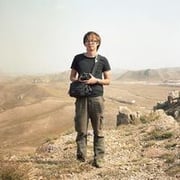
Great Wall
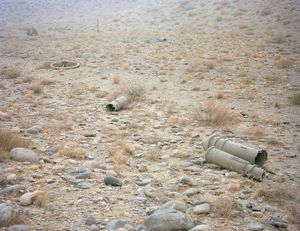
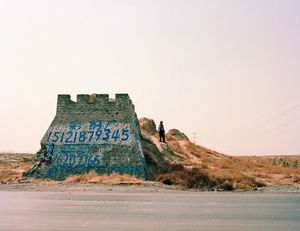
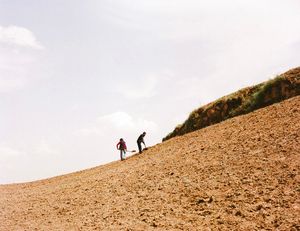
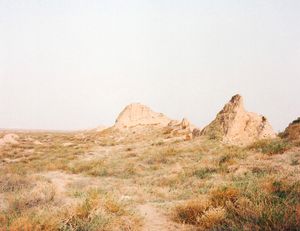
The map of China is sealed by a continuous line with special square marks , it starts from the border between China and North Korea, from there it goes westward through mountains of Liaoning and Hebei Province, continues into plains of Shanxi, Shaanxi and Inner Mongolia, crosses desert of Ningxia and Gansu Province, finally disappears by the dried lake of Lop Nor, it is the Great Wall. From childhood i was always wondering to travel along the Great Wall, following the wall i could go through towns, villages and cities, i could go across the whole country, during days I go following the wall, during night i sleep in the watch-towers. He who has not reached the end of Great Wall is not a true man, that was Chairman Mao’s word in 1935. As i grew up i understood the multiple meanings of the Great Wall, it was not only a wall to protect China from nomadic invaders but it also sieged its people in the shadows of the empire, it was not only a co-related narrative myth but a blood line along which millions of human skeletons buried without intermission. In the Spring of 2013 i started my journey at the West end of the Great Wall with a camera and a bike. Began at Dunhuang, i cycled 4000 miles toward east along the wall, through mountains, plains and desert, across the country, a sense of unease grew day by day, the earth was drained after thousand years of civilization, towns and villages along the wall are dying in the progress of the reborn country’s industrialization and urbanization. The landscapes were shaped again and again during the last thousand years, dynasties after dynasties, empires after empires, there would never be an utopia promised, after Revolution and Social Reform there was just another dynasty and a new wall. Individuals’s struggle and defense was effortless against a country’s choice, the nation’s fate was ordained, instead of praising Yao and condemning Jie, it would be better to forget them both, and seek Tao of the road.
No categories selected
Photos (30)