
Tibet

Photos (28)

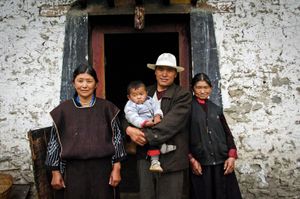
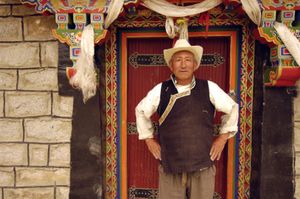
Three generations of a Milin village family, Tibet photographed outside their home. © Forest McMullin
File: McMullin-181.jpg
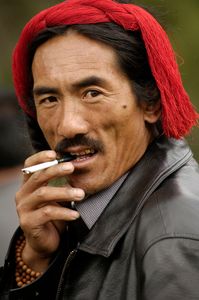
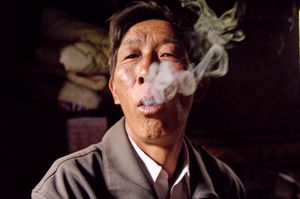
The red string in his hair identifies this man as a Khampa. Khampas are a tribe known to be fierce warriors. They were the main participants in the longest running resistance to the Chinese occupation, funded, in part, by the CIA and partially trained in the US. © Forest McMullin
File: 050704-034.jpg
Milin village, Tibet © Forest McMullin
File: 050704-072.jpg
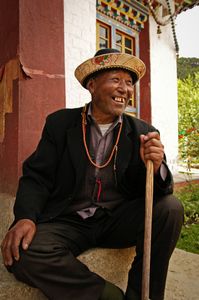
This pilgrim sat to rest on the steps of the main temple at Lamaling or Lama-Lin Monastery is about 30km south of Bayi, Tibet. Photographed on 4 July 2005. © Forest McMullin
File: 050704-173.jpg
Residents of Junpa Village, Tibet photographed 30 June 2005. © Forest McMullin
File: McMullin-097.jpg
Milin village, Tibet © Forest McMullin
File: McMullin-179.jpg
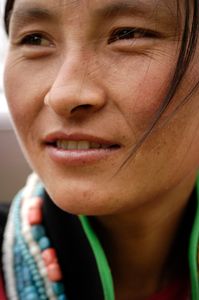
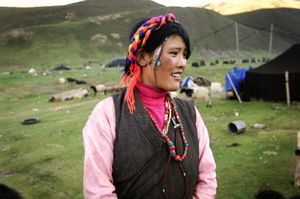
Nomad woman outside her family's encampment at elevation 16,300 feet between Lhasa and Bayi. © Forest McMullin
File: McMullin-205.jpg
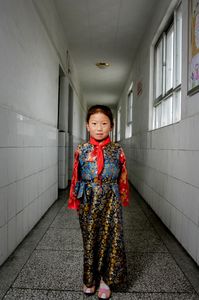
School girl in hall of elementary school in Lhasa, Tibet. © Forest McMullin
File: 050628-133.jpg
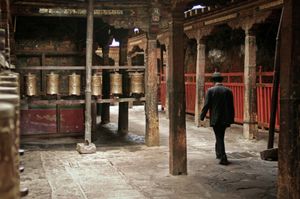
The Jokhang Temple is the most revered religious structure in Tibet. Parts of it were built as early as the 7th century. Prayer wheels line the outer kora or pilgrimage path. The wheels contain prayers that are chanted to gain merit and concentrate the mind. Photographed on 28 June 2005. © Forest McMullin
File: 050628-276.jpg
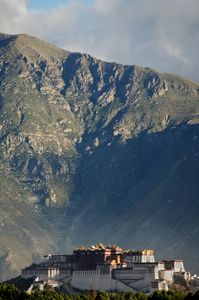
The Potala Palace in Lhasa is the second most holy place to Tibetan Buddhists. It was the winter home of the Dalai Lama. It is seen here from the far side of the Lhasa River, photographed on 29 June 2005. © Forest McMullin
File: 050629-018.jpg
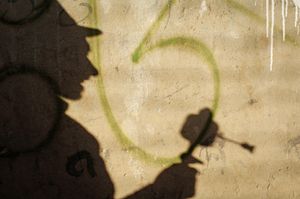
The Lingkor is a devotional route followed by pilgrims that encompasses much of Lhasa, Tibet. It includes rock paintings, prayer wheels, sangkangs (incense burners), and many other, more secular sights.This shadow is of a man walking along, spinning a prayer wheel. Photographed on 29 June 2005 © Forest McMullin
File: 050629-020.jpg
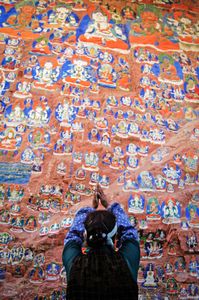
Scene along the Lingkor. The Lingkor is a devotional route followed by pilgrims that encompasses much of Lhasa, Tibet. It includes rock paintings, prayer wheels, sangkangs (incense burners), and many other, more secular sights. This woman is praying in front of old rock paintings. Photographed on 29 June 2005 © Forest McMullin
File: 050629-046.jpg
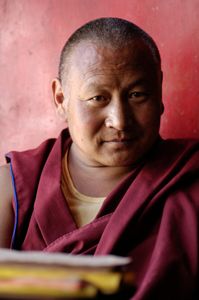
This monk is shown inside Drepung Monastery. Drepung sits high on a mountainside outside of Lhasa, Tibet. It was once the largest monastery in the world with 10,000 monks in residence. Today, about 700 live there. Photographed on 29 June 2005. © Forest McMullin
File: 050629-109.jpg
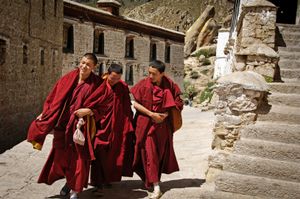
These monks are on their way to attend noontime devotions in the main temple at Drepung Monastery. Drepung sits high on a mountainside outside of Lhasa, Tibet. It was once the largest monastery in the world with 10,000 monks in residence. Today, about 700 live there. Photographed on 29 June 2005 © Forest McMullin
File: 050629-188.jpg
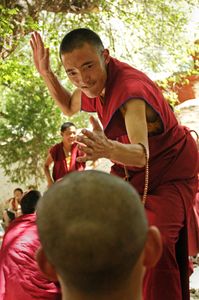
Sera Monastery is outside of Lhasa, Tibet. It is known for the dramatic debates held every day in a grove of trees. A common sight is one monk standing and, in a dramatic flourish that includes loud clapping of the hands, challenging the beliefs of a second, sitting monk. Photographed on 29 June 2005. © Forest McMullin
File: 050629-313.jpg
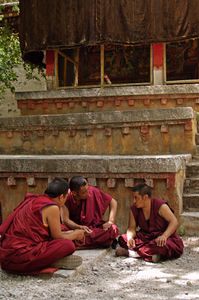
Sera Monastery is outside of Lhasa, Tibet. It is known for the dramatic debates held every day in a grove of trees.Some take a more contemplative approach, quietly and intimately discussing religious issues. Photographed on 29 June 2005© Forest McMullin
File: 050629-342.jpg
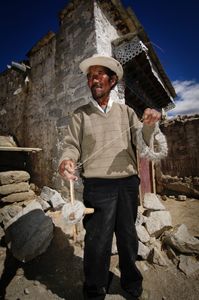
This man was walking through the lanes in Junpa Village, Tibet spinning wool into yarn. Photographed 30 June 2005. © Forest McMullin
File: 050630-046.jpg
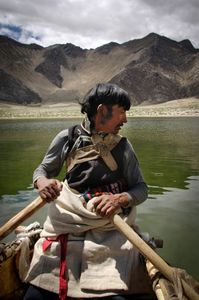
Junpa is the only fishing village in Tibet. They fish using yak-skin coracle boats, called dhawas. They're often carried long distances on the fishermans' backs © Forest McMullin
File: 050630-126.jpg
Cover
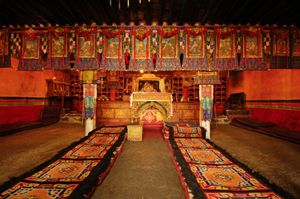
Drolma Lhakhang Monastery near Nyethang, Tibet was built in the 11th century. It was left intact by the Red Guards during the Cultural Revolution after a direct request from the government of Bangladesh. Photographed on 30 June 2005. © Forest McMullin
File: 050630-276.jpg
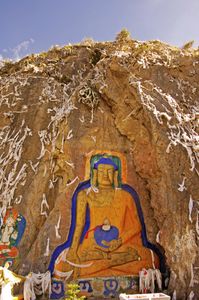
This rock carving of the Medecine Buddha is near Nyethang, Tibet. It's about 40 feet high and is surrounded by white prayer scarves left by pilgrims. Photographed on 30 June 2005. © Forest McMullin
File: 050630-283.jpg
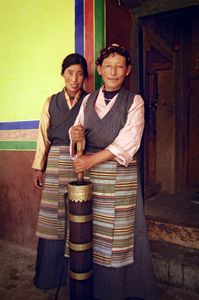
These women are villagers at Mindroling Monastery near Dranang, Tibet. They were photographed with a churn used for making yak buttter tea on 1 July 2005. © Forest McMullin
File: 050701-069.jpg
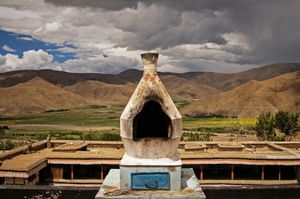
This large chorten or incense burner is on the roof of Mindroling Monastery near Dranang, Tibet. It was photographed on 1 July 2005. © Forest McMullin
File: 050701-085.jpg
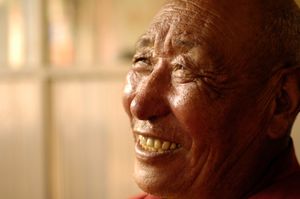
The number one monk of Mindroling Monastery near Dranang, Tibet was photographed on 1 July 2005. © Forest McMullin
File: 050701-097.jpg
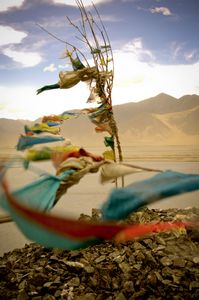
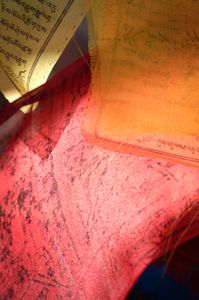
There are prayer flags everywhere in Tibet. They’re thin cloth printed with prayers, blessings and bits of Buddhist scripture. The Tibetans hang them from their houses, near holy places, along roads and bridges, and up the sides of mountains. They believe that when they flutter in the wind, a prayer is sent up to heaven. © Forest McMullin
File: 050701-131.jpg
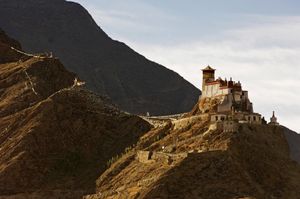
Yumbulagang Palace is in the Yarlung Valley region of Tibet. It's genereally considered the oldest building in Tibet with foundations probably laid over 2,000 years ago. It sits high on a ridge and can only be reached by way of a steep path on foot ot horseback. It was originally a fortress, but now is a temple attended by a few monks.  © Forest McMullin
File: 050702-009.jpg
The road from Lhasa to Bayi, Tibet passes over Mon La Mountain Pass. At the very top of the pass there is a tangle of prayer flags. Photographed 3 July 2005 © Forest McMullin
File: 050703-14.jpg
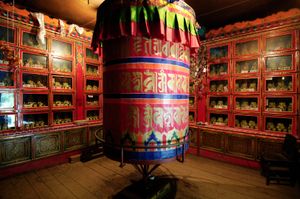
Draksum-Tso Lake is about 41km off the highway between Lhasa and Bayi, Tibet. It's a beautiful alpine lake surrounded by 6000 meter mountain peaks. There's  a magical little monastery on an island in the lake one can reach by way of a floating bridge. This huge prayer wheel is in a side chapel. Photographed on 3 July 2005. © Forest McMullin
File: 050703-46.jpg
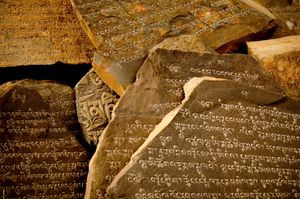
Along the road between Lhasa and Bayi, Tibet, huge stone towers rise from the forest. They are all that's left of a series of ancient castles. The locals people call them dudkhangs (demon houses). These tablets have writing on them in a language that pre-dates modern Tibetan and hasn't yet been de-cyphered. Photographed on 3 July 2005 © Forest McMullin
File: 050703-80.jpg