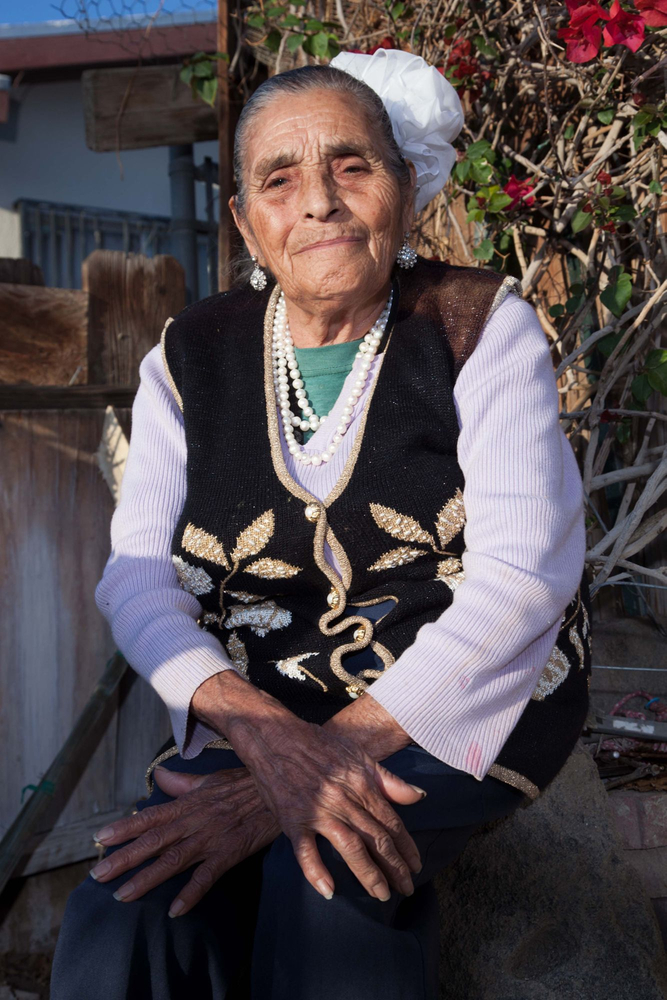
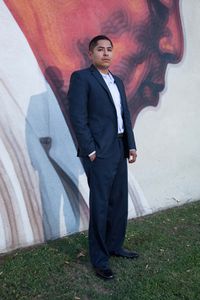
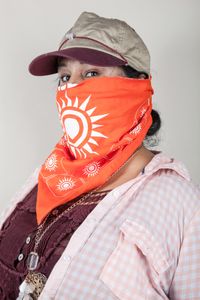
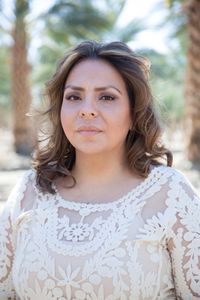
I had been working on making photos about farm workers very slowly over the years and in 2015 l received a Fellowship from The Alicia Patterson Foundation which allowed me to dedicate the time, focus and thought to the work that it deserved. I wanted to make this work in part because the majority of photography and documentary work that I have seen about farm workers depicts them very simply and many times condescendingly, usually as bent over shapes in fields, or more commonly as victims of social injustice, which while true is not the whole story. I know, from having grown up in a family of farm workers myself, that the farm worker community is a very complex one, with many assets, the most important of which is the individuals themselves. This is what this project is about. It’s about the people who are doing the work to make people's lives better. Almost all of them have been farm workers themselves or are the children of farm workers. I am trying to rework the frame and expose for highlights.
The Coachella Valley is two hours east of downtown Los Angeles. It is a series of connected towns that start in Palm Springs and get poorer and poorer as you go east until you get to the town of Indio. South of Indio to the Salton Sea is a great agricultural expanse dotted with a few concentrations of people in the towns of Coachella, Thermal, Mecca and the unincorporated areas of North Shore and Oasis. This is the land and the people I am talking about. It is a beautiful land, with a troubled history, like most of the American Southwest. In the abstract we should care about it because of our shared humanity, if one of us is suffering then it’s not OK. More concretely we should care because this is where some of our food comes from. Every year over 30 different crops are grown in the Coachella Valley. Produce from the valley is distributed worldwide. In the U.S. it is sold in retail outlets that range from Costco to Whole Foods. Some of the people who harvest our food are homeless, they are working homeless, it is true. In addition they have to contend with inequality in education, healthcare and the justice system. There is a lack of services and infrastructure, there is arsenic in the water, alcoholism, sexual harassment and wage theft, all of this in the communities of the people who harvest our food. But there is progress. Over the past couple of generations the community is finding their voice and their agency. Many of the people profiled here value service to the community over anything else. I think there is a lot to learn here especially in a time when our society is in such dire need of empathy, kindness and understanding.