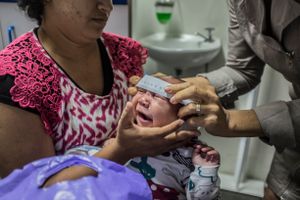
ZIKA VIRUS IN BRAZIL
In April 2015, the Brazilian Ministry of Health confirmed the autochthonous transmission of Zika virus, whose vector is the Aedes aegypti mosquito, the same one responsible for transmitting Dengue and Yellow fever. In September of the same year, in Brazil babies started to be born with microcephaly or other malformations. The clinical condition of these newborns was more aggressive than usual and wasn't following a pattern. The virus gets in the mother’s bloodstream and multiplies itself inside the fetus. As it gets sore, the brain tries but fails to grow. The sooner it happens during pregnancy, the more injuries the baby will have. The suspicion between the anomaly and the virus outbreak rose with the unprecedented increase of cases, especially in Recife and in the Northeast of Brazil. The researches gained weight when United Nations classified Zika as a worldwide emergency. So far the virus has already spread out by 45 countries, most in Latin America. On April 13th 2016, the American Centers For Disease Control and Prevention (CDC) finally confirmed the so feared link between these two outbreaks. In Recife, Pernambuco state's capital, families are uniting and organising to fight for the rights of their children with microcephaly, the Mothers of Angels Union, the Brazilian women making their voices heard and demanding a better future for their children.
No categories selected
Photos (43)