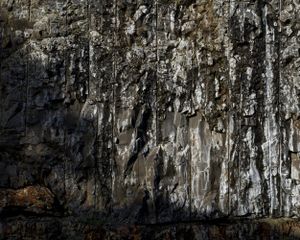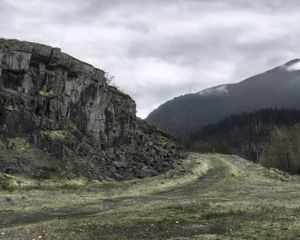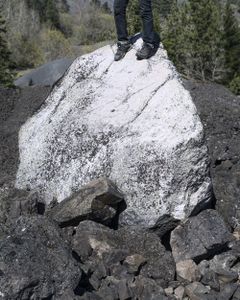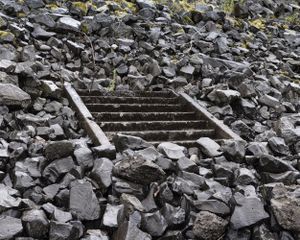
Where The Waters Cut Through
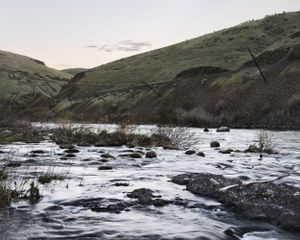
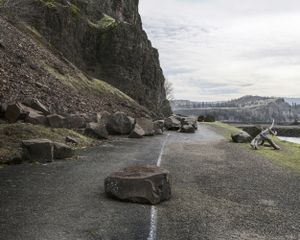
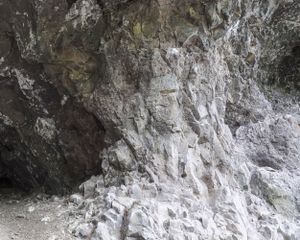
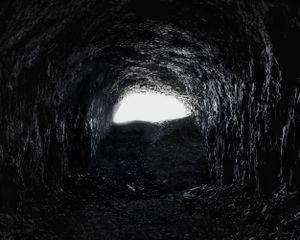
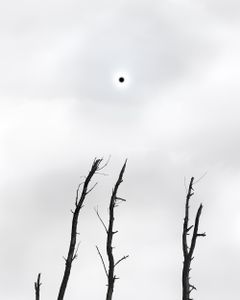
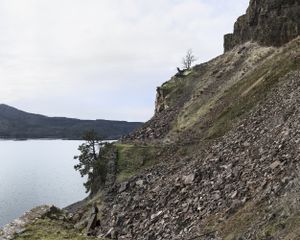
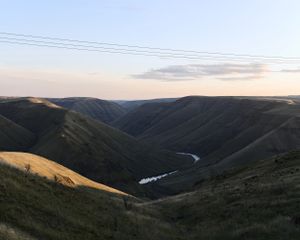
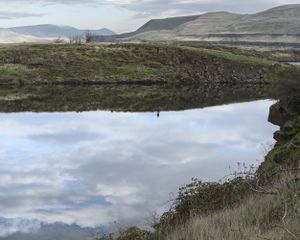
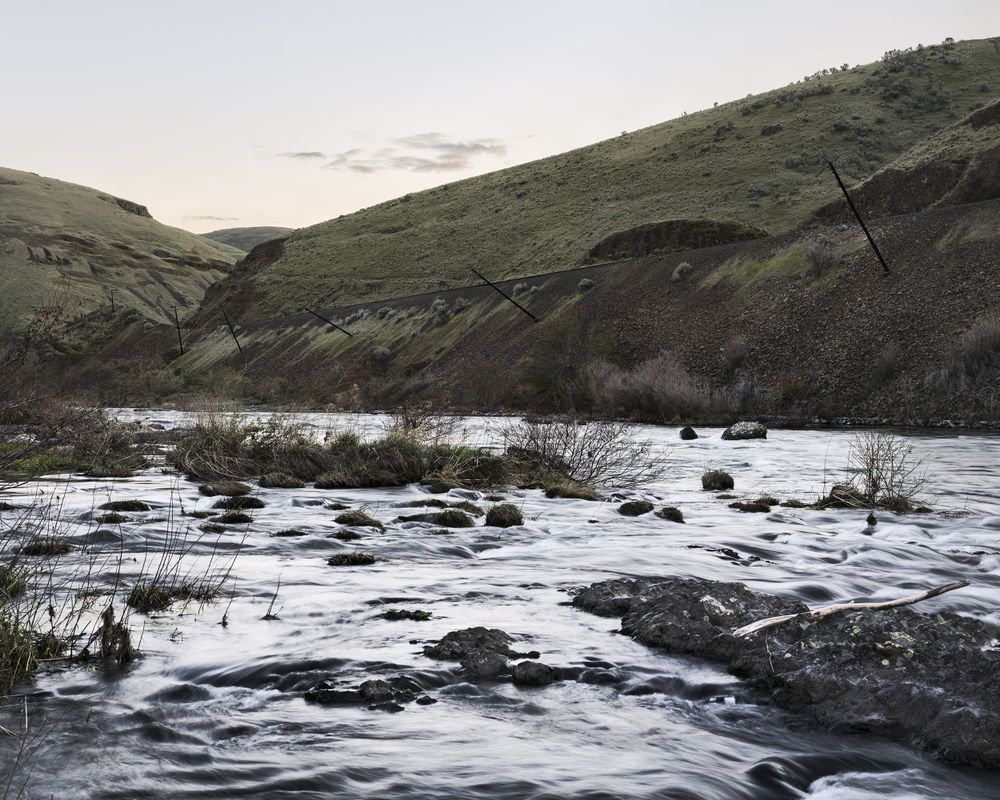
Where does history live? I know it doesn’t exist tucked away in books. I believe it lives in our bones and the bones of our ancestors. The history of the American West is not made of a singular truth – rather it is bent toward our own experiences and conceptions of what it means to be a Westerner. In the West we are continuously struggling to revise our mythology, and to find a new story to inhabit. My work is grounded in the intersection of family, photographic, and geologic histories. This work in particular focuses on the Columbia River Gorge, a landscape that has a photographic history tracing back to when Carleton E. Watkins photographed it in 1867. It is also the place where I grew out of my long held anger towards my father. I am, by birth, a Westerner. My family’s story is a Western narrative. My roots were planted by both of my immigrant grandfathers’ pilgrimage West to work in the copper mines of the early 20th Century. My father later followed their path and worked shortly for the mining industry before cutting his teeth as a photographer whose work focused on the preservation of wilderness and waterways of the Pacific Northwest. My ancestors helped to both exploit the Western landscape as well as to preserve it. As a young man I learned the lessons of adulthood by following others in place of my absent father. While often people feel a child raised without a father is a hardship, I found it to be a blessing. I didn’t have a singular male role model to follow – I had many and they were of my choosing. I learned how to make photographs from studying historical western landscape photographs. Since its invention, photography influenced the understanding of landscape as a physical, psychological, and geological frontier. These 19th Century photographs depict the sharp shift from the expansive sparsely populated landscape of the early part of the century to the dominance of extractive industries that reshaped the physical features of the West in the last half of the century. Carleton E. Watkins is one of the most notable 19th Century landscape photographers who depicted the shift from an image of humans dwarfed by the landscape to one where we are a dominant presence over place. Watkins like my father and further down the line, like me, found solace in the landscapes he worked in. Unlike my father, Watkins was connected to his family, who through the harsh working and traveling conditions of the 19th Century kept in almost daily contact with his wife and children. Watkins was what my father was not. Through looking at the differences between Watkins and my father, I can’t help but question who I will be as a father and husband.
No categories selected
Photos (23)