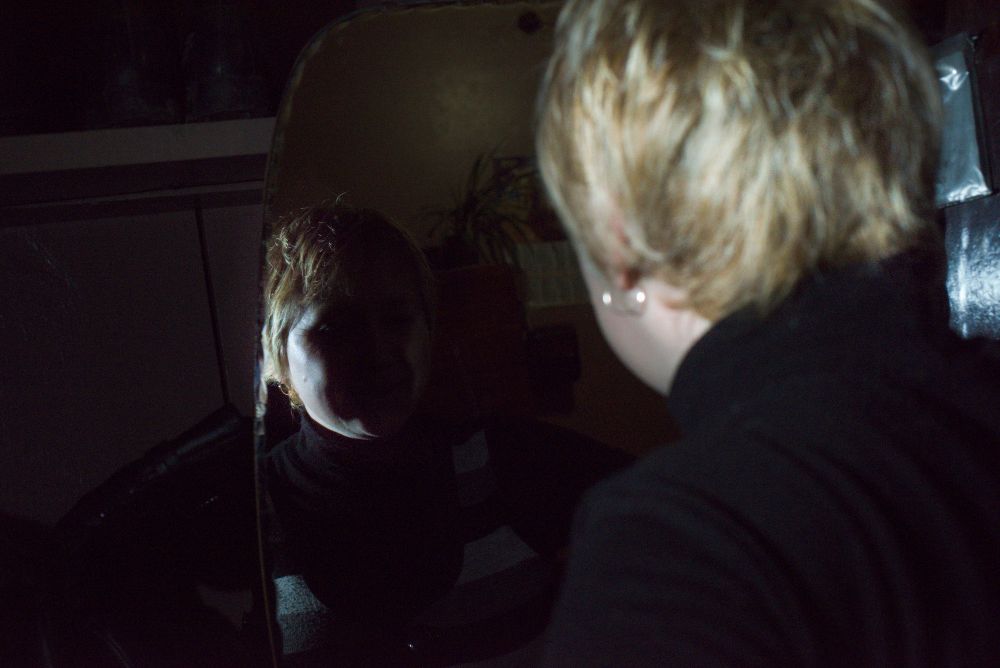
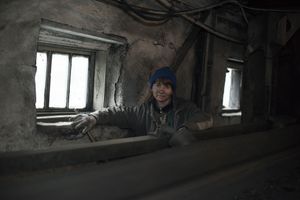
These photographs from my big project “Victories of the Defeated”, were taken in the winter of 2014-15 in Eastern Ukraine, in a remote coal mine close to the frontline settlement of Lysychansk.
In 2014, both the town and the coal mine were occupied by armed groups, and subjected to the terror and horror of war. While military operations to try to liberate Lysychansk began, and then rolled on, women and men working in the coal mine found themselves in a zone of total economic isolation for several months. They worked, but their salaries would ordinarily be paid by the government in Kyiv, so naturally no money came. Devoid of income, and with no belief in the future, they clung on to the only definite thing in their lives. They went in to work. Each day, they would dodge the bombardments landing all around them. Each day, they would plant flowers to keep their spirits up, sometimes in earth thrown up by shells that had fallen overnight. For these people, this act, their determination to clock in as normal, was the only way to keep peace in their communities, to bind together and reinforce the dignity of people who had grown up around and depended on the mine their whole lives.
Pressure to give in was relentless. Separatist leaders in the various occupied cities of Donbas were constantly inviting the miners to join the illegal brigades swarming over that part of Ukraine. But despite financial incentives, and against the grain of the way the war was going, almost every employee declined.
When I came to Lysychansk, shortly after its liberation, this astonishing bravery and the resilience of the miners took a grip on me. I was bowled over by their refusal to participate in war, by their dedication to their work, which was the only thing that hadn’t gone insane around them.
But then the mine received a hammer blow. Now, with their newfound freedom, came a price - the Ukrainian authorities wanted to close the mine. The place that they had been protecting, and keeping going throughout the fighting, was to be shut down. A deep depression had seized upon the place, and the workers. Yet it took a rebellious form. The women invited me to their changing rooms, to photograph them naked, as an act of protest. For me, these intimate, defiant pictures, dreamt up by the women themselves, marked a new definition for photography of coal miners, already a way of life commonly bound to notions of danger, pride and courage, yet here, exceeded by the unbelievably difficult things these people were experiencing.
The women requested that I not publish their photographs immediately, to allow them to forget the baring of their souls and bodies. Now, with the passing of time, I can show these pictures and ask: into what forms do photography and art translate the impulse of the real world? How should we interpret this message? How can we learn to see an action within this, the miners' communication?