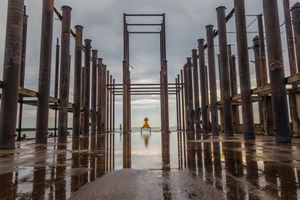
Abandonia in Thailand
Shuffling around the city of Bangkok, it isn’t hard to pick out the shells of abandoned buildings spread about the vast metropolis of this Southeast Asian hub. It’s a city brimming with life, color, and lustrous corporate modernity, but amongst the urban landscape are a number of striking concrete skeletons of decay. Deserted places in Thailand are mainly ignored by the general public, aside from people of limited financial means who use them as shelter from the acerbity of the streets, or security guards hired to look after the crumbling property. Gaining entry in pursuit of urban exploration is often as simple as just walking in, while other times it requires a bit of a ‘gratuity’ or just a simple conversation with inhabitants or guards. Occasionally, it necessitates some stealthy maneuvering and even a bit of calculated risk. Climbing walls or going under barbed-wire fences is not uncommon, and danger is sometimes present, though the risk is more often structural in nature than human. When we consider the hurried development and gentrification occurring in many cities these days, we realize that much of the past is being erased in terms of architectural and social history. People are very aware of these changes and see it happening around them all the time, so there’s often a feeling of nostalgia or holding on to the past that leaves us curious and intrigued with abandoned places. Accepting change is not always easy, and the removal of what is familiar can be difficult for us to accept as individuals and as members of a society. We must remember that changes can also represent growth and a potential for learning from the past. Acknowledging change, be it personal or societal, as cliché as it may sound, is both an unavoidable and pivotal part of living. Change should be faced, embraced, and it’s beauty identified and documented, as it can help us to both grow creatively and to foster our inner-strength.
No categories selected
Photos (10)