Geometry of Echoes
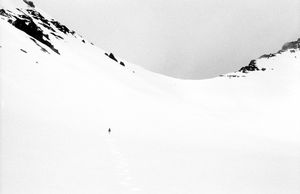
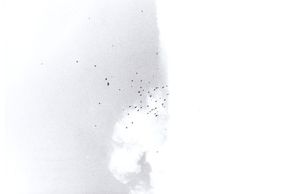
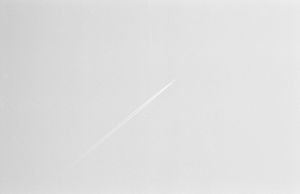
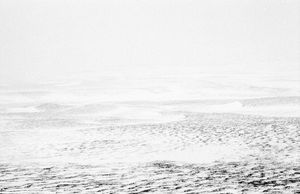
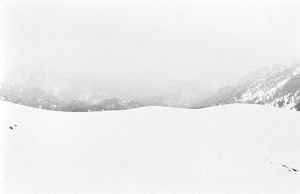
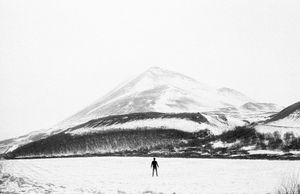
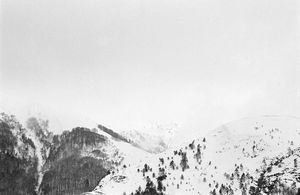
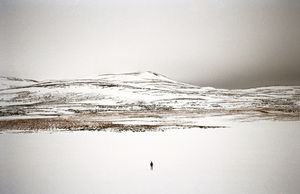
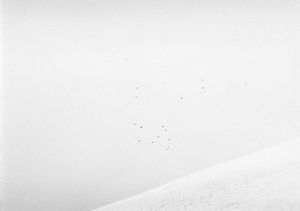
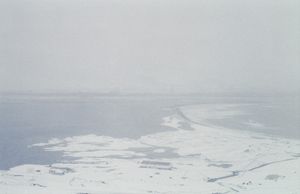
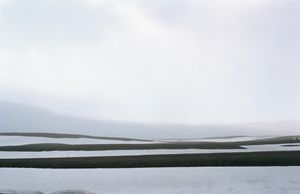
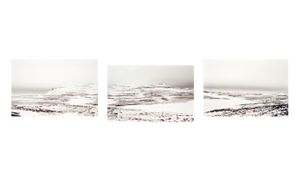
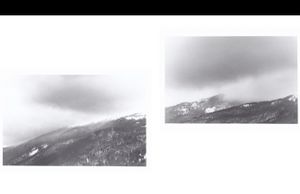
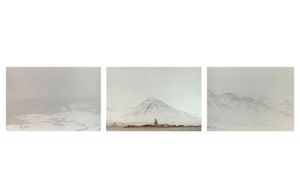
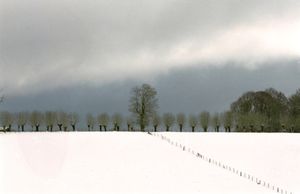
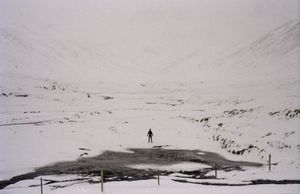
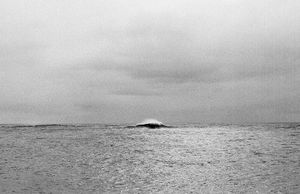
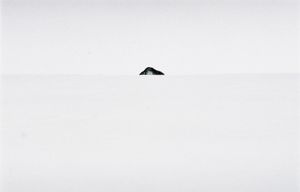
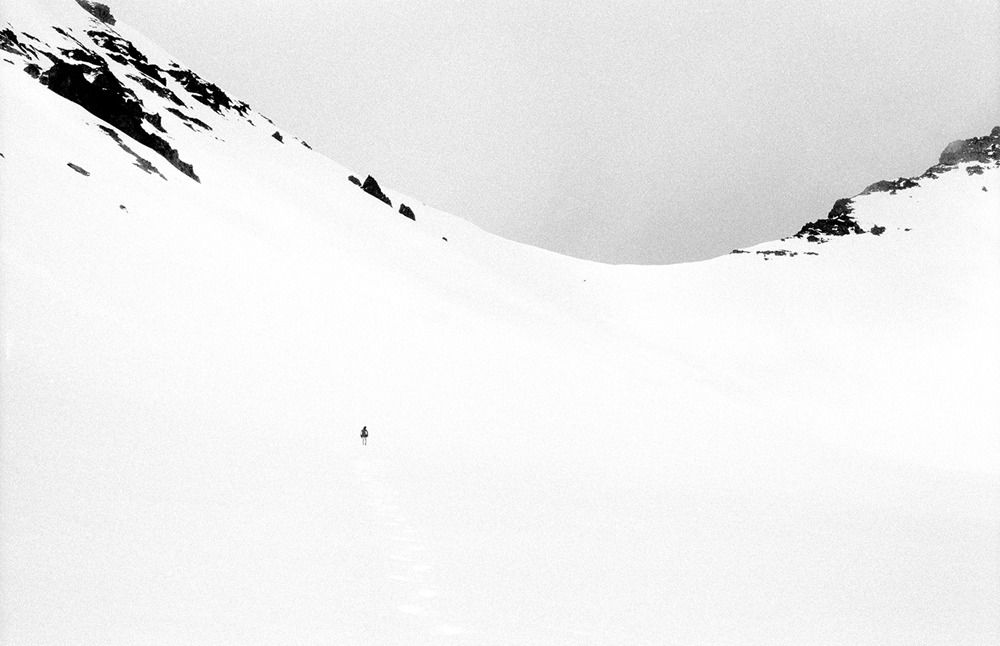
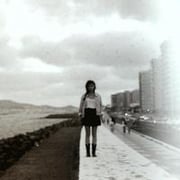
“I believe in those places, they do not sound or have names, perhaps characterized by the fact that there is nothing there, while around, everywhere, there is something. I believe in the oasis of emptiness. Man is the host of the reality” (Peter Handke) Non-narrative series, which through landscape reflects on about the representation of the emptiness in the space, symbolized by the white. Emptied landscapes as allegories of sensory deception and metaphors of fragility. Study of the absent, the invisible, the formless, the unintelligible, the mystery... A priori, this research is more characteristic of the painting, but in this case is a kind of tautology to John Berger's assertion that says "The true content of a photograph is invisible, for it derives from a play, not with form, but with time”. A photo, by its nature, refers to what isn’t seen, it selects an instant of a continuum. What shows invokes what is not shown. The meaning of a photograph lies in awareness between these poles of absence and presence. Geometry of Echoes search to photograph that void, that absence. But apart from this repetition into what is sought and what is given, this study of the emptiness in the landscape represented by white, has several lines of research and they will be explained in a more exhaustive way. First, I’m interested in the contradiction between the idea of "white" as "nothing" and "black" as "something", as the "full". However, the light, that makes possible the revelation of things, is white; without light we can’t see, if we see nothing, we see black. For example, for Cubism, the white means the moment of awareness, and the black symbolizes which is not understood. In my case the black gives the shape. This creates a game between the legible and the illegible. What is understood by the viewer, and what the viewer can’t understand; the object of my study, the empty, the "no –figuration". For this reason, in Geometry of Echoes, the object is not important. The priority is the combination of colours and shapes, which are those that raise the first emotional response. Also are important the internal and intrinsic rhythms of the image. In this regard, my work makes use of a non-objective, evocative and abstract language. It looks for the expression of the spiritual and essentially at the expense of details. Searching the essence of things. “It will always be impossible to create a painting without "colour" or "drawing" but a painting without "object" exists...” (W. Kandinsky) On the other hand, I am interested in the concept of white as the neutral, the non-colour. This establishes an unknown. White and black determine two fundamental characteristics of the colours, which are the light and the dark. Thus, white and black are static colours, while blue and yellow are dynamic. But contrary to black; white is birth. Black is death; there is no future in it, it’s an end. However white is a mystery, but full of possibilities. White sounds like a silence that suddenly can be understood. It is the primordial nothingness, the nothingness before the start, the birth. Maybe it's the sound of the earth in the white times of the glacial period. (W. Kandinsky) A very important reference, both conceptual and aesthetic in my work is the traditional oriental painting, because emptiness is a fundamental element in their Philosophy. For them the empty link the visible world to the invisible world, has an active role, it’s a living entity. It raises the internal transformation. So the picture isn’t just an aesthetic object, but a microcosm, which re-creates, like the macrocosm, an open space where true life is possible. As François Cheng explains; "...by the vacuum, in each case, the painter felt the pulse of the invisible in which are all things". "A great Presence is hard to see. A great sound is hard to hear. A great figure has no form. " (Lao-tzu) In the landscape of traditional Taoist art, the vacuum strips the image of all the details to stay in the essential lines that draw the landscape. So, in my work, through fog or snow, the landscape becomes a mystery that makes it sacred. I especially interested in what they called "Yinxian" (visible - invisible) concept applied especially to landscape painting and that is based on the art of not showing everything, in order to maintain the mystery.
No categories selected
Photos (22)