CLAYTIME
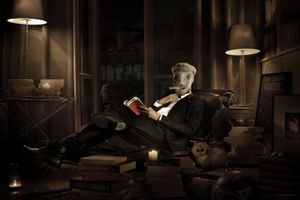
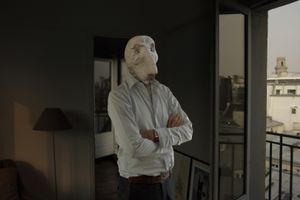
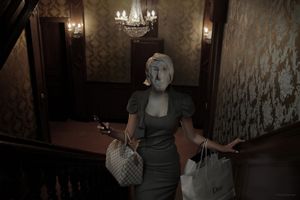
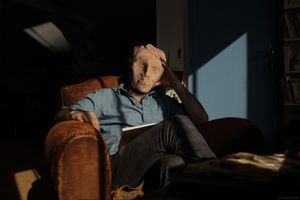
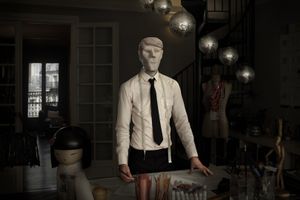
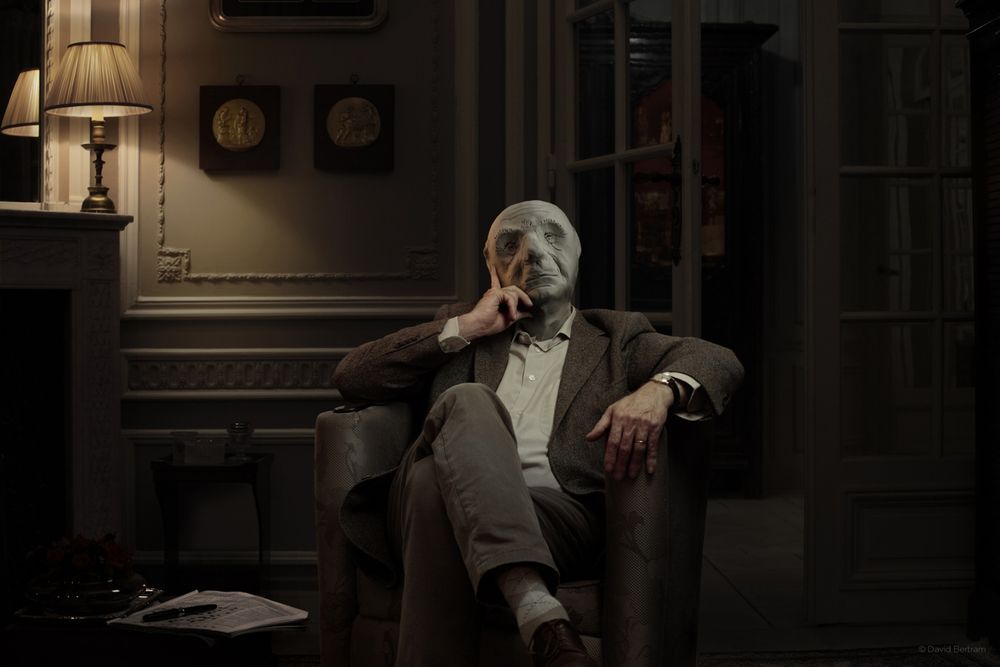
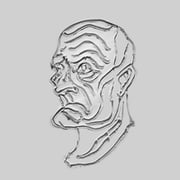
David Bertram: the art of the portrait The photographer brings to view: his eye and the lens of his camera offer his models a reflection, in every sense of the word. This photographer’s art involves overcoming appearances and revealing the intimate, real human being behind the social being. David Bertram transforms his models and rids them of appearances. Rather than posing passively, they play a role in their own portraits. David encourages his subjects to take ownership of their traits and perform an exercise in psychoanalysis by making clay models of their faces. In the hands of a novice, the clay can only retain - and demonstrate - the essence. The sculptures cannot beautify or be a true likeness. A likeness of what? There can be no cheating, no hiding. They have to show themselves as they are, by what defines them. Only the bare minimum remains. The presentation of this clay head on its human body photographed against the theatrical backdrop of the subjects’ everyday lives helps them find themselves as well as questioning who they really are. In concealing the face, that worldly identity, David Bertram fulfils his role as an artist-photographer who grasps reality and renders it visible, comprehensible. When the models are confronted with their portraits, surprise and amusement are just the first, anecdotal stage in reactions. Next comes stupefaction as to the revelations that stem from the dialogue between head and body, which reflect the model’s intimate contradictions. The model’s friends and family need a generous helping of humility to admit that their loved one, whom they thought they knew, can suddenly demonstrate a different image to the one they were sure of. The photographer brings to view: others becomes ourselves, we become voyeurs. Our interpretation is different to that of the model’s inner circle. We see the portrait as a whole, with its hybrid reality, its mixture of objectivity and subjectivity. It is not a simple photomontage in which two worlds collide, not just a meeting of two techniques. It goes beyond the associations that were Lautréamont’s idea of beauty and surpasses a mere juxtaposition of surrealist collages. David Bertram reveals something that is born of a subtle, muffled interaction. The clay eludes futility and the conventions of a posed face; it shuns appearances and reveals the core. Once the initial surprise has subsided, the spectator enters a strange yet familiar world: the interior world of the model, carefully recomposed by the eye of the photographer and dotted with keys to understanding. The photograph offers a complex message in which objects, symbolic still life, are pieces of a puzzle of a life story that evokes the portraits of Holbein. David Bertram establishes a subtle atmosphere with clever lighting that structures a photographic tableau in which objects come to life and recompose the hidden image of the model. Familiar objects unsettlingly take on lives of their own: they speak to us and their message is clear. When the living being is turned into clay, the inanimate becomes animated. The photography may be troubling, yet the lighting that envelopes the scene gives it deep unity, an atmosphere in which infinite shades move from the shadows towards the light to become objects with life and meaning. We then plunge into the photograph with pleasure, the sort of pleasure that is derived from the forbidden, a pleasure tinted with apprehension, sometimes with terror, for we know not what we might find within the intimacy of the shadows, beyond appearances. Dominique-Elise Houzé
No categories selected
Photos (15)