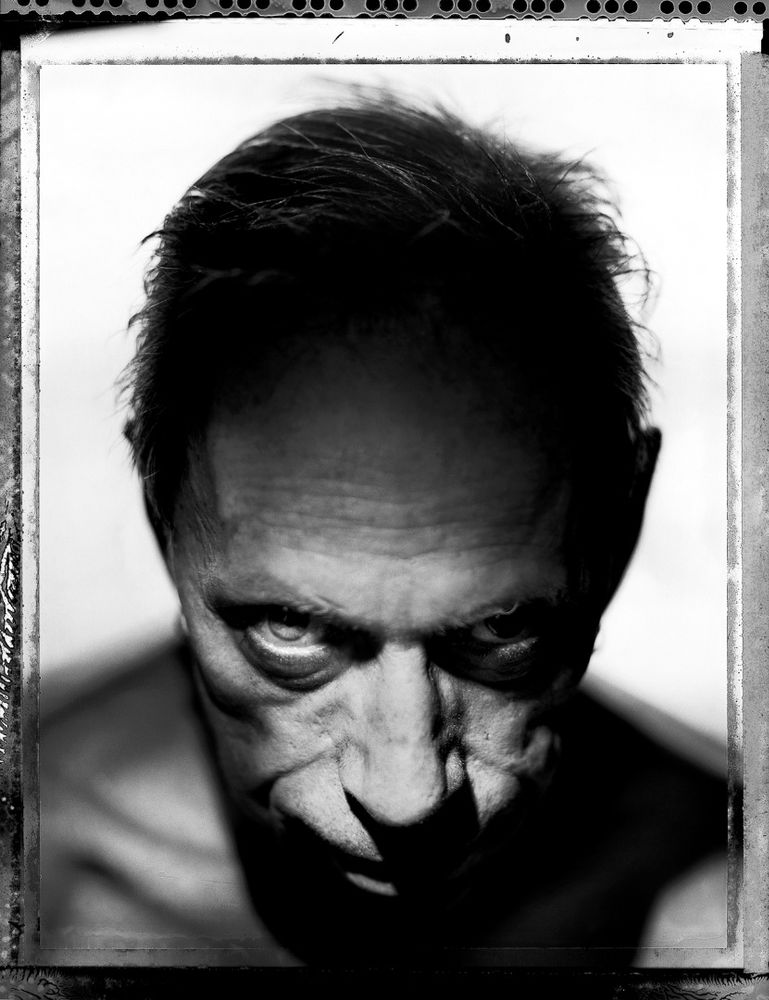
UNCLE CHARLIE
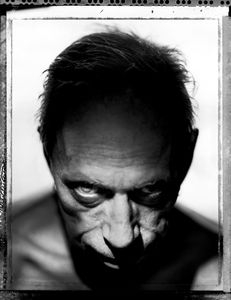
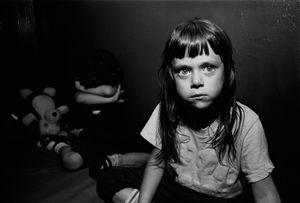
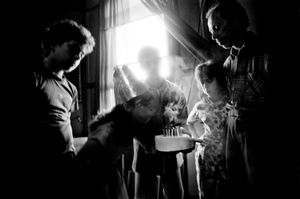
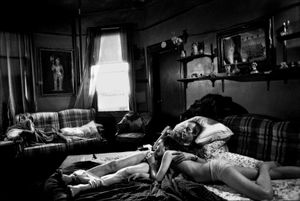
"The family is the cornerstone of our society. More than any other force, it shapes the attitudes, hopes, ambitions, and values of the child." - President Lyndon Johnson "The family is the nucleus of society." -Ariel and Will Durant "The family unit plays a critical role in our society and in the training of the generation to come." -Supreme Court Justice, Sandra Day O'Connor It is hard to overstate the importance of family in shaping society; for the family is an incubator for the generation to come. Societal problems such as poverty, mental illness, sexual and mental abuse, drug addiction, and domestic violence have often been shown to be cyclical in nature, perpetuated within the family from one generation to the next. There are many different lens through which one can view these issues; from the study of sociology and policy implementation on down to looking intimately at one single-family unit. It is my thirty year documentary called Uncle Charlie that puts a microscope to one such family, in this case my family, in the pursuit of showing first-hand what life is like within the cracks of society. My uncle was born into a dysfunctional family in Bed-Stuy Brooklyn in 1940. An alcoholic father with a gambling and barbiturate addiction, notorious as a local gangster, Uncle Charlie's male role model growing up was anything but a model father and citizen. He taught Charlie and his siblings to run numbers for him and to always use the alias they'd rehearsed if ever questioned. Life was never about tomorrow, never about education and building for the future. As Charlie says in the book, "There has never been any tomorrows. Only today's." Charlie's childhood was about surviving, scheming, and using whatever resources were at your disposal, including intimidation and violence. It's little surprise that Charlie's life turned out to follow this same trajectory. I remember as a child my Uncle Charlie, my Godfather, being a tough Brooklyn guy, with tattoos and a revolver he called his "Saturday Night Special". I loved having an Uncle with "street cred". I also vaguely remember my grandfather, a stroke victim, a shell of his former self, everyday sitting by the front window, looking out on a world he no longer recognized. What I couldn't foresee as an 18 yr old when I decided to document my uncle and his family, was that throughout the thirty years of this story I would photograph my uncle's descent and slide into mental illness and poverty, resulting in him sitting by that same window, a shell of his former self, looking out on a world that passed him by. What I couldn't foresee was that by documenting his life for thirty years, the dysfunction itself would come full circle and cycle through one generation to the next. Nearly 1.7 million New York City residents are officially classified as poor. The prevalence of serious mental illness is highest among those with the lowest family income level. About 35% of welfare recipients have either major depression, posttraumatic stress disorder, general anxiety disorder, and/or alcohol/drug dependence (Center for Poverty, Risk and Mental Health, University of Michigan, 1998). My Uncle Charlie is a chronic schizophrenic who suffers from severe depression and anxiety disorder. In 1980 he was diagnosed by Dr. Michael Daras, who described Charlie as "withdrawn, subject to delusional ideas, subject to persecutory thoughts, and depressed." Charlie has never been treated for this underlying condition, putting him in a category with 2.2 million other Americans suffering from this neurological brain disorder. He has been unable to hold down a job since March 10, 1976, instead collecting social-security disability since that day. The Uncle Charlie story is one that is enmeshed in the crack epidemic in New York, directly effected by the onslaught of AIDS, and deeply entangled in the vacuum that is the public mental health services and foster care system. Uncle Charlie is the face of the forgotten, the voice of the unheard, and a personification of the impersonal statistics. Raising five children on his own since 1986, children whom were often in and out of the foster care system, as well as treated by the public mental health system, Charlie's family encompasses the full spectrum of life in poverty and the challenges faced by life within the inner city. With crack addicts and prostitutes coming in and out of Charlie's life, and therefore his children's lives, as well as his youngest son contracting and dying of AIDS, Charlie’s family in many ways suffered from the same dysfunction in which he was raised, the only difference was the cultural context. Now an elderly man, isolated and ostracized from his children, Charlie's deeds have come full circle, leaving only a shadow of himself, a bearer of incredible burdens as well as a perpetuator of unconscionable actions and abuse. People often ask me what Uncle Charlie is about. After thirty years, one would think I would be able to easily sum it up. But this book is about life, raw unintelligible life; the life of one man, my uncle, and as in life, there are no easy answers or summaries. It's about broken dreams, disappointment, and having the resiliency to find slivers of happiness in an oppressed existence. It's about consequences, missed opportunities, delusions and loss. It's about mental illness, poverty, abuse, and their perpetuation. It's about having the guts to look intensely at the familiar and process what's in front of you, taking an account of your family, your society and what is implied about both. To be ignored in life and eventually forgotten in death is a terrible thing. I think this book has given my uncle the dignity to tell his own story in his own words, a chance to step up onto an imagined stage before an anonymous audience and be heard. He has always considered his life an untold tragedy, at times comparing it to Hiroshima. He got the chance he always wanted: to be heard. In exchange, the world also gets the chance to look back in through the window that Charlie sits by everyday and see what's on the other side.
Photos (5)