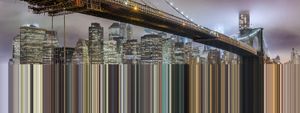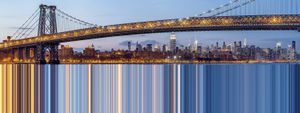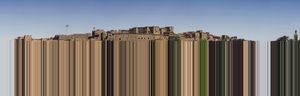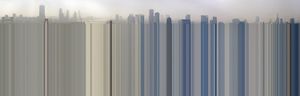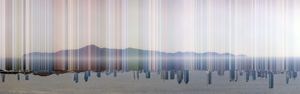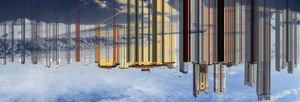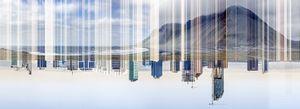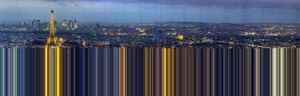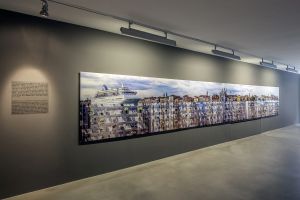

Facsimile Vol.1 & Vol.2
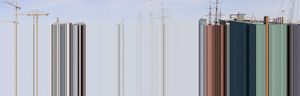
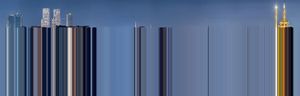
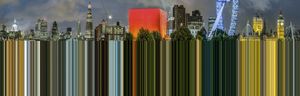
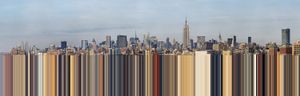
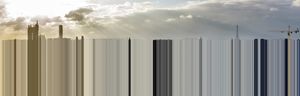
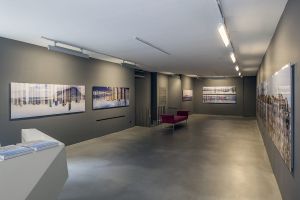
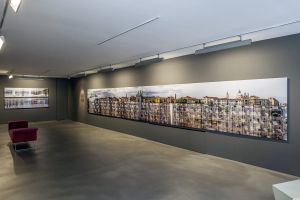
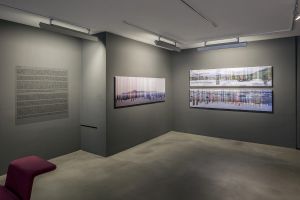
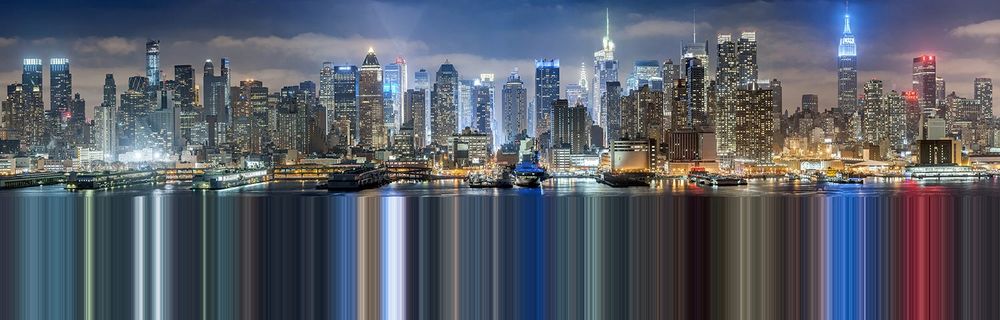
Facsimile Both previous “Muta-morphosis” and present “Facsimile” series focus on the perpetual transformation of the urban scenes. While the older series, “Muta-morphosis”, maximizes the urban content by shrinking very long panoramic photos into a photographic frame with a typical ratio, “Facsimile”, on the other hand, extends certain parts of cities to attract attention to particular dynamics among various urban components. In this context, it is possible to consider “Muta-morphosis” series as a “broad” body of work, which rather focuses on the egalitarian aspect of all urban zones that form a city; and “Facsimile” series as a relatively “narrower” body of work where certain urban zones disappear in order to make the hierarchy of cities visually more legible. Cities may seem to grow only upwards, but they actually accommodate two different worlds: First being the obvious Überland, the city over the ground level; and the other Unterland, the underground. Even though soundly developed metropolises have a very intricate and large underground infrastructure, the most lived, experienced and perceived urban world appears to be the one above: Überland. Unterland is usually ignored, misperceived, underestimated and not particularly pleasing by many; since the times we spend in the Unterland is usually temporary and we do not reside there. The “Facsimile” series is obtained by selecting a single horizontal line, very close to the horizon, which happens to be the threshold between Überland-Unterland and extending this line towards the bottom. The visual result of this extension, composed of thousands of thin and thick vertical lines in numerous colors, refers to the various chrono-layers that a city accommodates in its history. In addition, the same optical effect happens to graphically illustrate the fact that what remain at the top of city skylines are what rule the city. While the individual citizens’ relatively smaller homes get erased and become part of the heterogeneous line entity of the Unterland, institutional and corporate edifices stay intact. The vertical lines also refer to the erratic fax message glitch aesthetic that happens when the telephone line, in other words communication drops. This refers to the lack of communication between the corporatized, gentrified and the residential areas of cities. “Facsimile Vol.2” carries the presence and basis of existence of cities to a different dimension. The dissolution that existed between the Überland and Unterland in the first version; transforms into a tension in Vol.2, between urban-rural, in other words between human-nature.
No categories selected
Photos (22)