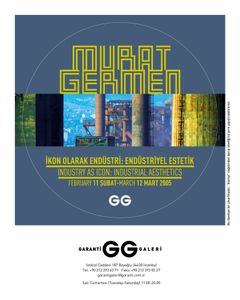

Industry as Icon: Industrial Aesthetics
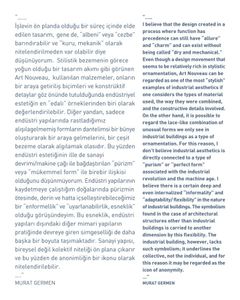
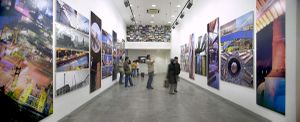
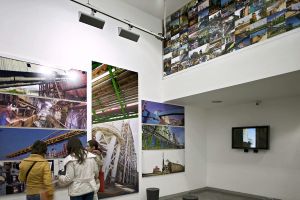
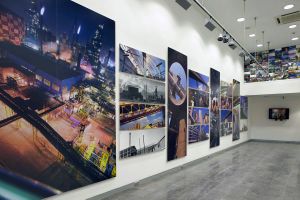
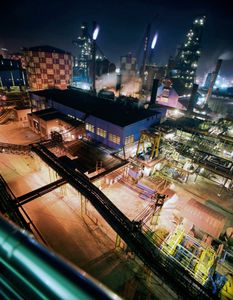
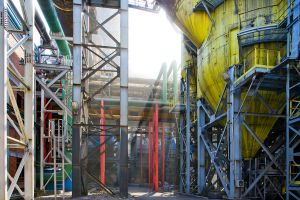
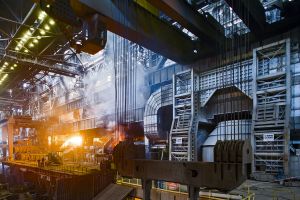
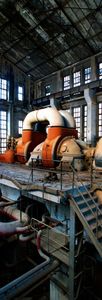
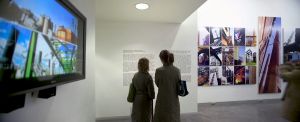
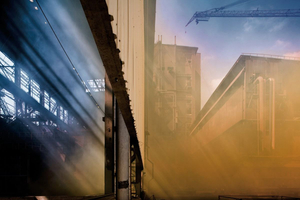
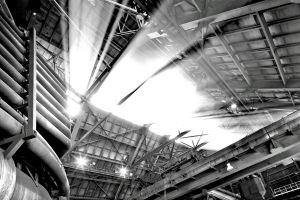
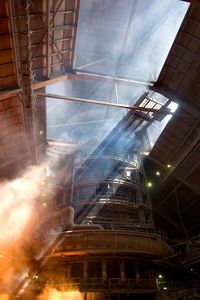
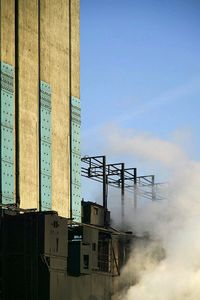
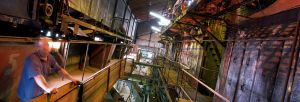
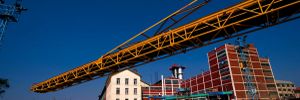
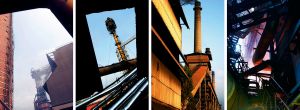
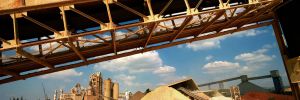
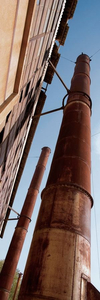
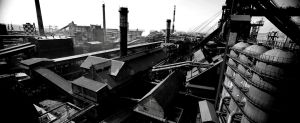
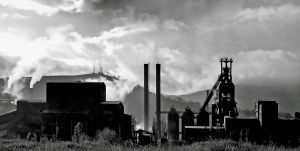
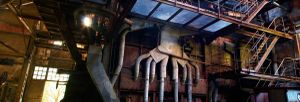
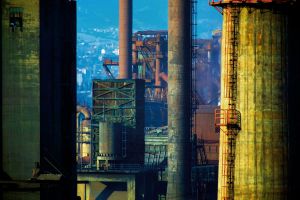
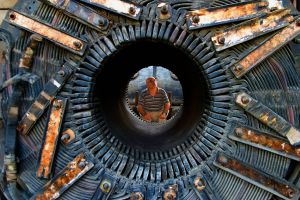
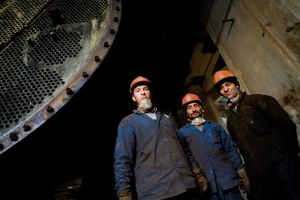
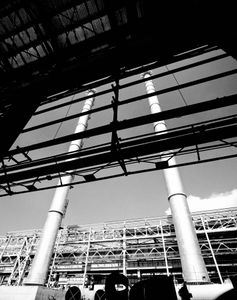
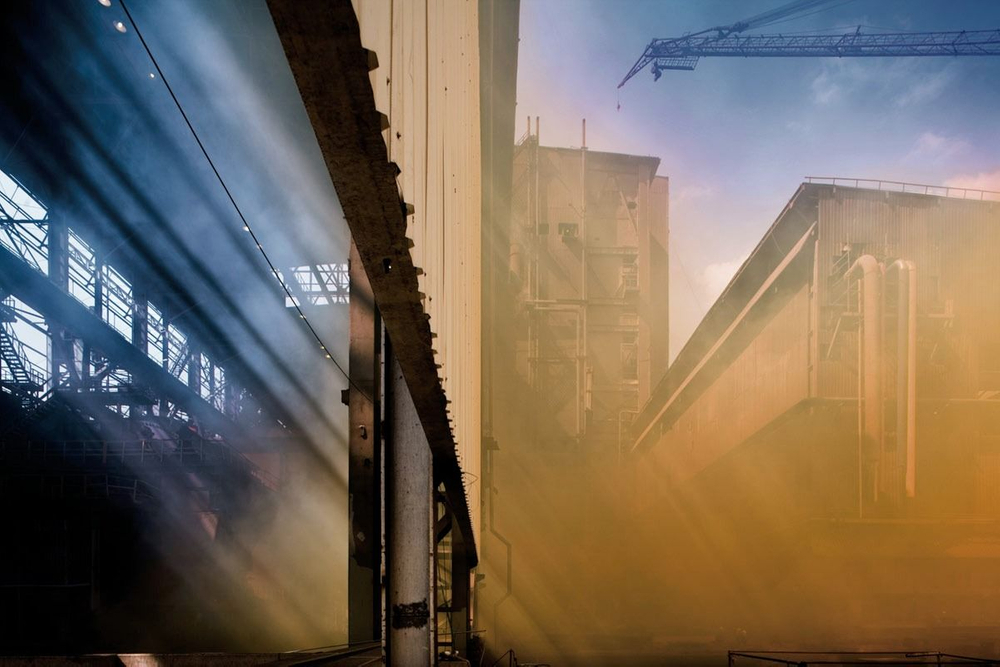
Industrial aesthetics is not about ingratiating, promoting or selling itself, buildings sampling industrial aesthetics do not have to sell in millions in order to exist. As a consequence, industrial buildings are designed “to a necessary degree” and the resulting design language is very straightforward, sincere, non-competitive, and most important of all, non-exclusive. The fact that industrial buildings tend to remain in the background as a result of above mentioned attitude, leads to a certain anonymity in their identities, and throughout history, the anonymous has always been a reference point and a source of inspiration. This anonymity, causes industrial aesthetics to remain disconnected / independent from any “ism” or movement. On the contrary, there are a number of “ism”s that have been based on, or have referred to industrial aesthetics. Even though an industrial building does not aim to promote itself, it has a beauty that inadvertently “imposes” itself. It is like an individual sitting alone in a corner who; beneath his calmness, confidence, and simple appearance, has a deep and charismatic personality (Walter Gropius calls this “the unintentional beauty of industrial buildings”). The charismatic minimalism of industrial aesthetics is not a pretense, it is pure and objective; it has not emerged to create finished, glossy surfaces. An ironical paradox regarding the concept of industrial aesthetics is that while industry is a mass manufacturing process aiming towards creating uniform objects, industrial buildings themselves do not exhibit such uniformity, sameness, or monotony. Buildings are shaped in various combinations and sizes depending on the quantity and quality of the products, and even buildings with the same function differ in design according to distance to local resources and transportation arteries. This variety introduces an incompleteness that has potential for future development, spaces that are full of surprises, and the possibility to obtain different points of view. On the other hand, though individual buildings are not replicas of each other, there is a certain level of homogeneity and universality among them due to their common typology. The distinction between industrial buildings of various countries is not as pronounced as the diversity between indigenous architectures of these countries; it is not easy to talk of a particular native quality in industrial architecture. I don’t believe industrial aesthetics is directly connected to the notions of “purism” or “perfect form” associated with the industrial revolution and the machine age. I believe there is a certain depth of “informality” and “adaptability, flexibility” that you can internalize in the nature of industrial buildings. This series aims to celebrate the straightforwardness and sincerity hidden in the complex and catastrophic visuality of industrial aesthetics, and to bring it once again to the forefront. It can also be envisaged as an attempt to discover architecturally exciting and inspiring space / location relationships in industrial buildings, and to propose a reconsideration and re-evaluation of design, which has turned into a commercial race. I hope we remember that the visual material depicted in this exhibition also constitutes an aesthetics of labor…
Photos (30)