Heavy Hand, 
      Sunken Spirit

Photos (12)

Cover
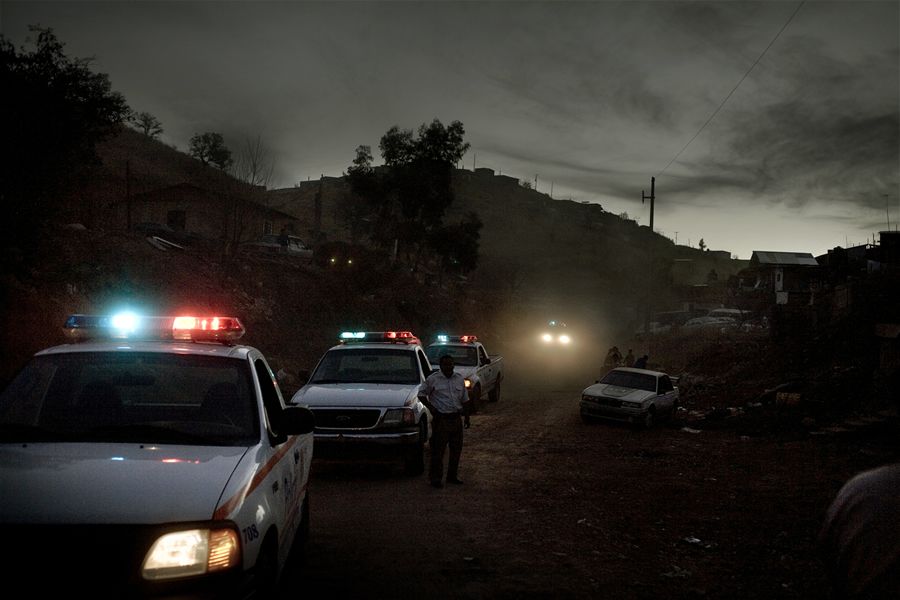
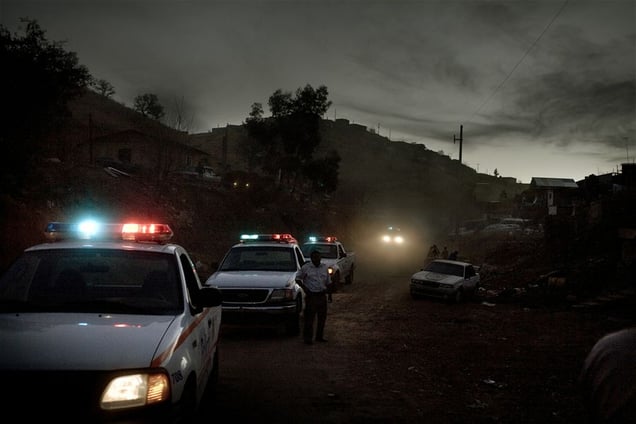
Police in Nogales, Sonora conduct a street sweep for drug dealers and drug users.  Cities along the US-Mexican border have always existed in their own space, defined more by their position between two countries than their presence in one of them.  With border security increasing, more smuggling is now conducted in the Sonoran desert rather than through cities. © David Rochkind
File: Rochkind_Lens001.jpg
A man who has just been returned to Mexico after trying to illegally enter the US stands just across the border at a Mexican customs and immigration office in Nogales, Sonora. © David Rochkind
File: Rochkind_Lens002.jpg
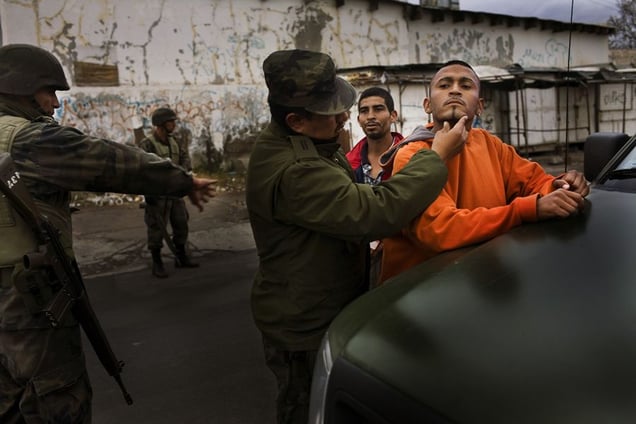
Ciudad Juraez was the center of Mexico's violence in 2008, with more than 1,500 murders.  Thousands of soldiers were sent to the city to try to stem the violence, though after a short decrease in murders the violence has blossomed once again.  Here, soldiers search young men in the streets of Juarez. © David Rochkind
File: Rochkind_Lens003.jpg
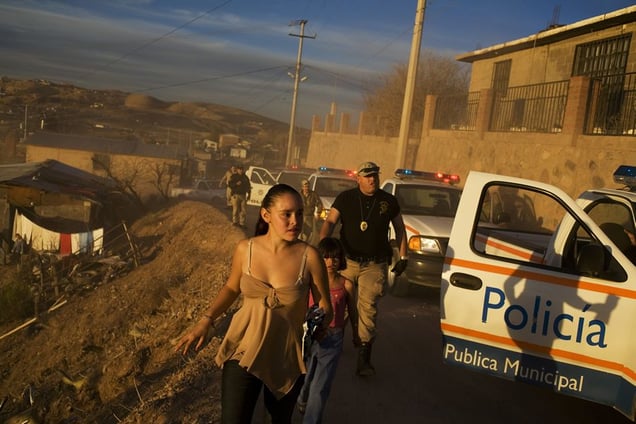
A young girl walks by a caravan of vehicles as police look for drug users and drug dealers. Mexicans of all ages are surrounded by violence, as murders have become commonplace and soldiers and police are often seen patrolling the cities. Psychologists believe that this conflict will have a lasting effect on the country's children. © David Rochkind
File: Rochkind_Lens004.jpg
A prostitute undresses for a client in a short-term motel in Nogales, Sonora. © David Rochkind
File: Rochkind_Lens005.jpg
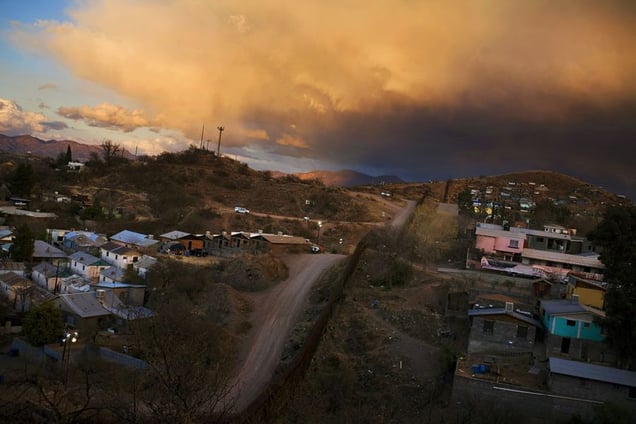
A wall runs along the border separating Nogales, Sonora (right) and Nogales, Arizona.  The dangers migrants face continue after they cross into the US, as this is where many people wait to take advantage of vulnerable immigrants. © David Rochkind
File: Rochkind_Lens006.jpg
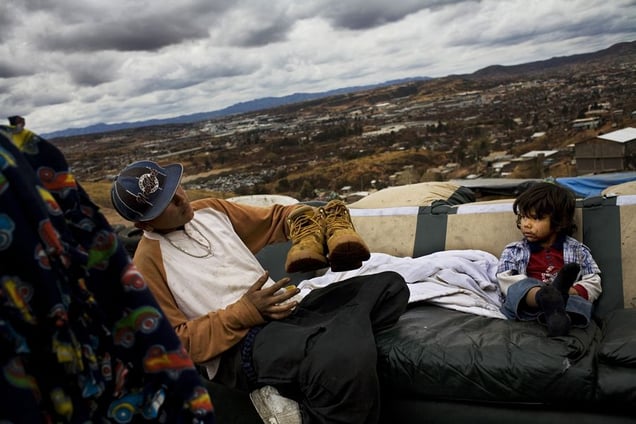
A young boy sits on a couch with a neighbor. He and his family have been sleeping outside since their cardboard shack burned to the ground two weeks before. Before the accident, the family had no water or electricity and their only source of income was selling scavenged trash.  Nearly half of Mexicans live in poverty. Many people along the border turn to cartel work to survive. © David Rochkind
File: Rochkind_Lens007.jpg
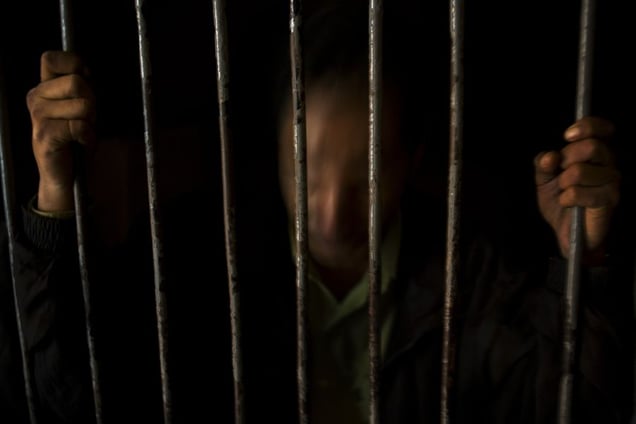
A man arrested for drug use stands in his jail cell in Nogales, Sonora. The police often make preventative arrests, sweeping through the city and arresting those people they believe will pose a threat that night. They lock up these "known" criminals until their families come to take them home. © David Rochkind
File: Rochkind_Lens008.jpg
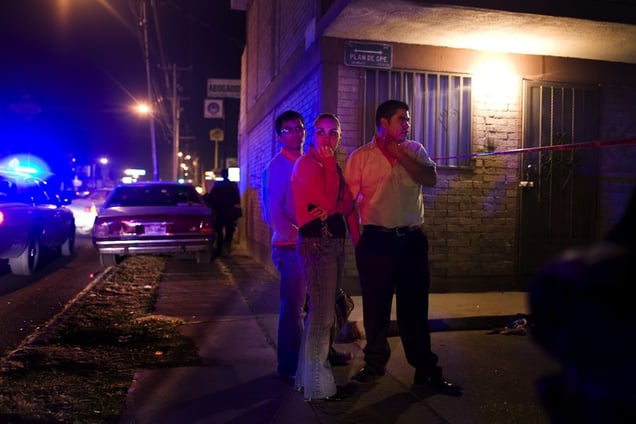
Bystanders wait near a crime scene. Earlier that night, a security guard at a doctor's office was shot twice in downtown Ciudad Juarez. © David Rochkind
File: Rochkind_Lens009.jpg
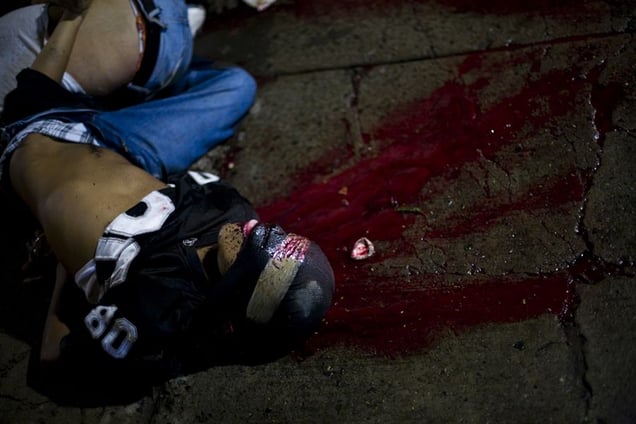
Two men were handcuffed, blindfolded and shot in the head in downtown Mexico City. Their bodies were dumped in the middle of the street underneath a light in order to ensure they would be found. Police determined that the executions occurred due to a fight between local drug dealers. This kind of violence is constant throughout Mexico and shapes the country's daily life © David Rochkind
File: Rochkind_Lens010.jpg
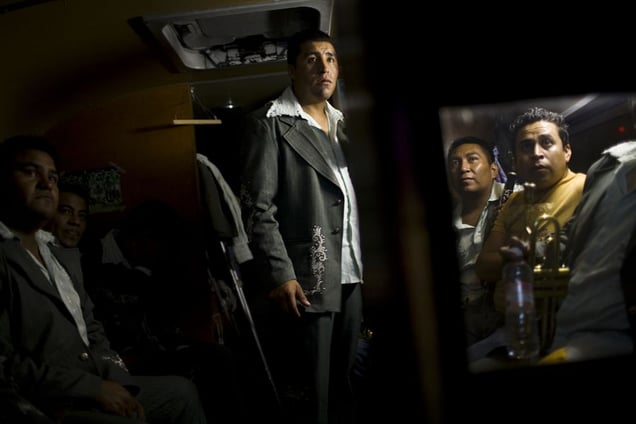
A group of Norteno musicians wait in their tour bus after a concert.  Norteno musicians are famous for singing "corridos", or ballads. They sometimes sing "narco-corridos", or ballads about drug leaders. In the past several years, a string of Norteno musicians have been killed in crimes that are believed to be drug related. © David Rochkind
File: Rochkind_Lens011.jpg
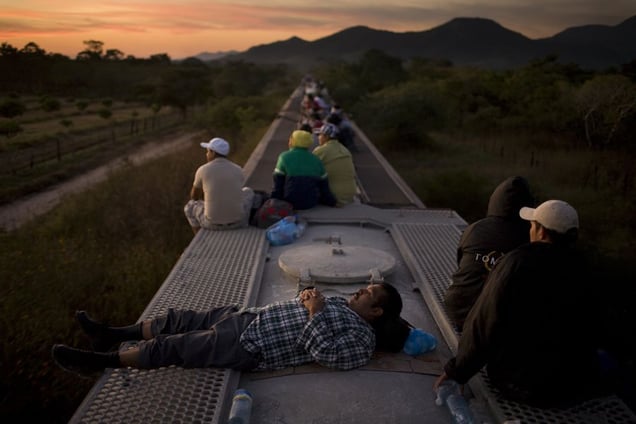
Central American migrants ride on top of freight trains through Mexico to reach the northern border, where they will attempt to cross into the United States. These migrants have increasingly become targets of drug cartels.  It is estimated that as many as 10,000 migrants were kidnapped in 2009. These kidnappings serve as an alternative source for the cartels. © David Rochkind
File: Rochkind_Lens012.jpg