

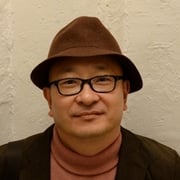
Painters : the painting laborers
Dafen Oil Painting Village (DOPV) in Shenzhen, China is the world’s largest oil painting market. Cheap oil paintings for fast consumption, which can be classified as ‘minor art’ are produced in this village and are exported to the world. This village started with about 300 painters in 1980s and began to expand rapidly around 2000. Now there are more than 10,000 painters working in the village. The oil paintings produced here account for almost 70% of the world’s oil painting market. I came to know about DOPV for the first time in 2005 and have been paying attention to it ever since. Then I came to plan a TV documentary about DOPV and conducted filming process by staying there from 10th to 26th of September, 2017. At the same time, I worked on my photographs as well. Unlike the documentary for broadcasting which focused on introducing the place, I wanted to present an even deeper vision concentrating to a sole concept in my photographs. Particularly, I concentrated on the features of the painters here. Painters in DOPV are different from ‘major artists’ who can be seen in famous art museums or galleries. The painters here work in old and small rooms or in alleyways between buildings instead of decent ateliers. They duplicate commonplace patterns of paintings. Sometimes, several painters work together for a painting through a strict division of labor. They also copy masterpieces of famous painters such as Vincent van Gogh or Gustav Klimt. They paint from early in the morning till late at night and sometimes work overnight to meet the orders. For them, painting is not art but labor. They are more like laborers working in a factory than artists. Instead of star artists made from major art system of the contemporary art or artists decorated with elegance and stylishness through the eyes of mass media, I saw artists surviving their lives with all their efforts – the laborers. I don’t want to regard them as ‘minor artists’ or third rate artists. I found the most instinctive and honest aspect of art in the form of labor. Probably this could be the one that what we call art now has lost or deliberately got rid of. I’d like to call them ‘painting laborers’ rather than ‘painters.’ Probably that could be the most noble term than any other words to express those artists. I wanted to express the impression as much as I could. Even though many photographers have taken the portrayal photographs of artists, those were not be the ones I could refer to. What I had to throw away was the cliche commonly found in portraits of artists such as stylishness, romanticism, agony or insanity. I let them to stand still staring the front for the shot and took the photographs of their faces like a mug shot with a minimum background. I asked them not to make any pose or facial expressions in order to capture a straightforward portrait seen from the finder. The reason for this was that I wanted to express the figures of ‘painting laborers’ rather than painting artists through their undisguised faces. From this, I wanted to evoke the art being completed by hard labor. Painters in the photographs are the ones I contacted while I was filming my TV documentary, so I did not have difficulty in explaining my intention or gaining their consent. These photographs will be released via press media at the time of broadcasting of the documentary.
No categories selected
Photos (10)


