Shipbreaking

Photos (12)

Cover
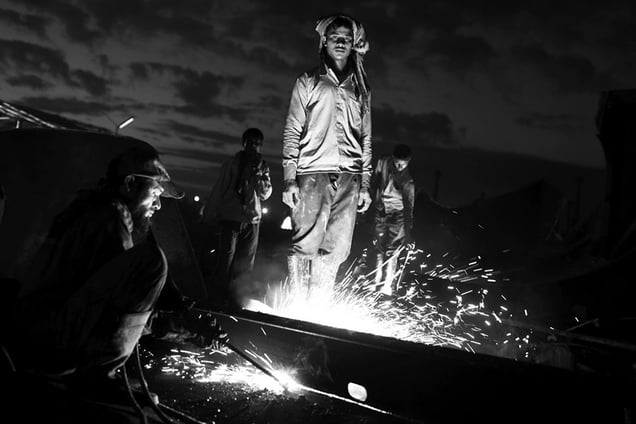
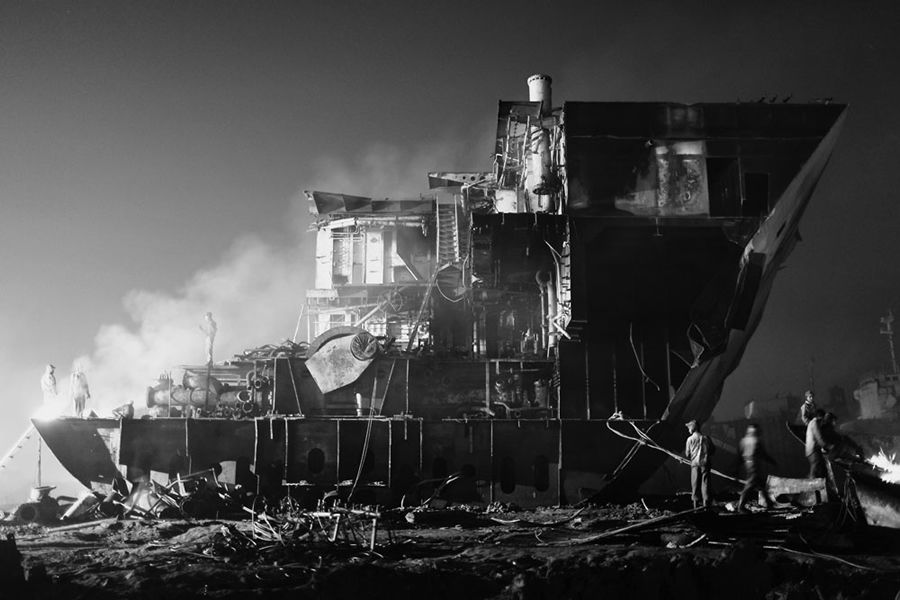
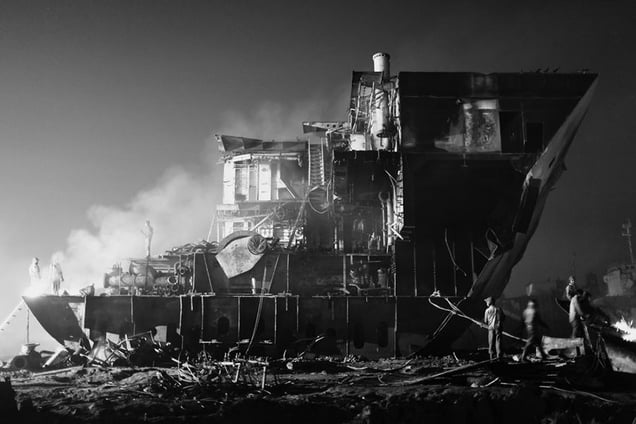
Workers deal daily with highly toxic materials. Contact with these materials alone can be very harmful to health, but when they are burned (on purpose or indirectly, through the heat generated by the blowtorches), the effect is devastating.  Asbestos, heavy metals (in paints, coatings and anodes) and persistent organic pollutants found in chemicals are some of these materials. © Pierre Torset
File: shipbreaking__12_.jpg
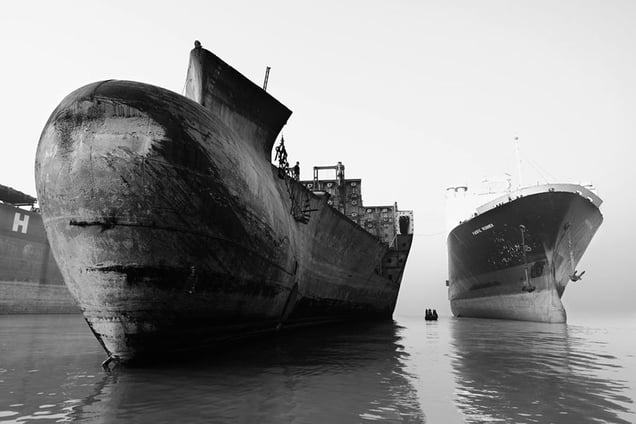
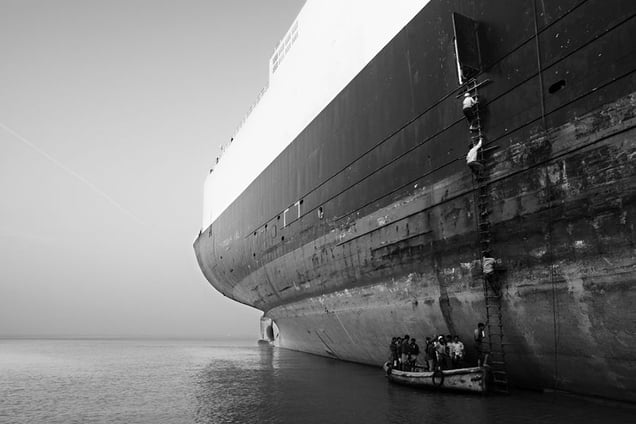
A team reaching their ship by boat (in the middle). Both oil tankers and cargo boats are broken in Bangladesh, while other countries are more specialized. Oil tankers represent the greater danger for explosion, but cargo boats also contain huge amounts of toxic chemicals (asbestos, heavy metals etc.) © Pierre Torset
File: shipbreaking__03_.jpg
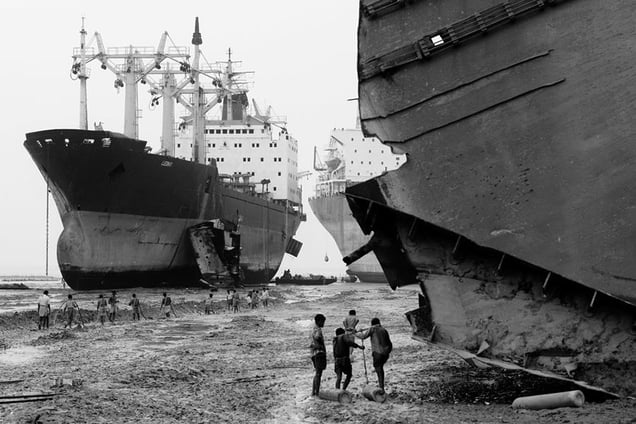
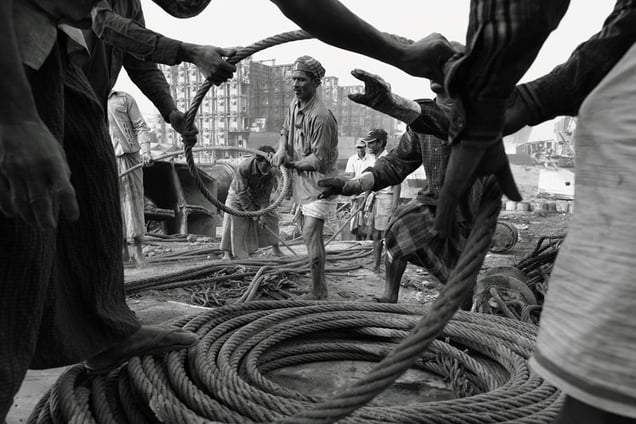
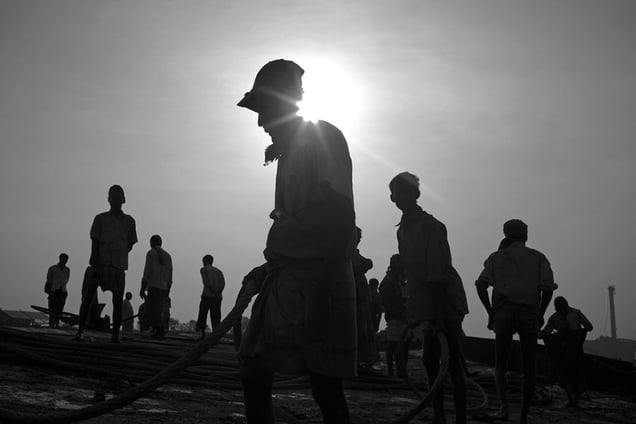
On the right, some workers take oxygen bottles to the ship to feed the blowtorches. On the left, a row of men pull a thick steel-made cable that will be used with a winch to bring ship parts closer to the beach. They have to walk there through low tide. They are often wounded by pieces of steel or glass lying in the mud. © Pierre Torset
File: shipbreaking__08_.jpg
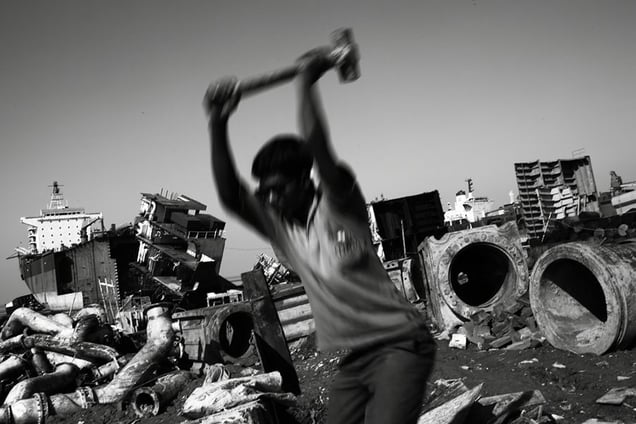
Worker breaking granite blocks used as weights in the ships. © Pierre Torset
File: shipbreaking__05_.jpg
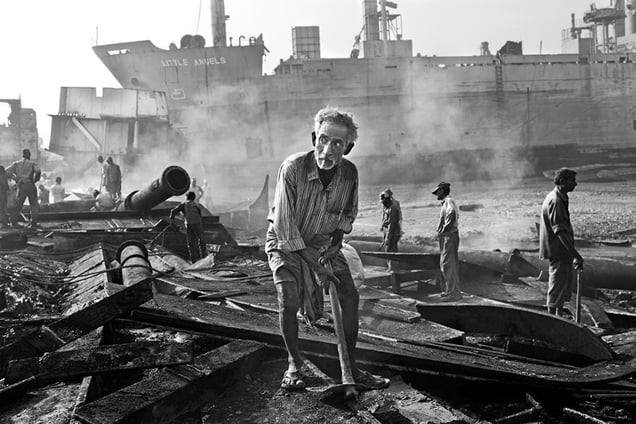
Anisur, 42, has been working in the shipbreaking yards in Bangladesh for about 20 years. Very few bear it so long. Most of the workers are less than 30 years old and work there just a few years. He now has some skin and breathing problems that he links to his work, but no medical facility can confirm it. © Pierre Torset
File: shipbreaking__09_.jpg
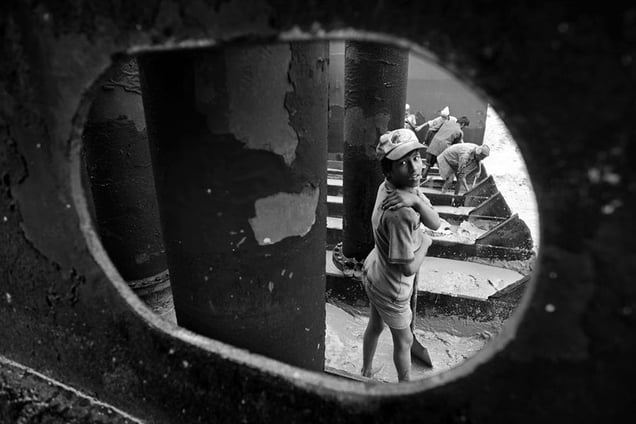
Child labor is a common practice on the Bangladeshi shipbreaking yards. Some remove mud, others assist the gas cutters, some are gas cutters themselves. Young Power and Social Action (YPSA), a local NGO, conducted a survey in 2003 and stated that more than 10% of the workers there are less than 18 years old (40% are between the ages of 18 and 22). © Pierre Torset
File: shipbreaking__06_.jpg
Workers uncoiling a thick steel-made cable (used to tie ship parts together). © Pierre Torset
File: shipbreaking__07_.jpg
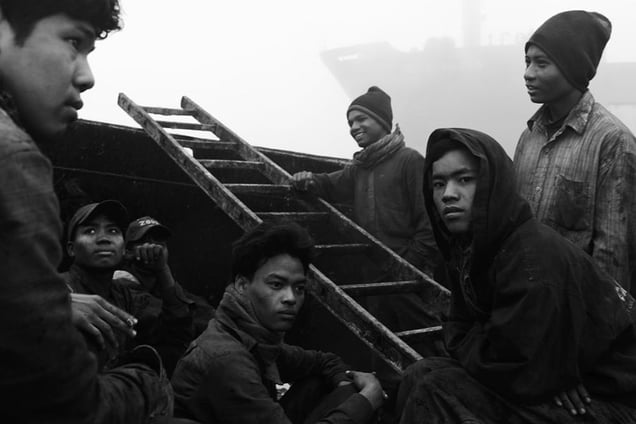
A team reaching their ship in the morning. Home-made ladders and anchor chains are the usual ways for workers to reach their boats. Falling from a ship (while working on it or trying to reach it) is a significant cause of deadly accidents on the shipbreaking yards. © Pierre Torset
File: shipbreaking__04_.jpg
Men organizing a line to pull a thick and heavy steel-made cable to the ship. © Pierre Torset
File: shipbreaking__10_.jpg
The majority of workers come from the northern region of Bangladesh where employment opportunities are limited, and floods often affect peoples livelihoods. There is a plentiful supply of people who are eager to work and easy to replace, a fact that does not contribute positively to the normalization of working conditions. The employers also use this to their advantage when it is time to compensat
File: shipbreaking__11_.jpg
A gas cutter and his helper at the end of a nightshift. Working by night allows them to earn more money (between 3 and 4 US dollars per night). © Pierre Torset
File: shipbreaking__13_.jpg
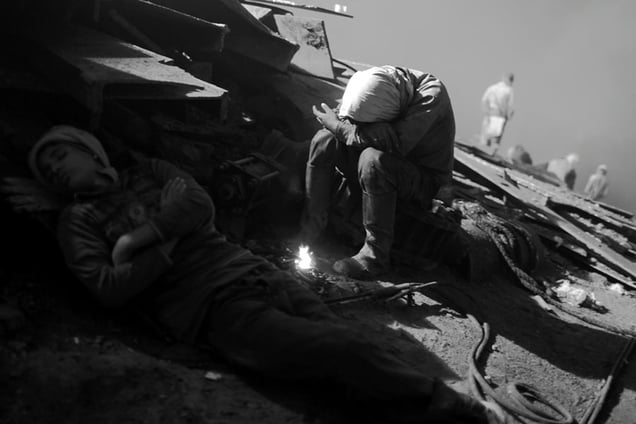
Workers hide from the floodlight at the end of a nightshift in order to take some rest. © Pierre Torset
File: shipbreaking__14_.jpg