Petrified Mist
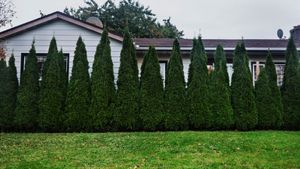
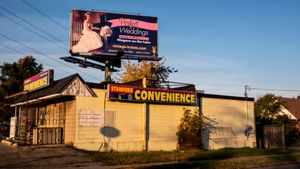
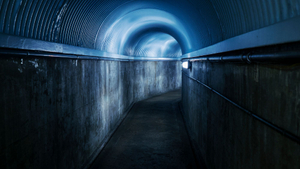
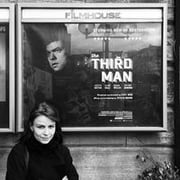
From the late 1800s till the early 1900s, a quartzite stone was mined in the Niagara River gorge. The so-called Niagara spar was carved into souvenirs and sold to tourists as ‘petrified mist’. Some believed it had magical powers. Niagara Falls forms part of the border dividing Canada and the United States. There is an eponymous city in both countries, each with its own gushing spectacle, the Horseshoe Falls and the American Falls. This dual identity is reflected in the name, which originates from the Iroquois term 'onguiaahra' denoting a neck between two bodies of water or a point of land cut in two. Others translate it as thundering waters. The correct definition has never been confirmed, so the double meaning persists. On the Canadian side, the city of Niagara Falls is a tourist destination where people come to vacation, marry, gamble and commit suicide, and where the 1953 film "Niagara", starring Marilyn Monroe, was shot. It has a population of 88,000 people, yet when residents say where they are from, they are often met with the response: “I didn’t know people lived there!” The Honeymoon Capital of the World is the 13th most photographed tourist destination on the globe. It also happens to be my partner’s hometown. I am intrigued by the elusive truth of Niagara Falls, which resides somewhere between little known facts and well known fictions. My work explores liminal spaces, personal histories and nostalgia, finding inspiration in cinema and vernacular keepsakes such as souvenirs and snapshots. Like petrified mist, photographs can condense the sense and memory of a place into a physical object but they are not always what they seem. This series shows the location as seen through the eyes of someone with a personal connection to the city but who is also a tourist. They seek to portray Niagara Falls not just as a breath-taking wonder but as a complex borderland coloured by attraction, illusion and myth, where traces of real life often remain in the shadows, unnoticed and unseen.
No categories selected
Photos (10)