
The Nature of Urbanity
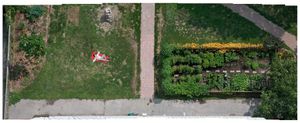
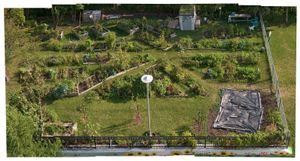
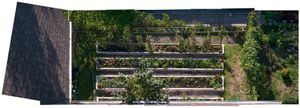
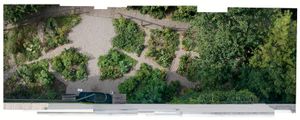
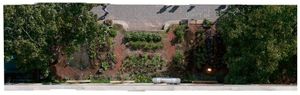
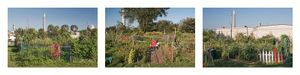
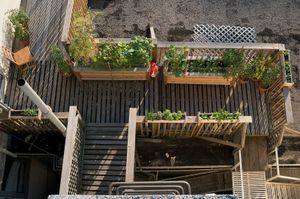
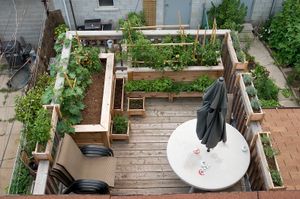
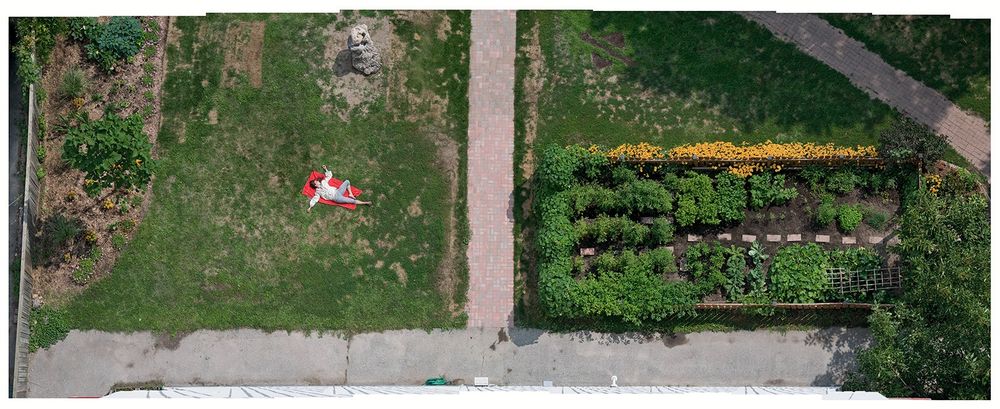
The Nature Of Urbanity explores and problematizes the human/nature dialectic as a cultural construct fundamental to the development of meaning, purpose, and security for the otherwise fragile human condition. Addressing historic and contemporary issues within the discourses of landscape, philosophy, and urban development, The Nature Of Urbanity employs aerial photo-panoramic composites of urban vegetable gardens exposing this relationship by juxtaposing mathematical precision and control of constructed space with the organic chaos of foliage and greenery. The garden as a physical and intellectual space is essential to understanding nature’s cultural evolution: representing humanity’s first forays into organized society that brought freedom from the tumults of life in the wilderness and allowing for the construction of our most romantic and idyllic notions of nature. Given the current global entropic crisis, Humanity is facing the need to reconsider our integration in the global biosphere that will require an empathic re-envisioning toward our physical and metaphysical relationship with nature. Humanity’s understanding of nature emerges directly from a changing idea and understanding of what it means to be Human. This relationship ultimately determines the way we think about and act toward the world we live in. On the one hand, we have developed nature as a realm of physical ‘stuff’ studied and defined by science, while on the other, we approach it through a transcendental reverence that borders on the sublime. What is routinely missed, ignored, feared, or disclaimed in an effort to maintain the intellectual purity of the dialectic is nature’s existence as a product of culture.
No categories selected
Photos (9)