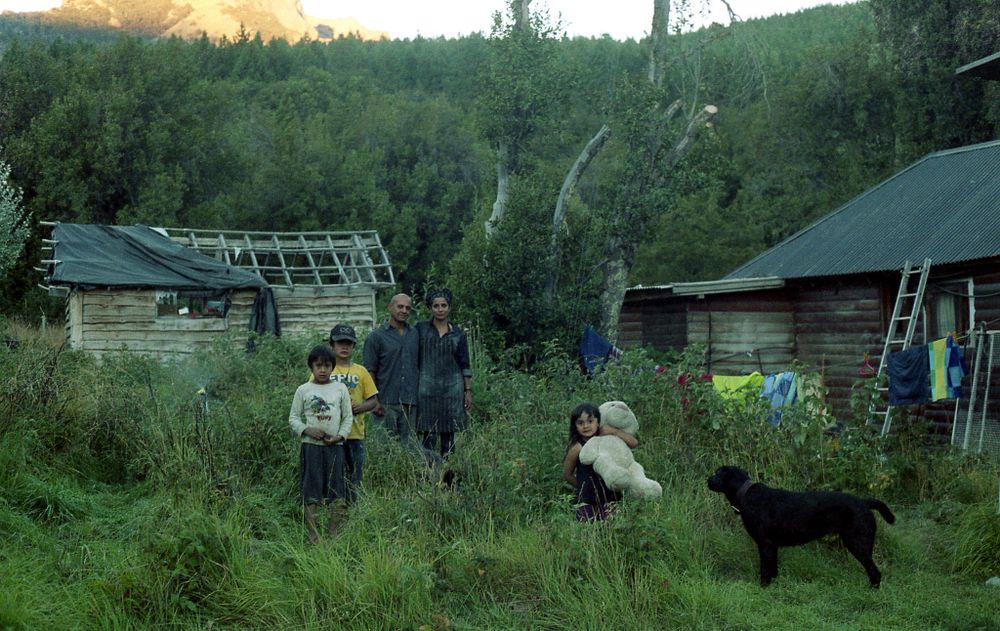
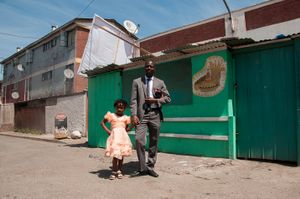
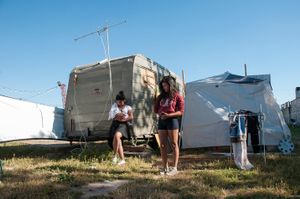
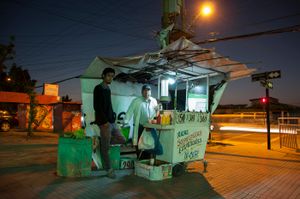
South Center, is a project on a context, does not revolve around a particular theme. Addresses events of this present, of this territory. This photographic work is not about migrants, it is not about that great social change (because that change has already happened), nor are the photos about trades, sexual diversity or people living in the street. And although it is contradictory, they are also contradictory. And it is the thread that connects the different photographs of the series is the way to present them, to show corners, neighborhoods or fragments of the city. This body of images is a documentary essay on a relatively new social context in certain points of Santiago, specifically the communes of the south and center of the capital.
Through this work, we seek to contribute to the development of photography as a discipline, based on research that deals with current social issues, but which in turn have always been present defining our society and interactions. With this, we refer to show a Chilean urban landscape seen from their new faces. At the same time, the aim is to pose photography as a social-fictional document, in which individuals of our daily life are shown in their intimate and public environments, often carrying out teamwork which becomes a kind of spoken portrait and that mixes photography with the staging due to the fact that the portrayed are ordinary people in their contexts of belonging, who are willing to show themselves and be directed by the photographer to create a documentary image.
Centro Sur is a photographic series that contributes not only to the artistic discipline, as mentioned above but also to the registration of the subject of study. Today there are other artistic works linked to immigration, floating populations, so-called "invisible" and other specific communities, however, it is necessary to raise a new image, to move away from dramatizations and forced constructions, erected from otherness. This work aims to raise a social-fictional record that accounts for the changes and nuances of the center-south area of our capital today, and that is why it is crystallized as an important artistic document to be made and disseminated through its exhibition