I try to kill the Volcano
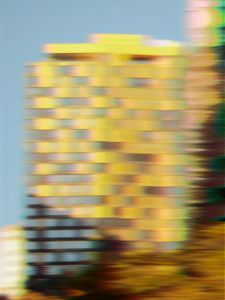
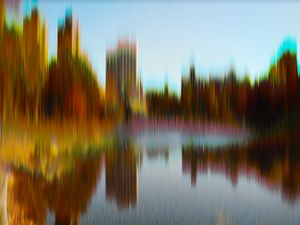
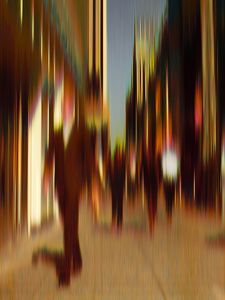
English "I try to kill the Volcano" is a photographic series about New York City. With this project, Jean-Baptiste Perrot perpetuates his unique photographic approach, with the use of digital cameras victims of an industrial defect. Their particularity is to be equipped with a sensor of origin which randomly develops an instability of the shooting. The effect is a blur of the subject, like Gerhard Richter, associated with chromatic aberrations. The need for this project in New York was born out of an unexpected experience. Scheduled for an exhibition at the New Art Center in NYC, it will not be held due to the closure of airspace caused by smoke emissions of the Icelandic volcano Eyjafjöll's awakening. After this episode, Jean-Baptiste Perrot decides to return to New York to "virtually kill this volcano", live an artistic experience without constraint, without volcano, only guided by his own free will. From his strolls, he fixes the symbols and the architecture so characteristic of this city . His perpetual activity and energy disturb him, make him dizzy. Then he thanks the randomness of the sensors used to translate this movement, to create this dizziness of the senses, with images of which we no longer know if they are photographs or paintings. He interprets the randomness of these sensors as markers of a technology, which frees itself from its own purpose, that of producing a sharp image with faithful colors. The sensors, do they not thus become the revealers of an outdated determinism, emancipated, freed,...? In this adventure, hasn't the artist, himself, overcome the idea of an overdeterminism that obsesses him? Français "I try to kill the Volcano" est une série photographique dont l'objet est la ville de New-York. Avec ce projet, Jean-Baptiste Perrot perpétue son approche photographique singulière, avec l'utilisation d'appareils numériques victimes d'un défaut industriel. Leur particularité est d'être équipés d'un capteur d'origine qui aléatoirement développe une instabilité de la prise de vue. L'effet provoqué est un flou du sujet, à la Gerhard Richter, associé à des aberrations chromatiques. La nécessité de mener ce projet à New-York est née d'une expérience inattendue. Programmé pour une exposition au New Art Center de NYC, celle-ci ne se fera pas pour cause de fermeture de l'espace aérien pour cause d'émission de fumées due au réveil du volcan islandais Eyjafjöll. Après cet épisode, Jean-Baptiste Perrot décide de revenir à New-York pour "tuer virtuellement ce volcan", vivre une expérience artistique sans contrainte, sans volcan, uniquement guidé par son propre libre arbitre. De ses déambulations, il fixe les symboles et l'architecture si caractéristiques de cette ville . Son activité perpétuelle et son énergie le troublent, lui donnent le vertige. Il remercie alors les aléas des capteurs utilisés de traduire ce mouvement, de créer cet étourdissement des sens, avec des images dont nous ne savons plus si elles sont photographies ou peintures. Il interprète les aléas de ces capteurs comme des marqueurs d'une technologie, qui s'affranchit elle-même de sa propre finalité, celle de produire une image nette aux couleurs fidèles. Les capteurs, ne deviennent-ils pas ainsi les révélateurs d'un déterminisme dépassé, émancipé, affranchi,...? Dans cette aventure, l'artiste n'a-t-il pas, lui-même, vaincu l'idée d'un surdéterminisme qui l'obsède?
No categories selected
Photos (10)